0%

Aluminium Windows & Doors bring together clean sightlines, durable frames, and practical options for homes and commercial buildings. Yet a familiar product name does not tell the whole story. Manufacturers differ in system design, finish choices, thermal performance, testing, and the support available after installation. Those differences can be easy to miss in a catalogue.

This guide introduces ten manufacturers with international reach and examines what helps distinguish their offerings. The selection considers product range, engineering capability, market presence, and publicly available company information. It is a starting point, not a universal ranking: regional availability and project requirements can change which supplier is the best fit. Even a strong frame may disappoint if it is poorly specified or installed.

Details matter. Look closely at frame depth, glazing compatibility, drainage, hardware, and finish warranties. Ask whether published performance figures apply to the exact configuration being quoted, not simply to a related product. Local climate, building design, and installer experience also shape real-world results. One imperfect point in any comparison is that manufacturers do not always publish information in the same format. Readers should verify current specifications directly with the company or its authorized partners before making a decision.
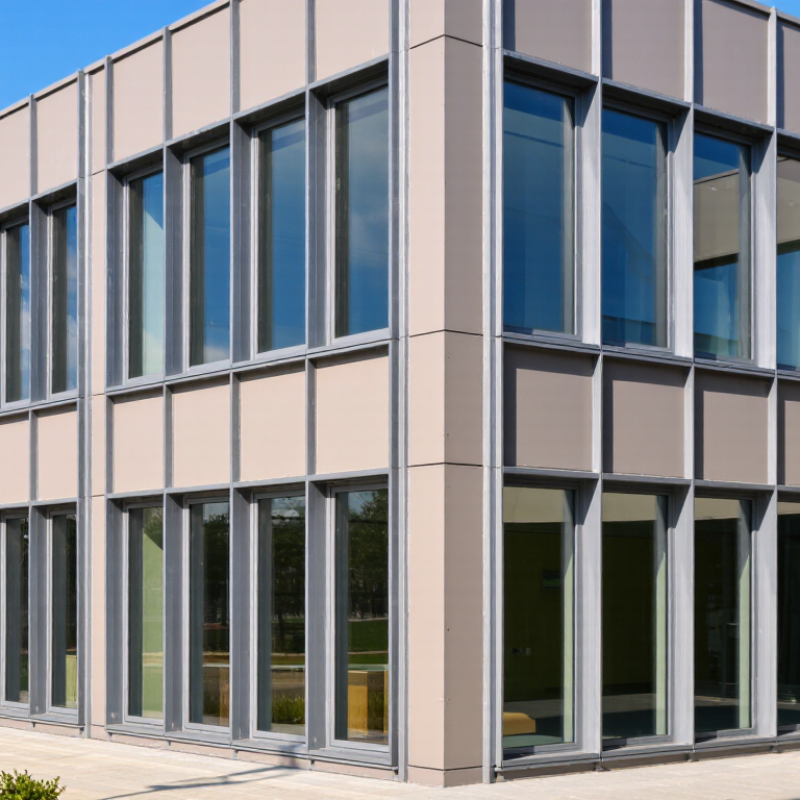
Top 10 Aluminium Windows and Doors Manufacturers Worldwide

Definition and Scope of Aluminium Windows and Doors

Aluminium windows and doors are glazed building openings built around frames made mainly from aluminium profiles. A typical window includes a frame, sash, glass, seals, and operating hardware. Doors may use hinged, sliding, folding, or pivoting panels. Some profiles include a thermal break, an insulating barrier between the inner and outer aluminium sections. This can help limit heat transfer, but it does not determine a product’s overall performance by itself.

The scope covers systems for homes, offices, shops, and other buildings, from compact awning windows to wide sliding doors. It also includes design, profile extrusion, surface finishing, assembly, and sometimes project-specific fabrication. Buyers and specifiers may compare frame dimensions, glazing compatibility, opening styles, weather seals, finish options, and test data. Details matter. Glass choice, installation quality, and local climate can all affect comfort and durability.

For a worldwide manufacturer comparison, “manufacturer” can describe different operations. One company may produce aluminium profiles, while another assembles complete window and door systems. Some firms do both. Product categories also overlap: a large sliding panel might be marketed as either a door or a glazed wall system. That boundary is not always neat. Clear definitions help readers compare like with like, while recognizing that published specifications may not capture every site condition or installation detail.

Criteria for Selecting Leading Manufacturers Worldwide

A credible ranking should weigh measured performance, manufacturing consistency, and evidence—not catalogue claims alone. The International Energy Agency reports that building operations account for about 30% of global final energy consumption and 26% of energy-related emissions. Efficient windows can help reduce heat loss, but their impact depends on climate, glazing, frame design, and installation quality. A polished catalogue is not proof.

Compare product-specific results for thermal transmittance, air leakage, water penetration, and wind resistance. Reports using recognized methods, such as EN 12207, EN 12208, and EN 12210, make comparisons more meaningful. Check that test samples match the offered frame, glass, and opening configuration. Ask about coating durability, spare-part availability, and technical support across regions. Small details matter.

Manufacturing evidence matters too. Look for documented quality controls, material traceability, and independently verified environmental product declarations. The International Aluminium Institute states that recycling aluminium requires about 5% of the energy used to produce primary aluminium. Recycled content is valuable, but only when suppliers can substantiate it. A global ranking can still miss local installation skill; that is an imperfect measure worth acknowledging.

Profiles of Ten Global Aluminium Windows and Doors Manufacturers

The ten profiles represent different manufacturing strengths, not a ranked list of named companies. A European specialist may focus on thermally broken frames and precise seals for cold climates. A North American producer often handles custom sizes and replacement projects. An East Asian manufacturer may combine automated fabrication with high-rise testing. Scale matters.

A Gulf-region fabricator may build wide openings suited to hot, dusty settings. A Turkish exporter can serve varied markets through flexible production runs. An Indian producer may prioritize affordable systems for fast-growing urban projects. An Australian manufacturer often considers coastal salt exposure and strong sun. A Chinese large-scale supplier may offer broad product ranges and high output. A Scandinavian firm may emphasize insulation and material efficiency. A Latin American producer may adapt profiles to local construction practices.

These profiles show why a single “best” manufacturer is hard to identify. Buyers should compare frame depth, alloy specifications, finish testing, hardware compatibility, and documented performance. Ask for sample corners, not just glossy catalogues. A smooth sliding test feels reassuring, but it cannot replace verified air, water, and structural results. Regional labels can also mislead; factory quality varies. A careful review should include installation support, spare-parts access, and clear warranty terms. Some details are easy to overlook.

Nominal Density of Common Window and Door Frame Materials

Aluminum has a nominal density of about 2.70 g/cm³, roughly one-third that of steel. Lower material density can help reduce frame weight, although the finished frame’s weight also depends on its design, dimensions, and construction. Values are typical material densities; alloys and formulations may vary.

Comparison of Product Ranges, Technologies, and Market Presence

A global comparison of aluminium window and door manufacturers should begin with product range. Some suppliers focus on standard sliding doors and casement windows, while others offer curtain walls, folding systems, and large-span openings. Check frame depth, available finishes, thermal breaks, and glazing compatibility. These details affect both appearance and performance. Small differences matter.

Technology is not just a list of features. Thermal testing, weather seals, drainage paths, and hardware durability influence how a unit performs after years of use. Ask for test documentation and installation guidance, not only catalogue specifications. A narrow sightline may look elegant, yet it can limit glass options or require careful structural design. Trade-offs are real.

Market presence also deserves careful comparison. A broad distribution network can improve access to profiles, replacement parts, and technical support, but coverage varies by region. Local fabricators may adapt products to project needs, though quality control can differ between workshops. For a fair top-ten assessment, compare documented product breadth, verified performance data, service availability, and experience with similar building types. Rankings can still miss local realities. I would treat them as a starting point, not a final purchasing decision.

Top 10 Aluminium Windows and Doors Manufacturers Worldwide — Comparison of Product Ranges, Technologies, and Market Presence

An anonymized comparison of internationally active manufacturers and systems suppliers. The entries are not presented as a definitive market-share ranking; product availability, certifications, and performance depend on the specific system and local market.

Manufacturer Regional Base Typical Product Range Technologies and System Features Market Presence Common Project Applications Sustainability Considerations
Manufacturer 1 Western Europe Windows, entrance doors, sliding doors, curtain-wall systems, and fire-rated solutions Thermally broken profiles, insulated multi-chamber sections, large-format sliding systems, and options designed for high-performance glazing Strong European network, with projects and distribution in additional international markets Commercial buildings, multi-residential developments, offices, and high-specification homes Recycled-aluminium options and environmental product information may be available for selected systems and markets
Manufacturer 2 Central Europe Aluminium windows and doors, sliding and lift-and-slide doors, façades, and conservatory systems Thermal-break technology, configurable frame depths, concealed drainage options, and systems compatible with double or triple glazing Established across Europe, with export activity beyond its home region Residential buildings, renovation projects, commercial façades, and mixed-use developments Material efficiency and recycled-content availability vary by profile series and country
Manufacturer 3 Northern Europe Window and door systems, curtain walls, sliding doors, and building-envelope solutions Thermally insulated aluminium profiles, façade integration, and system options that can be configured for demanding energy requirements Broad European reach and international supply through regional businesses and partners Large commercial buildings, public buildings, residential projects, and façade upgrades Recycled aluminium and product-specific environmental declarations are offered in parts of the portfolio
Manufacturer 4 East Asia Aluminium windows, hinged and sliding doors, entrance systems, and façade products Thermal-break construction, weather-resistant seals, sliding-door configurations, and product designs adapted to regional building conditions Strong presence in East Asia, with manufacturing, sales, or project activity in other regions Housing, apartments, offices, hotels, and large-scale urban developments Recyclability of aluminium is a material advantage; recycled content and environmental documentation depend on the product and market
Manufacturer 5 Mediterranean Europe Windows, hinged and sliding doors, shutters, curtain walls, and architectural aluminium systems Thermal-break profiles, slim-frame options, large sliding formats, and systems suited to varied glazing specifications Active across Southern and wider Europe, with distribution in overseas markets Residential construction, hospitality, renovation, and commercial projects Some product ranges offer recycled-material options; environmental credentials should be checked at system level
Manufacturer 6 Iberian Peninsula Aluminium windows and doors, sliding systems, façades, and complementary building-envelope products Thermally broken profiles, multiple frame and sash configurations, and solutions for different glazing and opening requirements Strong domestic and European distribution, with exports to a range of international markets Homes, apartment buildings, retail, offices, and refurbishment projects Aluminium can be recycled repeatedly; product-specific recycled content and EPD coverage vary
Manufacturer 7 North America Commercial windows, entrance doors, curtain walls, storefront systems, and selected residential products Thermal-break framing, pressure- and water-management features, and system configurations for commercial glazing Established North American presence, with selected systems and project work in international markets Office buildings, schools, healthcare facilities, retail, and institutional construction Recycled content, EPDs, and energy-related documentation are product- and project-specific
Manufacturer 8 Central and Eastern Europe Windows, doors, sliding systems, curtain walls, and aluminium building components Thermal-break profiles, system combinations for residential and commercial use, and options for enhanced acoustic or security specifications Wide regional distribution in Europe, with exports to selected markets worldwide Residential developments, public buildings, commercial projects, and renovations Recyclability is inherent to aluminium; recycled-content claims should be verified for each product line
Manufacturer 9 Western and Southern Europe Windows, doors, sliding doors, curtain walls, and related façade systems Thermally insulated profiles, modular system design, and configurations for a range of glazing thicknesses and building types European market presence with export and distribution partnerships in other regions Residential construction, offices, hotels, public buildings, and renovation work Environmental declarations and recycled-material options differ by system, production location, and market
Manufacturer 10 Asia-Pacific Aluminium windows and doors, sliding and folding systems, curtain walls, and architectural glazing products Thermal-break sections, weather-sealing systems, large-opening formats, and configurations designed for regional climate conditions Significant regional activity in Asia-Pacific, with international projects or distribution in selected markets Residential towers, commercial buildings, hotels, and large mixed-use projects Aluminium is recyclable; actual recycled content, embodied-carbon data, and certification availability require product-level verification

Global Industry Trends and Factors Influencing Manufacturer Performance

Aluminium window and door manufacturers compete on more than profile design. Thermal performance, delivery reliability, and material sourcing shape buyer decisions.

The IEA’s Global Status Report for Buildings and Construction 2024 estimates that buildings and construction accounted for 32% of global energy demand in 2023.

It also attributes 34% of energy- and process-related CO₂ emissions to the sector.

These figures make efficient frames and glazing commercially relevant, especially in renovation markets.

Material choices matter too. The International Aluminium Institute reports that recycling aluminium can use up to 95% less energy than primary production.

That advantage depends on clean scrap streams and reliable tracking. Recycled content alone does not guarantee a low-impact product, a point procurement teams should examine more carefully.

Manufacturers are also judged by thermal-break quality, air and water testing, finish durability, and installer support. On a job site, one poorly sealed corner can undo careful factory engineering. Not glamorous, but costly. Buyers should compare whole-window U-values and documented test results, not profile claims alone. Published figures vary by region and configuration, so global rankings can oversimplify actual performance.

FAQS

What evidence should buyers review when comparing manufacturers?

Compare product-specific thermal, air leakage, water penetration, and wind resistance results. A polished catalogue is not proof.

Why do test reports need to match the offered window?

Frame, glass, and opening designs can change performance. Check that tested samples match the product you plan to order.

Which test standards can help make comparisons clearer?

Reports using EN 12207, EN 12208, and EN 12210 provide recognized methods for comparing air, water, and wind performance.

How much does installation quality affect window performance?

Climate, glazing, frame design, and installation all affect energy savings. Even a strong product may underperform if fitted poorly.

What manufacturing details are worth checking?

Ask about documented quality controls, material traceability, coating durability, spare parts, and technical support in your region. Small details matter.

Does recycled aluminium automatically prove a product is sustainable?

No. Recycling aluminium uses about 5% of the energy required for primary production, but suppliers should substantiate recycled content.

Why might a manufacturer suited to one region not suit another?

Needs vary: coastal areas face salt exposure, while hot, dusty settings may need different opening and sealing choices. Not always obvious.

Can a single global ranking identify the best manufacturer?

Not reliably. Regional profiles show different strengths, and factory quality varies. Compare verified performance, installation support, spare-part access, and warranty terms.

Conclusion

This article explores the scope of Aluminium Windows & Doors, including their role in residential, commercial, and industrial buildings and the practical qualities that make them suitable for different projects. It explains how leading manufacturers can be assessed through factors such as product quality, design flexibility, technical capabilities, production capacity, customer support, and international market reach.

The article also profiles ten manufacturers worldwide without focusing on brand promotion, comparing their product ranges, technologies, and presence across regional markets. It considers how energy efficiency, evolving architectural preferences, material innovation, supply conditions, and customer expectations influence industry trends and manufacturer performance. Together, these perspectives provide a clear framework for understanding the global market and evaluating the strengths that distinguish manufacturers in a competitive industry.

Ethan

Ethan

Ethan is a professional marketing specialist with a strong understanding of the company’s products, customers, and market dynamics. With a practical approach to communication and a passion for continuous learning, he regularly contributes insightful articles to the company’s blog, helping readers......