Choosing the best Aluminum Door in 2026 requires more than comparing finishes and price tags. Door design now connects thermal comfort, security, daylight, accessibility, and long-term maintenance. A coastal home may need corrosion-resistant frames and stronger hardware. A cold-climate project may benefit from thermally broken aluminum profiles and insulated glass. Every building asks a different question.
Architectural aluminum specialist Mike Fischer has emphasized, “Performance begins with the complete door system, not the frame alone.” That principle remains practical. A sliding Aluminum Door can save space and widen a garden view. A folding system can open an entire patio wall. Pivot doors create a dramatic entrance, but their weight demands accurate engineering. Storefront doors suit commercial traffic, while insulated hinged doors often perform better in residential conditions.
Small details matter. Look at gaskets, thresholds, hinges, drainage, and glass specifications. Check whether the coating suits local humidity and sunlight. Ask how replacement parts will be sourced after installation. A beautiful door can still disappoint when its seals fail early. That is easy to overlook.
This guide compares the leading Aluminum Door types expected to shape 2026 projects. It considers energy performance, appearance, security, operation, installation complexity, and value over time. Some conclusions may remain imperfect because manufacturers publish different testing data. Real-world performance also depends on installers and building conditions. The “best” choice is rarely universal. It is the door that fits the opening, climate, users, and maintenance plan most honestly.
What Are the 2026 Best Aluminum Door Types?
Aluminum door selection now depends on opening size, climate, security, and daily use. Hinged doors suit entrances that need firm seals and controlled movement. Sliding doors save floor space and frame wide views. Folding doors can connect kitchens with patios, but their many panels demand accurate installation. Pivot doors create a strong architectural statement. They also need stronger hardware and careful load calculations.
Thermally broken aluminum doors remain important in energy-conscious projects. The International Energy Agency’s 2024 Global Status Report states that buildings consume about 30% of global final energy. A thermal barrier separates interior and exterior aluminum, reducing heat transfer through the frame. Low-emissivity glazing can improve the whole assembly. However, glass performance alone cannot fix poor drainage or weak seals. Small details matter.
Performance should be checked through tested U-factor, air leakage, water resistance, and structural ratings. The National Fenestration Rating Council provides a recognized framework for comparing these values. In practical inspections, installers should examine corner joints, rollers, thresholds, and gasket compression. A low threshold looks convenient. It may still allow water during wind-driven rain. Coastal homes need corrosion-resistant finishes and frequent hardware checks. Larger doors feel impressive, but they can flex, drag, or become difficult to service. My own preference is less dramatic: choose the simplest aluminum door that matches the opening, exposure, and maintenance ability.
| Aluminum Door Type | Operating Method | Main Features | Typical Glazing Options | Thermal Performance | Security Potential | Best Applications | Key Considerations |
|---|---|---|---|---|---|---|---|
| Aluminum Hinged Door | Swings inward or outward on side hinges. |
|
Double glazing, triple glazing, laminated glass, tempered glass, and low-emissivity glass. | High when fitted with thermally broken frames, insulated glass, and effective weather seals. | High | Main entrances, rear doors, balconies, patios, and commercial access points. | Requires clear swing space. Door closers and hardware should be selected according to door size and traffic level. |
| Aluminum Sliding Door | Moves horizontally along tracks, usually with two or more panels. |
|
Large insulated glass units, low-emissivity glass, solar-control glass, laminated glass, and tempered glass. | Moderate to high, depending on frame design, interlock seals, glazing, and track construction. | High | Patios, balconies, gardens, terraces, and rooms requiring wide exterior views. | Tracks need regular cleaning. Panel weight, drainage, air leakage, and water management are important design factors. |
| Aluminum Folding or Bi-Fold Door | Multiple hinged panels fold and stack to one or both sides of the opening. |
|
Double or triple insulated glass, low-emissivity glass, solar-control glass, and laminated safety glass. | Moderate to high; performance depends heavily on the number of panel joints and the quality of seals. | High | Open-plan living areas, restaurants, event spaces, terraces, and large residential openings. | More moving joints require careful adjustment and maintenance. Structural support and threshold drainage must be planned correctly. |
| Aluminum Lift-and-Slide Door | The panel lifts slightly from the track when opened, then slides with reduced operating force. |
|
Large double or triple insulated glass units, laminated glass, low-emissivity glass, and solar-control glass. | High when the system uses thermally broken frames, insulated glazing, multipoint locking, and properly designed seals. | High | Premium residential projects, large patios, luxury apartments, and high-end commercial spaces. | Usually costs more than standard sliding doors. Floor tolerances, panel weight, and installation quality are critical. |
| Aluminum Pivot Door | Rotates on pivot hardware positioned at the top and bottom or offset from the door edge. |
|
Insulated glass, laminated glass, tempered glass, decorative glass, and opaque insulated panels. | Moderate to high, depending on the frame break, pivot arrangement, seals, and panel dimensions. | High | Modern entrances, architectural homes, hotels, offices, and showrooms. | Needs sufficient circulation space. Large leaves require accurate structural calculation and correctly sized pivot hardware. |
| Aluminum French Door | Two hinged leaves open from the center, often with one active and one inactive leaf. |
|
Double glazing, laminated glass, tempered glass, low-emissivity glass, and divided-light configurations. | High with thermally broken frames and properly sealed meeting stiles. | High | Residential entrances, patios, balconies, dining areas, and garden access. | The central meeting stile and multiple seals must be precisely aligned to limit air and water leakage. |
| Aluminum Terrace or Patio Door | Usually hinged, sliding, or folding; designed for frequent indoor-outdoor access. |
|
Insulated glass, low-emissivity glass, solar-control glass, laminated glass, and impact-resistant glazing where required. | Moderate to high, depending on the selected opening configuration and climate-specific glazing. | High | Homes, apartments, conservatories, sunrooms, terraces, and outdoor entertaining areas. | Drainage, threshold height, wind exposure, water resistance, and corrosion-resistant hardware should be evaluated. |
| Aluminum Commercial Storefront Door | Typically swings on heavy-duty hinges; may use a panic exit device or automatic operator. |
|
Tempered safety glass, laminated safety glass, insulated glass, and security glazing. | Low to high depending on whether the system is non-thermal or thermally broken and whether insulated glass is used. | High | Retail shops, offices, schools, clinics, public buildings, and mixed-use developments. | Hardware must match traffic volume and accessibility requirements. Local fire, egress, and safety regulations may apply. |
| Aluminum Fire-Rated Door | Usually hinged and self-closing; uses tested door, frame, glazing, and hardware assemblies. |
|
Specially tested fire-rated glass or opaque fire-resistant infill panels. | Varies; fire resistance and thermal insulation performance must be verified for the complete tested assembly. | Very High | Stairwells, corridors, protected exits, commercial buildings, and compartmentation zones. | Only tested and approved assemblies should be used. The required fire rating, smoke control, egress, and installation rules vary by jurisdiction. |
| Aluminum Security Door | Usually hinged or sliding, with reinforced frames, locks, and security glazing. |
|
Laminated safety glass, security laminated glass, tempered glass, insulated security glazing, or opaque panels. | Moderate to high when thermal breaks and insulated glazing are included. | Very High | Ground-floor entrances, offices, data-sensitive areas, apartments, and high-traffic facilities. | Security performance depends on the complete assembly, including frame, lock, hinges, glass, anchors, and installation. |
Sliding doors work well for wide patios and save interior floor space. Their panels move beside each other. Check the tracks regularly. Grit, leaves, and small stones can affect movement.
Hinged doors suit entrances, bedrooms, offices, and service areas. They offer familiar movement and strong sealing. Their simpler hardware can make maintenance easier. They may feel restrictive in busy spaces.
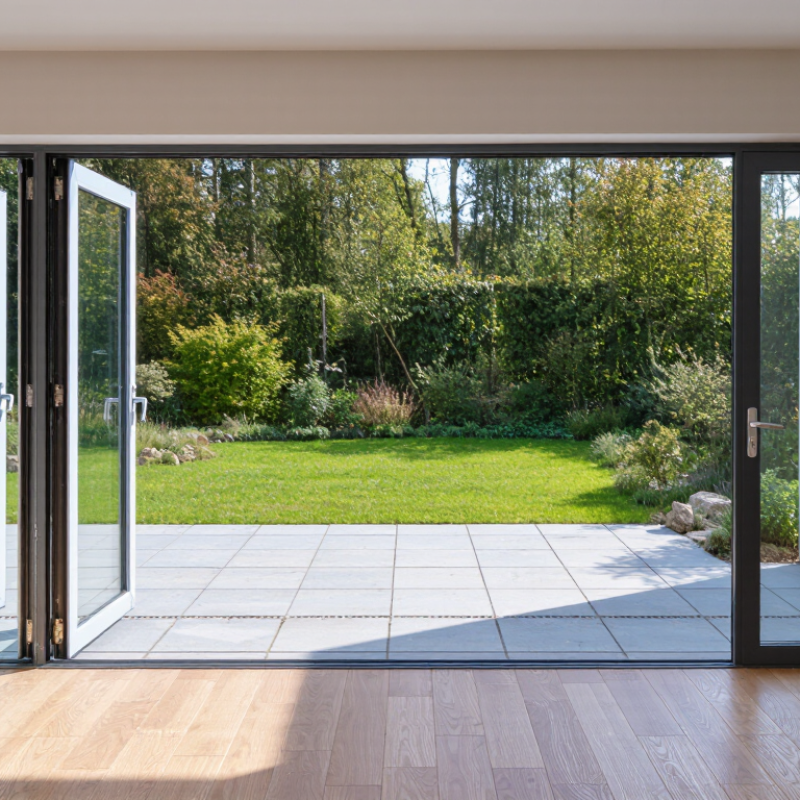
Folding doors create a broad opening between indoor and outdoor areas. They can improve ventilation during mild weather. However, their hinges, panels, and locking points need accurate installation. Allow enough side clearance.
Pivot doors create a striking architectural entrance and support large panels. They need strong hardware and careful load calculations. Wind pressure may make opening difficult. Narrow hallways can reduce their practicality.
A thermal barrier separates indoor and outdoor aluminum surfaces. This reduces heat transfer through the frame. It helps during hot summers and cold winters. Good glazing cannot correct weak seals or poor drainage.
Review tested U-factor, air leakage, water resistance, and structural ratings. Also inspect corner joints, thresholds, gaskets, and drainage paths. A low threshold looks convenient. Wind-driven rain may still enter.
Select a corrosion-resistant finish and review the technical documents carefully. Inspect hinges, rollers, and locking hardware twice yearly. Salt and moisture can shorten hardware life. Small maintenance tasks matter.
Poor measurements, uneven walls, and badly fitted sills can cause leaks or difficult movement. Measure the opening at several points. Check who will install the door. Test the movement yourself.
Appearance matters, but opening size, climate, security, and maintenance ability matter more. A dramatic door may flex or become difficult to service. I may prefer simpler designs. Future repairs deserve attention.
Choosing the right Aluminum Door in 2026 depends on balancing design, performance, and building requirements. Common types include sliding, hinged, folding, pivot, and insulated doors, each offering different advantages in terms of space usage, accessibility, daylight, ventilation, and visual style. Modern designs can be compared by their thermal insulation, weather resistance, security features, glass options, operating methods, and suitability for residential, commercial, or high-traffic environments.
The best choice should reflect the building’s layout, climate, budget, energy goals, and expected level of use. Buyers should also consider frame strength, hardware quality, installation accuracy, drainage, and compatibility with surrounding walls and glazing. With regular cleaning, periodic hardware checks, and timely attention to seals or moving components, an Aluminum Door can maintain its appearance and function for many years. Properly selected and maintained, it provides a practical combination of durability, low maintenance, flexibility, and contemporary design.

 English