Choosing the best Aluminium Washroom Door involves more than comparing colours and prices. It requires attention to moisture, traffic, cleaning routines, privacy, and long-term maintenance. In a busy airport washroom, doors may open hundreds of times daily. In a school, impact resistance and easy supervision matter more.
The 2023 WHO and UNICEF Joint Monitoring Programme report states that 3.5 billion people lacked safely managed sanitation in 2022. This figure reinforces the importance of hygienic, accessible washroom design worldwide. A suitable door should support regular cleaning without trapping water around hinges, edges, or frames. Aluminium is often considered because it is lightweight, corrosion resistant, and relatively easy to maintain. Still, material choice alone does not guarantee performance.
Details decide the result. Check the alloy, surface finish, door thickness, hardware quality, and ventilation conditions. Powder coating may improve appearance and surface protection, but poor preparation can cause early failure. The International Aluminium Institute reports that recycling aluminium uses about 95% less energy than producing primary aluminium. That sustainability advantage is valuable, although product durability should remain the priority. A door that needs replacement too soon is not truly economical. Not every project needs the same specification. This is where mistakes happen. The following guide examines practical selection criteria, including privacy, moisture resistance, accessibility, safety, installation quality, and lifecycle cost. It also questions attractive claims that lack test evidence, helping buyers choose with greater confidence.
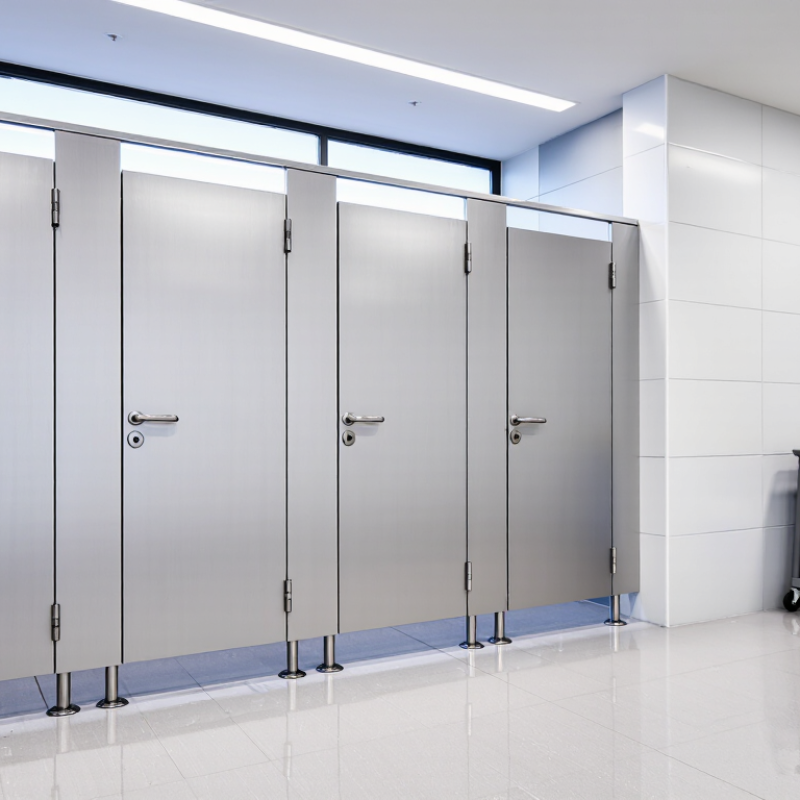
How to Choose the Best Aluminium Washroom Door?
Understanding the door type is the first practical decision. Framed aluminium doors offer strong support and suit busy public washrooms. Frameless doors create a cleaner appearance but need accurate installation. Louvered doors improve airflow, while solid panels provide stronger visual privacy. Sliding options save space, although their tracks require regular cleaning. The right choice depends on room size, traffic, moisture, and privacy needs.
Core features matter more than appearance alone. Choose aluminium with a durable, moisture-resistant finish to reduce staining and corrosion. Check that hinges, handles, locks, and screws are suitable for humid environments. A well-fitted seal can limit noise, light, and water movement. It should still allow smooth opening. Safety glass or a stable composite panel may improve durability, depending on the design. Measure the opening carefully. Small errors can cause rubbing, gaps, or weak locking.
Installation quality often decides the real service life. Experienced installers check wall alignment, floor levels, drainage, and ventilation before fixing the frame. Do not ignore maintenance access. A beautiful door can become inconvenient when its hinges are difficult to adjust. I would also question overly low prices; cheaper hardware may loosen sooner in heavy-use areas. Clean surfaces with mild products, inspect fasteners, and replace damaged seals promptly. Good design is useful. Perfect design is rare.
Choosing an aluminium washroom door starts with the moisture it will face daily. Steam, splashes, wet floors, and cleaning chemicals can attack weak finishes and hardware. Aluminium resists rust, but it is not maintenance-free. Unsealed edges, damaged coatings, and steel screws may still corrode.
Ventilation matters as much as the door material. ASHRAE Standard 62.1-2022 lists 50 cubic feet per minute of exhaust per water closet or urinal in toilet rooms. Poor airflow leaves condensation on door edges and frames. Check the room’s actual ventilation, not only the product brochure. ISO 12944-2 also shows that humid interiors can create moderate corrosivity conditions, especially where condensation remains frequent.
Look for anodized or high-performance powder-coated surfaces, with documented testing against humidity, adhesion, and chemical exposure. AAMA 2604 and AAMA 2605 specifications can help distinguish coating performance levels. Ask for test records, coating thickness, and hardware material. Stainless-steel hinges are usually safer than ordinary plated steel. Inspect the bottom rail every month; trapped water often appears there first. Use a soft cloth and diluted neutral detergent. Avoid abrasive pads and strong acids.
Real maintenance is often overlooked. A busy public washroom may need weekly cleaning and quarterly hardware checks. That schedule is only a practical starting point. Door traffic, cleaning routines, and local water quality can change the result. I would also examine the frame-to-wall joint, because a durable door can still fail when the surrounding sealant cracks.
When selecting an aluminium washroom door, start with the opening, not the door leaf. Measure the width at the top, middle, and bottom. Check the height on both sides. Walls are rarely perfect. Record the smallest measurement, then allow clearance for the frame and seals. A 10-millimetre error can cause rubbing, gaps, or costly rework. I have seen neat layouts fail because the floor slope was ignored.
Layout affects privacy, cleaning, and daily movement. A single door suits compact cubicles, while a wider opening helps users carrying supplies. Keep the swing away from basins, partitions, and busy corridors. In tight rooms, an outward swing may improve access, but it can obstruct circulation. Sliding doors save floor space, yet their tracks need regular cleaning and careful alignment. Think beyond the drawing.
Opening style should match traffic and maintenance habits. Hinges must tolerate frequent use, and the latch should work smoothly with wet hands. A stronger closer is not always better; excessive force can damage fixings. Select panels and hardware that resist moisture. Inspect edges, seals, and fasteners during installation. Confirm dimensions on site before fabrication.
How to Choose the Best Aluminium Washroom Door?
An aluminium washroom door should feel stable, quiet, and easy to operate. Choose corrosion-resistant hinges for humid rooms and busy facilities. A controlled closer prevents slamming, but excessive closing force can frustrate children and wheelchair users. Lever handles usually work better than round knobs. Small details matter. Check the door’s clear opening, threshold height, and handle position before ordering. These measurements affect daily comfort more than appearance.
Privacy hardware needs careful balance. An occupancy indicator gives reassurance, while an emergency release helps staff respond quickly. Avoid locks that are difficult to understand or operate with limited hand strength. A small lower gap may support ventilation, but it can reduce privacy. Sound control also depends on seals, wall construction, and the door’s fit. No single feature solves everything. Test the complete assembly, not just the lock.
Safety includes finger protection, smooth edges, stable hinges, and a swing direction that does not block circulation. Where accessibility is required, compare local building guidance with the needs of actual users. Requirements vary between locations, so verified measurements matter. I have seen attractive doors fail because the closer was too strong or the latch sat too high. That assumption can fail. Ask someone using a wheelchair or carrying supplies to test the door. Their experience may reveal problems that a product sheet misses.
| Decision Area | Option or Specification | Typical Performance or Requirement | Advantages | Points to Check | Recommended Use |
|---|---|---|---|---|---|
| Door Construction | Aluminium-framed door with compact laminate or moisture-resistant infill | Suitable for humid washroom environments when edges, joints, and fixings are properly sealed | Corrosion-resistant, comparatively lightweight, easy to clean, and dimensionally stable | Specify corrosion-resistant fasteners and avoid unsealed cut edges that can allow moisture ingress | Public, commercial, educational, healthcare, and high-traffic washrooms |
| Hinges | Stainless-steel or corrosion-resistant aluminium hinges | Should support the door weight and withstand repeated opening cycles without binding | Improves durability and helps maintain consistent door alignment | Confirm hinge load rating, fixing method, adjustment range, and resistance to washroom cleaning chemicals | Busy facilities where reliable operation and low maintenance are important |
| Handle Type | Lever handle or D-pull handle | Lever handles generally require less gripping and twisting than round knobs | Easier for users with limited hand strength, wet hands, or reduced dexterity | Use rounded, smooth surfaces and verify that the handle does not create a snag or impact hazard | Accessible washrooms and facilities used by a wide range of occupants |
| Privacy Lock | Occupied/vacant indicator bolt with external emergency release | Shows whether the cubicle is occupied and permits authorised release from outside | Provides clear privacy status while supporting emergency access | Test the emergency release regularly and ensure it cannot be locked in a way that prevents rescue | Public washrooms, schools, transport facilities, and other shared spaces |
| Privacy Level | Standard gaps, reduced-gap design, or privacy-sealed edges | Smaller door gaps reduce visibility and light leakage but require accurate installation | Balances user privacy with ventilation and door clearance | Do not eliminate necessary ventilation or create rubbing between the door and frame | Premium public facilities and locations where privacy expectations are high |
| Door Closer | Adjustable hydraulic closer or concealed closer | Controls closing speed and latching force; adjustment should match the door size and user needs | Improves privacy, reduces uncontrolled swinging, and helps keep the cubicle closed | Excessive closing force can make the door difficult to operate; confirm local accessibility requirements | Most washrooms, especially high-traffic installations |
| Safety Features | Rounded edges, anti-finger-trap protection, secure fasteners, and emergency-release hardware | Reduces risks from sharp edges, trapped fingers, loose components, and delayed emergency access | Supports safer daily use and simpler inspection procedures | Inspect hinge sides, lock function, fixings, and clearance zones after installation | Schools, childcare facilities, healthcare sites, and high-use public buildings |
| Accessibility | Lever hardware, adequate clear opening, low threshold, and manageable operating force | Where local rules follow ADA principles, a door commonly needs at least a 32-inch clear opening; verify the applicable code | Improves access for wheelchair users, people with mobility limitations, and users carrying items | Measure the clear opening with the door open, not only the nominal door width; check local regulations | Accessible toilet rooms and inclusive commercial or public projects |
| Threshold | Flush or low-profile threshold | Reduces trip risk and makes wheeled movement easier when permitted by the floor and drainage design | Supports accessibility and simplifies cleaning at the doorway | Maintain adequate water management without creating an unnecessary step or obstruction | Accessible cubicles and washrooms with frequent trolley or wheelchair traffic |
| Ventilation | Door undercut or approved ventilation grille | Allows airflow where the room’s mechanical or natural ventilation design requires it | Helps control humidity and odours without relying on an open door | Coordinate the opening with privacy, fire, acoustic, and accessibility requirements | Enclosed cubicles and washrooms requiring continuous air movement |
| Maintenance | Non-porous surfaces, replaceable hardware, and accessible adjustment points | Routine cleaning and periodic hardware inspection can extend service life | Reduces downtime and keeps doors operating smoothly | Use cleaning products compatible with aluminium finishes, seals, laminate, and stainless steel | Facilities with scheduled cleaning and preventive maintenance programs |
| Final Selection Priority | Safety and accessibility first, followed by privacy, durability, and appearance | The correct door must satisfy the project’s building, fire, accessibility, ventilation, and hygiene requirements | Creates a balanced solution rather than selecting hardware based only on appearance or initial cost | Confirm all dimensions, door swing, clearances, fixing conditions, and applicable local standards before ordering | Every aluminium washroom door project |
Choosing an aluminium washroom door starts with the opening, not the catalogue. Measure width, height, wall thickness, and floor level on site. Damp rooms need corrosion-resistant hinges, sealed fixings, and finishes suited to frequent cleaning. Check ventilation, privacy gaps, swing clearance, and local accessibility requirements before ordering. A few millimetres can create expensive rework.
Installation cost includes more than the door leaf. Include the frame, hardware, delivery, removal, labour, and wall repairs. A low purchase price may hide difficult drilling or uneven partitions. Ask installers to separate material and labour allowances. The 2024 Turner & Townsend International Construction Market Survey shows substantial construction-cost differences between cities, so copied online prices can mislead. Get at least two site-based quotations. Small mistake, large bill.
Long-term value depends on cleaning, replacement parts, and moisture performance. Aluminium can resist corrosion well, but poor drainage and incompatible fixings still cause staining. The International Aluminium Institute reports that recycling aluminium uses up to 95% less energy than primary production. That supports a circular specification, especially when the door can be repaired rather than discarded. The UNEP 2024 Global Status Report for Buildings and Construction states that buildings account for about 32% of global energy use and 34% of global carbon dioxide emissions. The door is only one small component, yet lifecycle choices matter. I would still request an environmental product declaration, warranty terms, and maintenance instructions. Sustainability claims without project evidence deserve caution.
Steam and condensation collect around frames, edges, and hinges. Good exhaust reduces trapped moisture. Check actual airflow, not only product information. A common design reference uses 50 cubic feet per minute per fixture. Poor ventilation can shorten service life.
No. Aluminium resists rust, but damaged coatings and unsealed edges can deteriorate. Steel screws may also corrode. Small details matter.
Choose anodized or high-performance powder-coated surfaces. Request humidity, adhesion, and chemical-resistance test records. Also ask for coating thickness. A finish alone cannot solve poor installation.
Stainless-steel hinges usually perform better than ordinary plated steel. Choose latches that operate smoothly with wet hands. Avoid excessive closer force. Stronger is not always better.
Inspect the bottom rail monthly because trapped water often appears there first. Busy facilities may need weekly cleaning and quarterly hardware checks. Adjust the schedule for traffic and cleaning habits. This is only a starting point.
Use a soft cloth and diluted neutral detergent. Rinse away cleaner residue and dry the lower edges. Avoid abrasive pads and strong acids. Gentle cleaning helps preserve the finish.
Measure the width at the top, middle, and bottom. Check both sides of the height. Record the smallest measurement. Allow space for the frame and seals. Measure twice.
A single door suits compact cubicles, while a wider opening helps with supplies. Outward swings may improve access but can block circulation. Sliding doors save floor space, yet their tracks collect dirt. Think beyond the drawing.
Check floor slope, door edges, seals, fasteners, and the frame-to-wall joint. A cracked sealant joint can admit water. Confirm dimensions on site before fabrication. I would not trust perfect drawings alone.
Choosing the best Aluminium Washroom Door begins with understanding the available door types, construction, and core features. Consider whether a hinged, sliding, folding, or partition-style design suits the available space and usage requirements. Aluminium is a practical choice for washrooms because it is lightweight, moisture-resistant, durable, and easy to maintain. Evaluate the door’s finish, frame strength, corrosion resistance, and cleaning needs to ensure reliable long-term performance in humid environments.
Next, select the correct door size, layout, and opening direction for smooth movement and efficient space use. Pay attention to hinges, handles, locks, privacy panels, ventilation, and safety features, especially in shared or accessible washroom facilities. Installation requirements should also be reviewed, including wall conditions, accurate measurements, professional fitting, and future maintenance access. By comparing initial costs with durability, ease of cleaning, replacement needs, and overall service life, you can choose an Aluminium Washroom Door that provides comfort, privacy, safety, and strong long-term value.