The global demand for minimalist, industrial-aesthetic fenestration has driven a structural shift from legacy carbon steel profiles to advanced CE Certified Aluminium Crittall Windows. Historically characterized by narrow sightlines and iconic grid mullions, traditional steel Crittall systems suffered from severe thermal bridging, heavy dead-loads, structural corrosion vulnerabilities, and exorbitant fabrication overheads. Modern architectural engineering, spearheaded by Doorreme Aluminum Industry Co., Ltd., has successfully re-engineered this timeless geometry utilizing high-tensile, extruded 6063-T6 aluminum alloys integrated with structural polyamide thermal breaks (PA66GF25).
This whitepaper delivers deep operational insights for real estate developers, facade engineers, commercial contractors, and international procurement managers. By examining stringent compliance parameters under CE EN 14351-1, thermal insulation thresholds ($U_w \le 1.1 \text{ W/m}^2\text{K}$), acoustic damping coefficients ($R_w \ge 42\text{ dB}$), structural wind load performance (Class C5/EN 12210), and lifetime maintenance costs, this report establishes the definitive technical standard for procuring high-performance Crittall-style aluminum systems worldwide.
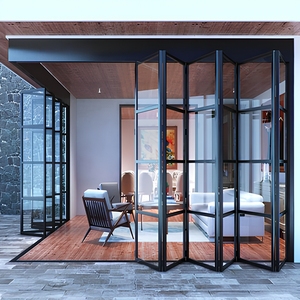
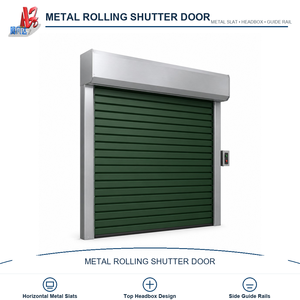
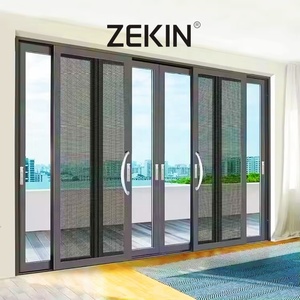
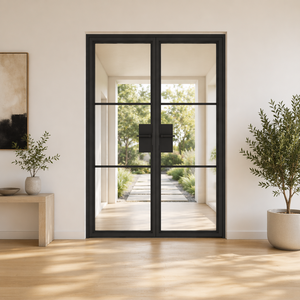
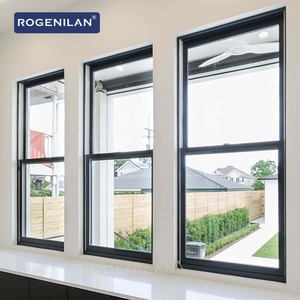
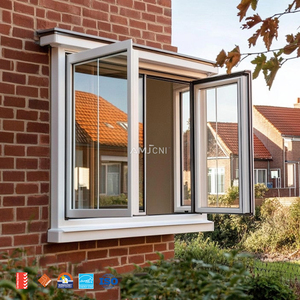
For international project developers and import distributors operating across the European Economic Area (EEA), United Kingdom, North America, and Australia, verified compliance with statutory building regulations is non-negotiable. CE marking under EN 14351-1 (Windows and Doorsets Product Standard) guarantees that an aluminum fenestration system has undergone rigorous Factory Production Control (FPC) and Initial Type Testing (ITT) by accredited third-party notified bodies.
Doorreme’s CE-certified Crittall-style aluminum series incorporates low-emissivity (Low-E) insulated glass units (IGUs) sealed with structural silicone and warm-edge spacer bars. Unlike traditional steel frames that permit thermal transfer through direct metal contact, our engineered aluminum profiles utilize a 24mm to 34mm PA66GF25 polyamide thermal break strip. This reduces thermal conductivity by over 70%, enabling full compliance with strict European EPBD (Energy Performance of Buildings Directive) mandates.
Information Gain Fact: Traditional steel Crittall profiles possess a thermal conductivity ($\lambda$) of approximately $50 \text{ W/m}\cdot\text{K}$. Doorreme’s thermal-break aluminum profile system, combined with argon-gas-filled Low-E double glazing ($5\text{mm} + 16\text{Ar} + 5\text{mm}$), achieves an overall system U-value ($U_w$) as low as $1.1 \text{ W/m}^2\cdot\text{K}$, drastically reducing building HVAC energy demand.
| Performance Benchmark | Modern Aluminium Crittall (Doorreme) | Legacy W20 / W40 Steel Crittall | Engineering Impact & Advantage |
|---|---|---|---|
| CE Compliance Standard | EN 14351-1 / EN 1279 Certified | Variable / Often Exempt Heritage Only | Full regulatory sign-off for new commercial builds |
| Thermal Transmittance ($U_w$) | $1.1 - 1.4 \text{ W/m}^2\text{K}$ (PA66 Thermal Break) | $3.0 - 5.2 \text{ W/m}^2\text{K}$ (Cold Bridging) | Up to 65% improvement in thermal efficiency |
| Structural Weight / Dead Load | $2.70 \text{ g/cm}^3$ (High-tensile 6063-T6) | $7.85 \text{ g/cm}^3$ (Dense Carbon Steel) | 65% weight reduction; lower hardware strain |
| Corrosion & Finish Quality | Qualicoat Class 2 Powder / PVDF Coatings | Prone to rust at weld joints over time | Zero structural rust in coastal/high-salt zones |
| Air / Water / Wind Resistance | Class 4 Air / Class 9A Water / Class C5 Wind | Basic Gasket / Draft Sealing Limitations | Superior weatherproofing under hurricane conditions |
| Total Cost of Ownership (TCO) | Economical initial cost; zero maintenance | High initial fabrication & ongoing paint upkeep | 35-50% overall project budget optimization |
The B2B fenestration supply chain is undergoing profound structural evolution. Procurement directors for multi-family residential towers, luxury hospitality projects, and commercial hubs are no longer selecting suppliers based on unit price alone. The next decade of international project sourcing is defined by three primary vectors:
Global green building standards (LEED v4.1, BREEAM, EDGE) require suppliers to provide verified Environmental Product Declarations (EPDs). Primary aluminum sourced using low-carbon hydropower, coupled with 100% recyclable extrusion alloys, will become a mandatory prerequisite in international tenders to minimize embodied carbon footprints.
Contractors are abandoning manual CAD approvals in favor of digital twin integration. Forward-thinking suppliers must deliver native BIM (Revit/IFC) objects containing full geometric parameters, wind load tolerance values, thermal conductivity attributes, and CE certification metadata for seamless virtual design and construction.
Escalating climatic volatility has pushed demand toward high-performance hurricane impact glass (PVB/SGP laminated layers) combined with heavy-duty 1.6mm–2.0mm aluminum profiles certified under AS2047 and NFRC testing. Coastal regions demand PVDF (Fluorocarbon) finishes capable of withstanding 3,000+ hours of continuous salt spray exposure.
Achieving the iconic authentic Crittall style in extruded aluminum requires precise micro-engineering. Historical aluminum profiles were criticized for thick, clumsy frames that destroyed the delicate visual rhythm of classic steel glazing. Doorreme’s engineering division solved this architectural challenge through high-precision profile design:
1. Ultra-Narrow Sightlines: By leveraging high-yield-strength 6063-T6 aluminum alloys, Doorreme engineered ultra-slim frame depth profiles with exterior sightlines as minimal as 30mm. This delivers maximum daylight penetration while retaining structural rigidity capable of carrying 10mm+ double-laminated toughened glass panes.
2. Applied vs. Structural Glazing Bars (Astragal Bars): To replicate authentic multi-lite grid patterns without compromising thermal insulation or structural glass integrity, Doorreme utilizes precision CNC-machined internal aluminum astragal bars coupled with dummy spacer bars inside the IGU. This creates the optical illusion of individual small glass panes while maintaining a continuous thermal cavity.
3. Architectural Coating Technologies: Authenticity extends to surface texture. Our specialized architectural powder coating lines apply fine-textured matte black, bronze, and anthracite grey finishes conforming to Qualicoat Class 2 specifications. These coatings provide superior UV stability, zero chalking, and scratch-resistant tactile qualities that mirror traditional hand-forged steel.
Founded in 2004 and situated in Foshan, China’s industrial capital for aluminum processing, Doorreme Aluminum Industry Co., Ltd. operates as an integrated manufacturing powerhouse serving developers, general contractors, and wholesalers in over 140 countries.
Equipped with imported German Elumatec 5-axis CNC machining centers, automated double-head cutting saws, and robotic corner-crimping equipment. Our massive footprint guarantees rapid order turnover and consistent geometric tolerances within $\pm 0.5\text{mm}$.
Over 800 staff, including a dedicated R&D technical team. We provide complete shop-drawing creation, wind load pressure calculation reports, finite element structural analysis, and customized profile extrusion design tailored to project specification sheets.
From high-rise commercial facades in Manila to luxury seaside hotel developments in Dominica and transit infrastructure projects in Guangzhou, Doorreme possesses verified experience navigating complex international shipping, sea-freight packing, and local building code compliance.
Send your architectural elevation drawings, window schedules, or opening dimensions to our senior engineering desk today.
 English