 English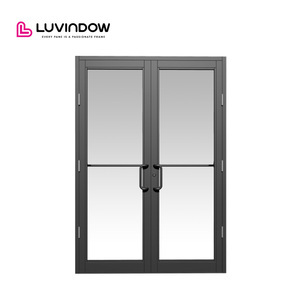
Factory-engineered aluminum entrance doors, double glazed swing doors, and custom architectural glass facades engineered for global compliance.
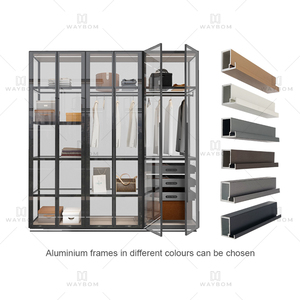
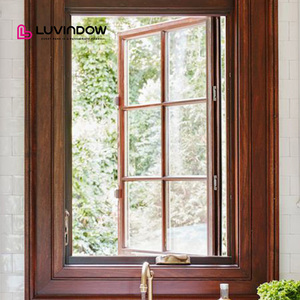
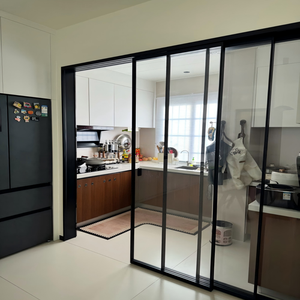
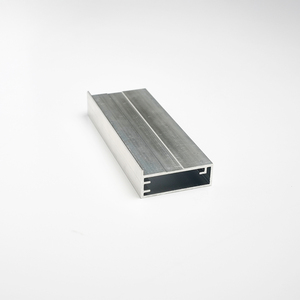
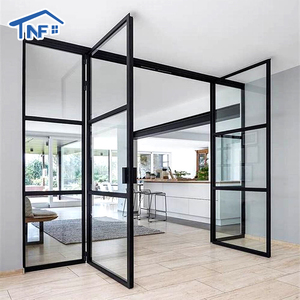
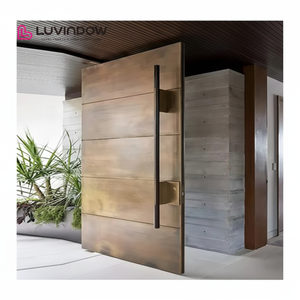
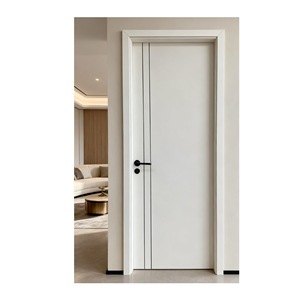
In contemporary commercial fenestration and high-performance residential design, selecting an authentic CE Certified Aluminum Double Swing Door Supplier is a foundational requirement for structural integrity, life safety, energy compliance, and long-term operating efficiency. Double swing doors—frequently specified as heavy-duty entry storefronts, main vestibules, double French doors, or emergency egress portals—are subject to complex dynamic mechanical loads, severe atmospheric exposure, and rigorous municipal building codes across the European Union, North America, and global markets.
Achieving compliance with European Standard EN 14351-1 (Windows and doors - Product standard, performance characteristics) demands far more than basic structural assembly. It dictates that every aluminum profile alloy formulation, thermal break barrier, glazing infill unit, weather-stripping gasket, and multi-point locking mechanism operates in precise mechanical harmony under maximum environmental stress.
An industrial-grade aluminum double swing door relies on precision-extruded 6063-T6 or 6060-T6 architectural grade aluminum profiles. Structural frame wall thicknesses typically range from 2.0mm to 3.0mm for heavy commercial storefront applications, ensuring deflection limits remain well within $L/175$ or $L/250$ span requirements under high wind load pressure.
To meet stringent green building codes (such as NFRC, LEED v4, and EU EPBD directives), premium aluminum swing doors incorporate structural thermal break barriers constructed from 24mm to 34mm Polyamide PA66 reinforced with 25% glass fiber (PA66-GF25). This material matches the thermal expansion coefficient of aluminum, preventing mechanical shear stress failure across extreme seasonal ambient temperature differentials ranging from $-30^\circ\text{C}$ winter freezes to $+70^\circ\text{C}$ direct summer solar radiation on dark powder-coated surfaces.
Double swing door assemblies engineered by leading export suppliers incorporate dual or triple-pane insulated glass units (IGU) ranging from 28mm to 44mm overall thickness. Recommended glass configurations include:
Below is an architectural matrix comparing typical commercial double swing doors manufactured to CE standards versus non-certified entry options:
| Engineering Attribute | CE Certified Double Swing System | Standard Non-Thermal Commercial Swing Door |
|---|---|---|
| Applicable Standard | EN 14351-1 / EN 12207 / EN 12208 / EN 12210 | Uncertified / Basic GB Standards |
| Aluminum Profile Alloy | 6063-T6 High-Precision Extrusion (2.0mm–3.0mm) | 6063-T5 Recycled Grade (1.2mm–1.4mm) |
| Thermal Barrier | PA66-GF25 Polyamide Strut (24mm to 34mm) | None (Solid Aluminum Conductive Bridge) |
| Air Permeability | Class 4 (Under 600 Pa test pressure) | Class 1 – Class 2 (High air leakage) |
| Water Tightness | Class 9A / E900 (900 Pa continuous water spray) | Class 3A (300 Pa under wind-driven rain) |
| Hardware Specification | German Roto/Siegenia SS304 Heavy-Duty 3D Hinges | Standard zinc-alloy offset friction pivots |
| Finish Coating | AkzoNobel PVDF (AAMA 2605) / 25-Year Warranty | Standard indoor powder coat (Fades within 3–5 yrs) |
How global environmental directives, smart automation, and low-carbon aluminum manufacturing are reshaping fenestration sourcing for international buyers.
With the implementation of the EU Carbon Border Adjustment Mechanism (CBAM), tier-1 procurement managers prioritize suppliers utilizing low-carbon primary aluminum smelted via hydropower. Green aluminum profiles with verified Environmental Product Declarations (EPD) reduce embodied carbon metrics by up to 65% across commercial project lifecycles.
Future double swing doors are no longer purely mechanical barriers. Procurement specifications increasingly require hidden motorized actuators, concealed electromagnetic locking bolts, biometrics, facial recognition integration, and automatic drop-down bottom seals that sync directly with central Building Management Systems (BMS).
The market demand for maximum daylight ingress has pushed engineering boundaries toward narrow profile frames with visible face widths under 45mm. Modern aluminum double swing doors combine ultra-slim profiles with heavy structural glass bonding (using structural silicone sealant) to support leaf weights exceeding 250kg per door panel.
Leading global architects now mandate native Autodesk Revit family files (.rfa) and Building Information Modeling (BIM) data from suppliers during the schematic design phase. Reputable manufacturers provide pre-configured structural performance metrics, thermal data, and hardware opening collision testing in digital format prior to factory fabrication.
Combining Foshan’s complete industrial supply chain with international quality management systems since 2004.
Operating out of Shishan Town, Foshan—China's capital of aluminum extrusion—our facility houses automated CNC machining centers, precision corner-crimping stations, and dust-free insulated glass assembly lines.
Our window, door, and curtain wall products strictly adhere to CE (EN 14351-1), NFRC energy ratings, CSA certification benchmarks, and ISO 9001:2015 quality management standards.
Supported by over 50 dedicated facade engineers, structural calculation experts, and international project managers who provide 1-on-1 drawing review and technical guidance.
From luxury residential developments in North America to commercial towers, transit centers, and resorts in Bolivia, Gambia, the Philippines, and Dominica, our products deliver proven durability across all climatic zones.
Clear engineering answers regarding thermal breaks, hardware customization, logistics, and compliance testing.
To verify authentic CE compliance under EN 14351-1, a manufacturer must provide a valid Declaration of Performance (DoP) issued by an accredited European Notified Body. This document details tested performance classes for air permeability (EN 12207), water tightness (EN 12208), wind load resistance (EN 12210), thermal transmittance ($U_d$ value), load-bearing capacity of safety devices, and acoustic performance ($R_w$). Doorreme provides full test reports and factory production control (FPC) documentation for all custom orders.
Non-thermal aluminum profiles have a thermal conductivity value ($k$) of approximately $160 \text{ W/m}\cdot\text{K}$, causing rapid thermal transfer and interior condensation. In contrast, thermal break swing doors featuring PA66-GF25 polyamide barrier strips reduce profile thermal conductivity to under $3.0 \text{ W/m}\cdot\text{K}$. When combined with Low-E double glazing, the overall door assembly $U_d$ value drops from $\sim 3.8 \text{ W/m}^2\text{K}$ down to $\le 1.3 \text{ W/m}^2\text{K}$, helping projects achieve ENERGY STAR and Passive House compliance standards.
Yes. 100% of our production is custom-engineered to order. Clients submit structural opening dimensions, shop drawings, or architectural elevations. Our technical department prepares detailed 2D/3D fabrication drawings specifying profile extrusions, glass build-ups, hinge placement, drop seal details, and threshold options. Production commences only after final customer sign-off on technical drawings.
We partner with world-leading hardware manufacturers including German Roto, Siegenia, GU, and Hoppe, as well as premium tier-1 Chinese hardware brands (KSS, Kin Long). Available configurations include multi-point hook locks, anti-panic exit bars (panic hardware compliant with EN 1125), heavy-duty 3D adjustable concealed or flag hinges capable of supporting 200kg+ door leaves, magnetic card readers, electric strikes, and automatic floor springs.
For coastal installations exposed to salt spray and high atmospheric moisture, we recommend Fluorocarbon (PVDF) coating meeting the AAMA 2605 specification. PVDF finishes utilize 70% Kynar 500® resin to resist chalking, UV degradation, and chemical corrosion with a 20-to-25-year warranty. Alternatively, high-micron anodized finishes (Class 1, minimum 18–25 microns) provide excellent scratch resistance and metallic aesthetic appeal.
Export packaging is engineered for extreme ocean freight conditions. Door leaves and frames are individually wrapped in 5-layer protective PE film, edge-protected with dense foam guards, and encased inside custom-built non-fumigation plywood crates. Glazed units are secured with steel banding and desiccant packs to prevent condensation staining during multi-week container shipping.
Standard fabrication lead time is 25 to 35 days following drawing approval and deposit receipt. For complex custom extruded profiles or specialized PVDF color matching, lead times average 35 to 45 days. We accommodate flexible procurement requirements—from small high-end residential orders to large multi-container commercial project contracts.
Contact Doorreme’s engineering consulting team today. Receive comprehensive technical proposals, U-value estimations, wind load calculations, and factory-direct pricing within 24 hours.