Factory-direct engineered aluminum systems tested to international standards for weather resilience, thermal breaks, and structural durability.
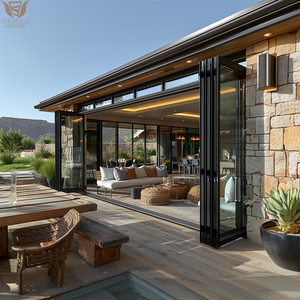
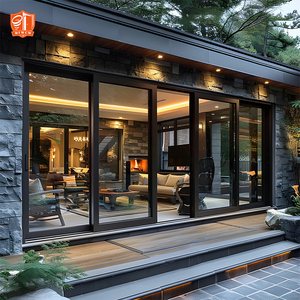
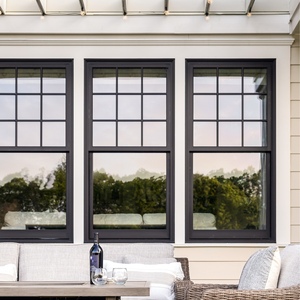
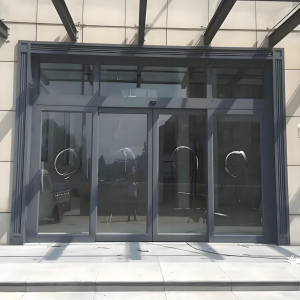
Lanai doors—specifically multi-panel heavy-duty sliding, lift-and-slide, and bi-fold aluminum systems—have evolved from luxury architectural features to essential structural elements in high-end residential, commercial resort, and multi-family developments globally. Serving as the primary dynamic threshold between conditioned interior living spaces and semi-enclosed exterior verandas or lanais, these door systems are subject to stringent mechanical, thermal, and weather-proofing mandates.
For international procurement directors, general contractors, and structural engineers, sourcing **CE-certified aluminum lanai doors** from premier manufacturing hubs (such as Foshan, China) represents an optimal convergence of structural performance, cost efficiency, and design flexibility. The CE mark (Conformité Européenne) is not merely a regulatory requirement for European Union entry under the Construction Products Regulation (CPR 305/2011); it serves as a universal benchmark for mechanical stability, safety, thermal resistance, and environmental sustainability recognized across North America, the Middle East, Australia, and Southeast Asia.
"Technical compliance in architectural glazing requires more than aesthetic execution. CE EN 14351-1 certification mandates rigorous empirical testing for air permeability, water tightness under driving rain, structural resistance to hurricane-force wind loads, and long-term thermal transmittance optimization."
To guarantee that aluminum lanai doors perform reliably when exposed to severe coastal winds, sudden storm surges, and intense thermal fluctuations, tier-1 manufacturing facilities subject their profile assemblies, glass units, and weather seals to rigorous laboratory testing. Harmonized standard **EN 14351-1** governs windows and external pedestrian doorsets without fire resistance or smoke leakage characteristics. Below are the primary empirical parameters required for full certification:
Measures atmospheric leakage across sash seals under positive and negative pressures. Class 4 ratings (tested up to 600 Pa) ensure maximum HVAC energy conservation for conditioned lanais.
Evaluates resistance to liquid penetration during continuous water spray combined with rising pressure differentials. Ratings up to Class E900 (900 Pa) prevent indoor moisture intrusion during extreme typhoons.
Measures structural bending under high wind pressures. Class C5/B5 certification ensures structural safety for large-span glass panels exceeding 3.5 meters in height.
Calculates total frame and glazing heat transfer (U-factor). Polyamide thermal breaks (PA66 GF25) lower U-values to ≤ 1.4 W/m²K, optimizing green building performance.
When requesting quotes or specifying raw material schedules for commercial projects, architectural specifiers must evaluate the exact metal composition, glass build-up, and hardware load capacities. Below is the structural baseline maintained by certified Foshan export manufacturers:
| Specification Category | Commercial Heavy-Duty Lift & Slide | Exterior Thermal Break Bi-Fold | Slimline Panoramic Sliding System |
|---|---|---|---|
| Aluminum Alloy Profile | 6063-T6 Architectural Grade (2.0mm - 3.0mm wall) | 6063-T5 High Tensile (1.8mm - 2.2mm wall) | 6063-T6 Precision Extrusion (2.0mm - 3.5mm wall) |
| Thermal Barrier Strip | 24mm - 34mm Polyamide PA66 GF25 Reinforced | 14.8mm - 20mm Polyamide PA66 GF25 Strip | Multi-Cavity Insulated Thermal Insert Structure |
| Glass Configuration | 6mm Low-E + 16Ar + 6mm Tempered (Argon Gas Fill) | 5mm Clear + 12A + 5mm Double Tempered Insulated | 8mm Low-E + 1.52PVB + 8mm Laminated Tempered |
| Hardware Systems | German Roto / SIEGENIA / Hoppe Heavy Rollers | CMECH / Sobinco Multi-point Locking Gear | Stainless Steel Concealed Bottom Track Wheels |
| Panel Load Capacity | Up to 400 kg per sash panel | Up to 150 kg per sash panel | Up to 500 kg per sash panel |
| Surface Finishing | Qualicoat Powder Coating / AkzoNobel PVDF | Anodized 15-25μm / Wood Grain Transfer | Fluorocarbon 3-Coat Coastal Weather Finish |
As international architectural preferences pivot toward seamless indoor-outdoor integration and net-zero operational carbon, the global supply chain for aluminum doors is undergoing rapid technical evolution. B2B buyers must align their multi-year procurement plans with these core market shifts:
Modern villa developments prioritize unhindered ocean and landscape views. The market is shifting from conventional 50mm vertical interlocks toward structural glass-supported profiles with 16mm to 22mm vertical sightlines, requiring high-modulus structural silicone bonding.
Universal design and accessibility standards (ADA compliance) demand barrier-free transition tracks between living areas and outdoor lanais. Advanced sub-floor concealed drainage channels with integrated stainless steel grates prevent rain blowback without creating trip hazards.
Commercial resort projects and luxury residences increasingly demand smart motorized actuators. CE-compliant doors now incorporate brushless DC motors, obstacle-detection pinch sensors, and direct integration with Crestron, Control4, or Building Management Systems (BMS).
With extreme weather events increasing in frequency, coastal developments require missile-impact resistance (SGP interlayer laminated glass). Sourcing managers are bundling CE standards with Florida Building Code (FBC) and High-Velocity Hurricane Zone (HVHZ) compliance test data.
Navigating Asian manufacturing centers requires structured supplier qualification frameworks. Importers, wholesalers, and general contractors should systematically verify three crucial manufacturing capabilities prior to contract execution:
Ensure the supplier controls profile extrusion, anodizing, and automated polyamide thermal strip insertion in-house rather than outsourcing, guaranteeing uniform structural integrity and lead-time stability.
Demand documented IQC (Incoming Material QC), IPQC (In-Process Assembly Checks), FQC (Full Mock-up Pre-assembly Testing), and OQC (Export Protective Packaging Verification).
Top-tier factories employ specialized fenestration engineers capable of providing wind-load calculation reports, shop-ready AutoCAD elevations, and Revit BIM models for project submittals.
Founded in 2004 and headquartered in Foshan, China’s industrial epicenter for architectural aluminum, **Doorreme Aluminum Industry Co., Ltd.** operates a state-of-the-art 123,000 m² manufacturing plant equipped with imported German CNC machining centers, automated glass insulating lines, and precision profile corner crimping technology.
With a global export footprint spanning more than 140 countries across the Americas, Middle East, Australia, and Europe, Doorreme delivers complete fenestration solutions engineered strictly to international building codes. From single modern villa packages to multi-thousand square meter commercial hotel facades, our team of 800+ dedicated professionals enforces an uncompromising quality philosophy: *“Better Service, More Value.”*
Custom aluminum windows, heavy bi-fold doors, narrow-frame sliding doors, unitized curtain walls, glass skylights, and architectural glass railings.
Full technical proposal development, wind pressure structural modeling, custom extrusion dye creation, and pre-shipment trial assembly.
Strategic partnerships with world-renowned hardware manufacturers including German Roto, SIEGENIA, and premium heavy-duty Chinese brands.
Clear answers to key questions asked by overseas contractors, architects, and sourcing directors.
 English