Explore our factory-direct selection of high-performance aluminium double glazed door assemblies engineered for residential luxury, extreme structural wind-load tolerance, and strict energy efficiency codes worldwide.
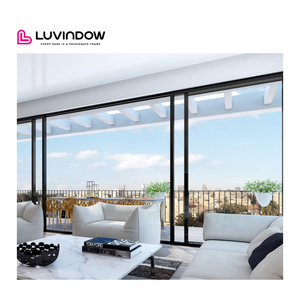
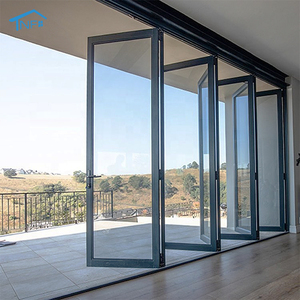
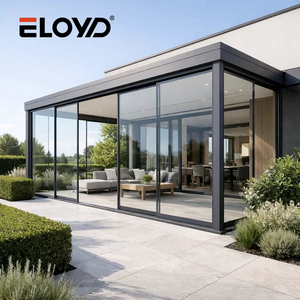
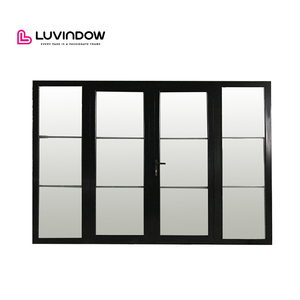
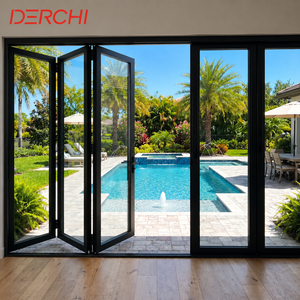
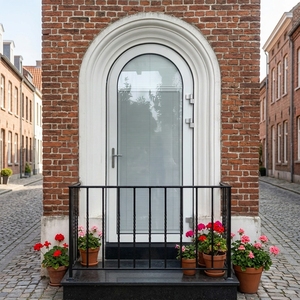
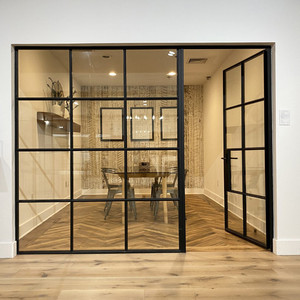
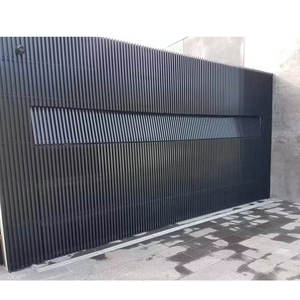
The global architectural fenestration market has undergone a paradigm shift. Modern commercial and residential developments no longer view exterior doors merely as static building envelope closures, but as primary vectors for thermal dynamics management, acoustic isolation, structural resilience, and embodied carbon reduction. As prime global contractors, real estate developers, and architectural firms navigate stringent building energy standards—such as North America’s NFRC/AAMA codes, Australia’s AS2047, and Europe’s EN 14351-1—sourcing high-caliber fenestration from China’s premier manufacturing hubs has become a strategic baseline.
Headquartered in Foshan, Guangdong—the world’s most sophisticated aluminum profile extrusion and hardware manufacturing cluster—our state-of-the-art facility spans over 123,000 square meters. Operating continuously since 2004, we combine European precision engineering with scalable industrial capacity to redefine the standard for Aluminium Double Glazed Doors. This comprehensive technical guide details the material science, structural physics, procurement frameworks, and macro-industry trajectories defining top-tier Chinese manufacturing.
The core integrity of an architectural glass door resides in its extruded aluminum framing. Standard commercial alloys often suffer from structural deflection under extreme wind loads or thermal stress. Top-tier Chinese manufacturers utilize 6063-T5 or 6060-T66 grade architectural aluminum extrusions featuring precise wall thicknesses ranging from 1.6mm to 3.0mm depending on height load matrices.
To achieve exceptional thermal resistance, profile geometry must break the intrinsic thermal conductivity of aluminum (k ≈ 200 W/m·K). We integrate imported Polyamide PA66GF25 (25% glass fiber reinforced) structural thermal barrier strips. These multi-chambered thermal breaks decouple the exterior profile from the interior frame, effectively reducing overall frame U-values ($U_f$) down to **1.2 – 1.6 W/m²K**.
Engineered internal ribbing structures optimize moment of inertia ($I_x, I_y$), providing maximum deflection resistance under hurricane-force wind loads up to 5000 Pa.
Architectural-grade AkzoNobel fluorocarbon (PVDF) 3-coat spraying and custom anodizing offer extreme salt-spray resistance exceeding 3,000 hours (ASTM B117 compliance).
Fully integrated European-standard drive gear mechanisms (German Roto / Hoppe / CMECH) deliver superior anti-burglary security and effortless operation for heavy sash loads up to 400kg.
The double glazing assembly accounts for over 80% of a door’s surface area and governs the thermal transfer rate ($U_g$) and Sound Transmission Class (STC). High-end Chinese manufacturing facilities utilize automated IG production lines equipped with robotically sealed secondary structural silicone.
A standard high-performance configuration comprises 5mm Fully Tempered Low-E Glass + 12A/20A Warm Edge Gas-Filled Cavity + 5mm Fully Tempered Clear Glass.
| Glazing Profile Configuration | U-Value ($W/m^2K$) | SHGC (Solar Heat Gain) | STC Acoustic Rating | Primary Application Context |
|---|---|---|---|---|
| 5mm Clear + 12A + 5mm Clear (Standard IG) | 2.7 - 2.9 | 0.68 | 32 dB | Standard residential inland builds |
| 5mm Low-E + 16Ar + 5mm Clear (Argon Filled) | 1.4 - 1.6 | 0.38 | 36 dB | Commercial energy-certified developments |
| 6mm Low-E + 20Ar + 6mm Clear (Warm Edge TPS) | 1.1 - 1.3 | 0.32 | 38 dB | Luxury villas, high-rise luxury apartments |
| 6mm Low-E + 16Ar + 6.76PVB Laminated (Impact) | 1.2 - 1.4 | 0.30 | 42 - 45 dB | Hurricane zones (Florida HVHZ) & soundproof hotels |
A factory’s capacity to consistently deliver custom fenestration packages without lead-time slip or dimensional variance requires sophisticated enterprise infrastructure. Operating from our 123,000 m² industrial facility staffed by over 800 skilled technicians and fenestration engineers, we adhere to a zero-defect manufacturing methodology.
Custom extrusion profiles undergo 5-axis CNC milling, drilling, and corner crimping. Automated dual-component corner sealant injection ensures complete hermetic sealing and structural rigidity, preventing corner joint cracking during ocean transport or long-term structural settling.
Every production batch undergoes raw material spectral analysis, coating thickness testing (Elcometer), air/water/wind pressure chamber testing (ASTM E283, E330, E331), and a 100% pre-shipment dry assembly test to verify precise tolerance matching against CAD shop drawings.
As commercial real estate stakeholders focus on life-cycle cost analysis and decarbonization, procurement managers must align with technological trajectories. Key procurement trends shaping the 2025–2030 fenestration landscape include:
Architectural preference has moved firmly toward minimal frame visibility. Modern motorized lift-and-slide doors now integrate interlock sightlines as thin as 21mm while carrying massive 12m² glass panels, requiring structural steel-reinforced interlock stiles.
Driven by EU CBAM (Carbon Border Adjustment Mechanism) and LEED v4.1 certifications, top Chinese factories are adopting hydro-powered aluminum extrusions with over 75% post-consumer recycled content, drastically scaling down carbon footprints.
Integration of brushless DC motor drives, concealed magnetic locks, rain sensors, and smart home protocol compatibility (KNX, Zigbee, Matter) is rapidly shifting from optional luxury to standard specification in high-end projects.
Detailed responses prepared by our senior fenestration engineering team to assist international buyers, architectural specifiers, and procurement officers.
Have architectural elevation drawings, window schedules, or custom project specifications? Connect directly with our engineering team for detailed technical proposals and factory-direct pricing.
Inquire Now English