Explore our factory-engineered range of aluminum, aluminum-clad, thermal break, and fiberglass structural fenestration systems manufactured to exceed international structural and thermal building codes.
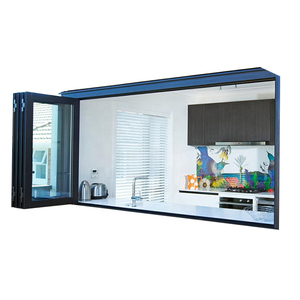
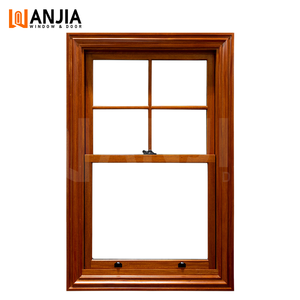
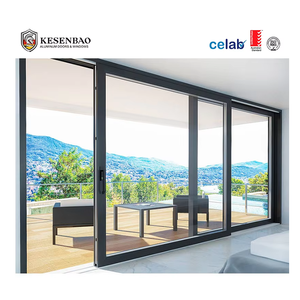
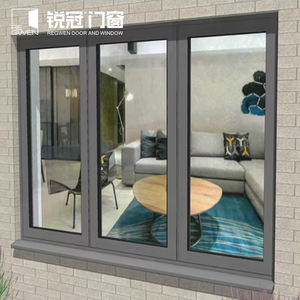
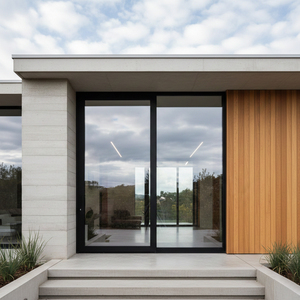
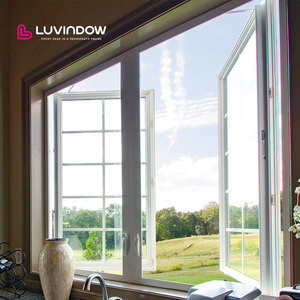
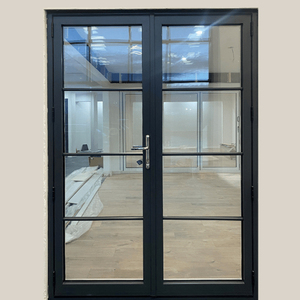
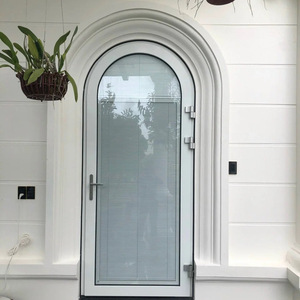
In modern architectural engineering, the envelope of high-rise commercial structures, coastal villas, and sustainable residential developments requires fenestration materials that successfully bridge the gap between structural rigidity, low thermal conductivity, and extreme weather resilience. As a premier China Best Aluminium Fiber Door Manufacturer & Factory, Doorreme Aluminum Industry Co., Ltd. (operating from Foshan, Guangdong—the world's hub for structural aluminum manufacturing) leads the technical shift toward aluminum-fiberglass hybrid profile engineering.
Traditionally, architectural specifiers were forced to compromise: standard aluminum alloy extrusions (such as 6063-T5 or 6060-T6) offer extraordinary tensile strength, wind pressure resistance, and structural framing capabilities, but present high thermal conductivity. Conversely, fiberglass (pultruded glass fiber reinforced polymer - GFRP) delivers superior linear thermal coefficient matching and immunity to coastal saline corrosion, but lacks the mechanical extrusion versatility required for intricate multi-track sliding hardware and multi-point locking channels.
Doorreme’s 123,000 square meter industrial complex integrates automated European extruders, dual-component thermal crimping lines, and precision double-glazing lines. This comprehensive infrastructure ensures that architects, general contractors, real estate developers, and international importers receive fully tested fenestration systems certified against global benchmarks including Australian AS2047, North American NFRC/CSA, and European CE standards.
Selecting a manufacturing partner in China demands transparency across engineering workflows, material verification, and production scalability. Established in 2004, Doorreme has spent over two decades optimizing every stage of custom door and window production.
Our in-house structural engineering department converts architect elevations into precise CAD production shop drawings, wind load calculations, and BIM models prior to metal cutting, ensuring zero site-fitting errors.
Every batch of thermal break aluminum and fiberglass composite profiles undergoes air infiltration (ASTM E283), water penetration (ASTM E331), and structural wind pressure (ASTM E330) validation prior to crating.
We utilize custom steel-framed pallet packing, moisture barrier film wrapping, and fully insured sea freight containerization to protect powder-coated and anodized surfaces during ocean transport.
Commercial procurement requires objective structural comparison. The matrix below outlines how Aluminum-Fiberglass Composite Door Systems compare against legacy building materials under rigorous mechanical and thermal environmental stress testing.
| Performance Metric | Aluminum-Fiberglass Hybrid | Standard Thermal Break Aluminum | uPVC / Vinyl Profiles | Solid Timber Clad |
|---|---|---|---|---|
| Thermal Conductivity (U-Factor) | 0.8 - 1.2 W/m²K (Ultra Low) | 1.4 - 2.0 W/m²K (Medium) | 1.3 - 1.8 W/m²K (Low) | 1.2 - 1.6 W/m²K (Medium-Low) |
| Structural Wind Load (Pa) | > 5500 Pa (Extreme Typhoon) | 4500 - 5000 Pa (High) | 1800 - 2500 Pa (Low-Medium) | 3000 - 3500 Pa (Medium) |
| Saline / Coastal Corrosion Resistance | Grade A (Fluorocarbon PVDF + GFRP) | Grade B+ (Requires PVDF Coating) | Grade A (Non-metallic surface) | Grade C (Requires recurring sealing) |
| Thermal Expansion (mm/m°C) | 0.010 (Matches Float Glass) | 0.023 (Requires expansion joints) | 0.070 (High deformation risk) | 0.005 (Hygroscopic swelling risk) |
| Frame Depth & Sightline Profile | Ultra-Slim (Narrow 25mm-50mm) | Slim to Standard (50mm-75mm) | Bulky / Wide (70mm-110mm) | Heavy / Deep Frame (> 90mm) |
| Hardware Integration Compatibility | German Roto / SIEGENIA / Custom CNC | Multi-Point European Groove | Limited Surface Fastening | Mortise Heavy Hinges |
As global energy codes become more stringent (such as Europe's EPBD directives, America's ASHRAE 90.1, and Australia's NCC Section J), commercial developers and residential homebuilders can no longer rely on conventional window and door profiles. When sourcing from China, professional buyers are concentrating on three core procurement vectors:
Building envelopes account for over 35% of HVAC thermal loss. Future procurement prioritizes structural doors utilizing triple-pane Low-E insulated glass units (IGUs) filled with 90% Argon gas, separated by warm-edge stainless steel/composite spacers. Combining these glass specifications with aluminum-fiber composite structural breaks effectively eliminates thermal bridging, enabling projects to achieve Passive House (PHI) compliance without sacrificial frame thickness.
Architectural aesthetics demand seamless integration between interior living space and outdoor environments. Large-format lift-and-slide doors, hidden-frame pocket sliders, and heavy-duty stacker doors require high structural inertia. Because fiberglass composite stiffeners significantly increase profile modulus without adding bulky visual mass, factories can manufacture single panel heights exceeding 3.8 meters while maintaining glass frame deflection standards.
On-site labor costs across North America, Europe, and Australia have increased significantly. International B2B buyers are shifting from knock-down (KD) field assembly toward factory-glazed, fully unitized fenestration assemblies. Doorreme provides complete factory pre-assembly—including integrated SS304 insect mesh, embedded motorized blinds, and pre-calibrated multi-point hardware locksets—ensuring rapid site drop-in installation.
Understanding why aluminum fiber hybrid doors excel requires examining material physics at the structural interface. The primary driver of door failure in extreme climates—such as thermal bow, panel warping, air leakage, and track binding—is differential thermal expansion between dissimilar materials.
When a dark-colored exterior door profile absorbs direct solar radiation (reaching temperatures up to 80°C), while the interior air-conditioned room remains at 22°C, standard aluminum profiles experience unequal linear expansion across the outer and inner aluminum skins. This phenomenon, known as Thermal Bowing, forces tall door panels to bend, making them difficult to latch or slide smoothly.
By integrating pultruded glass fiber reinforced polymers within the profile core, Doorreme's engineering team stabilizes the extrusion matrix. Fiberglass possesses a coefficient of thermal expansion nearly identical to architectural float glass (approx. 8.5 x 10⁻⁶ /K). As a result, the inner glass panel, composite thermal break, and outer aluminum shield expand at unified rates, completely resolving thermal bow even on 3.5-meter entry doors facing continuous sunlight.
Utilizing AkzoNobel or PPG Kynar 500 PVDF (Polyvinylidene Fluoride) coatings applied via automated electrostatic spray lines, delivering 20+ years of resistance against color fading, chalking, and salt spray exposure.
Multi-chambered profile geometry combined with double-laminated asymmetric glass configurations achieves sound transmission class (STC) ratings up to 45 dB, isolating interior spaces from exterior urban noise.
High-tensile hardware tracks equipped with stainless steel rollers engineered for smooth, silent operation under panel dead loads exceeding 400 kg per panel.
Address key technical, logistical, and customization requirements prior to placing commercial orders with our factory.
Our standardized 4-stage engineering process ensures total accuracy from initial concept sketch to site delivery:
Submit your architectural elevation drawings, window schedules, or rough opening dimensions. Our technical team evaluates wind zone requirements, glass specs, and structural loads.
Receive a comprehensive commercial proposal accompanied by 2D section drawings, showing profile depth, thermal break position, seal locations, and hardware mounting.
Upon signed drawing approval, profiles are cut on automated double-head CNC saws, routed for hardware mortises, crimped with fiberglass breaks, and glazed in clean assembly bays.
Each complete unit is sample-assembled on test racks to confirm lock engagement, squareness, and smooth rolling action before undergoing protective crating and container loading.
Whether you are designing a high-end luxury villa, specifying a commercial hotel expansion, or expanding your building product distribution network, Doorreme provides factory-direct value, uncompromising quality control, and engineering support.
 English