Explore our top-certified export-grade aluminium windows, doors, and facade profiles manufactured in Foshan, China. Built strictly to ASTM, CE, and AS2047 international standards for global residential and commercial projects.
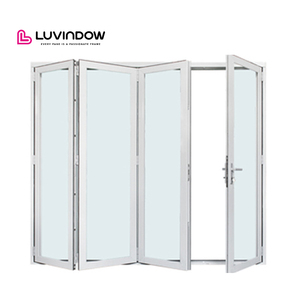
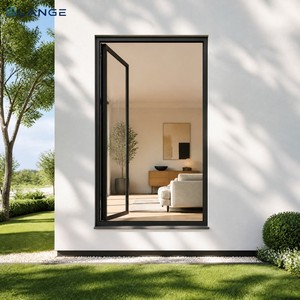
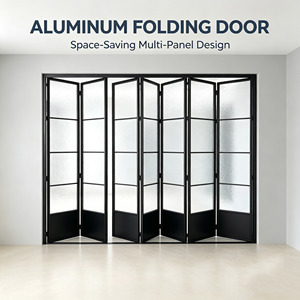
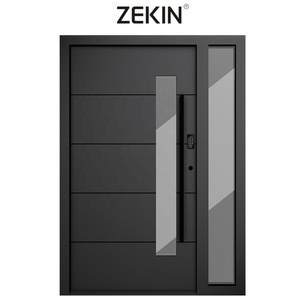
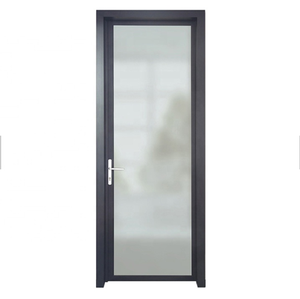
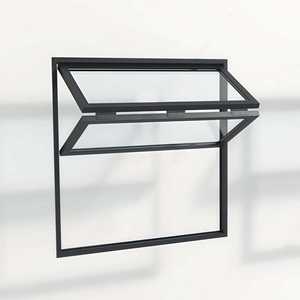
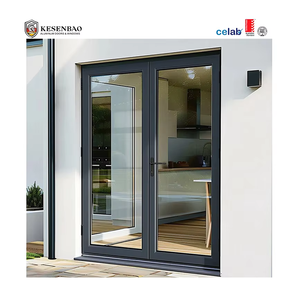
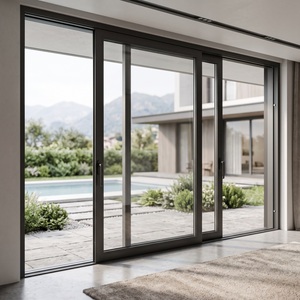
As global building regulations enforce stricter U-factor requirements, sound isolation targets, and wind-load resistances, leading Chinese exporters have transitioned from standard fabrication to high-precision structural fenestration engineering. Understanding profile alloys, thermal break insulation, surface treatment durability, and structural silicone glazing (SSG) is critical for structural architects and commercial B2B procurement managers.
Standard architectural exports utilize 6063-T5 and 6061-T6 aluminium alloys. 6063-T5 offers superior surface finish for anodizing and intricate cross-sectional extrusions, while 6061-T6 provides exceptional tensile strength (minimum 240 MPa) necessary for high-rise unitized curtain walls and heavy-duty sliding panels under severe wind loads.
Thermal bridging is negated using PA66-GF25 (25% Glass Fiber Reinforced Polyamide) barrier strips inserted between inner and outer profile extrusions. This reduces frame thermal conductivity ($K$-value) down to $<1.6\text{ W/m}^2\text{K}$, preventing condensation and reducing HVAC loads in extreme climates.
Exporters offer three main surface protection tiers: Fluorocarbon PVDF (Kynar 500) coating for extreme UV/coastal resistance (20+ year guarantee), Electrostatic Powder Coating (Qualicoat Class 2 standard), and Architectural Anodizing (Grade AA25) preventing oxidation in harsh salt-spray environments.
| Performance Standard | Standard Domestic System | Export-Grade Thermal Break System | Testing & Compliance Certificate |
|---|---|---|---|
| Thermal Transmittance (U-Factor) | 3.5 – 4.2 W/m²K | 1.2 – 1.8 W/m²K | NFRC / ISO 10077-2 / CE EN 14351 |
| Wind Pressure Resistance | 2.0 – 3.0 kPa (P2) | 4.5 – 6.0 kPa (Class 9 / ASTM E330) | ASTM E330 / AS2047 / GB/T 7106 |
| Acoustic Insulation (STC / Rw) | 25 – 30 dB | 40 – 48 dB (with Laminated Low-E IGUs) | ISO 140-3 / ASTM E90 |
| Water Tightness | 300 Pa (Class 5A) | 700 – 1000 Pa (Class E1050) | ASTM E331 / EN 12208 |
| Air Infiltration Rate | 1.5 m³/m·h | < 0.5 m³/m·h (Class 4 / ASTM E283) | ASTM E283 / EN 12207 |
China’s Foshan industrial region represents over 35% of the world’s architectural aluminium extrusions and fabricated fenestration systems. Operating within this world-class cluster, our manufacturing base integrates state-of-the-art European CNC machinery with end-to-end supply chain integration.
Equipped with 18 automated extrusion lines, Italian Emmegi 5-axis CNC machining centers, and automated double-glazing line units. With over 800 skilled technical personnel, we maintain complete oversight from raw ingot casting to final hardware assembly.
Every commercial export order includes structural engineering shop drawings, 3D BIM modeling integration, and FEA (Finite Element Analysis) for wind pressure, thermal stress, and dead-load deflection compliance required by local overseas building authorities.
We integrate German hardware systems including Roto Frank, Siegenia, and Hoppe, as well as top-tier Chinese precision hardware (Kin Long, CMECH). Multi-point locking mechanisms ensure anti-burglary protection up to RC3 European security standards.
Exporting architectural systems requires heavy-duty protection. All units are crated using fumigated solid-wood frames, plastic film shrink-wrapping, corner guards, and nitrogen-cushioned container loading to prevent transit damage.
The international architectural landscape is rapidly transforming under stringent environmental regulations and modern architectural aesthetics. Procurement managers must realign their sourcing strategies with four core macro trends reshaping Chinese aluminium door and frame exports.
With the implementation of the European Union's Carbon Border Adjustment Mechanism (CBAM) and global net-zero mandates, top Chinese exporters are switching to Green Aluminium billet sourced from hydro-powered smelters. Utilizing post-industrial recycled content (PCR) dramatically reduces embedded carbon from $16\text{ kg CO}_2/\text{kg Al}$ down to $< 4.0\text{ kg CO}_2/\text{kg Al}$, ensuring compliance with green building credits (LEED, BREEAM).
Modern luxury residential and commercial architecture demands maximum natural light via minimal structural frames. Modern slim-frame sliding and pivot door designs feature interlock sightlines as narrow as 16mm to 21mm, while embedding the outer aluminium tracks completely into floor finishes to deliver seamless indoor-to-outdoor visual transitions without sacrificing wind-load structural rigidity.
Aluminium frames are increasingly engineered with concealed electrical conduits, smart sensors, and linear actuators. Modern export systems integrate directly with Building Management Systems (BMS), KNX, and smart home ecosystems, allowing automated climate-responsive ventilation, motorized sliding doors capable of moving 800kg glass panels, and electrochromic (smart dynamic tinting) glass integration.
High structural labor costs overseas have driven demand away from stick-built curtain walls toward factory-assembled unitized systems. By fabricating, glazing, and sealing unitized modules inside controlled factory conditions in Foshan, contractors cut job-site installation times by up to 60% while drastically lowering water leakage risks caused by poor field sealing.
Clear, direct responses addressing commercial procurement concerns, quality verification, engineering calculations, and international shipping protocols.
Every order includes structural engineering calculation packets covering wind pressure analysis, thermal transfer coefficients ($U$-values), glass stress analysis according to ASTM E1300, and CAD elevation shop drawings. Upon request, these can be stamped by licensed local structural engineers in specific destination countries.
Production begins strictly after final signed approval of CAD shop drawings. We utilize high-precision 5-axis CNC cutting machinery operating within strict tolerances ($\pm 0.5\text{ mm}$). Additionally, mock-up test assemblies are built in our Foshan workshop to verify opening tolerances, hinge operation, and lock-alignment prior to final packaging.
Anodizing (AA25 standard) converts the aluminium surface into a durable electro-chemical oxide layer, ideal for natural metallic aesthetics. Powder Coating provides a wide palette of RAL colors with strong scratch resistance. PVDF (Fluorocarbon / Kynar 500) is the premium choice for coastal or high-UV tropical regions, offering 20-30 year anti-fading and anti-chalking guarantees against harsh salt mist and sun exposure.
For sound reduction near airports or busy highways, we specify double-laminated insulating glass (e.g., 6mm Low-E + 12A Argon + 5mm + 1.14PVB + 5mm Acoustic Laminated Glass), achieving up to 45+ dB sound attenuation. For extreme climates, triple-pane Low-E insulated glass units (IGUs) filled with 90%+ Argon gas achieve low U-factors down to 0.8 - 1.2 W/m²K.
For custom architectural project orders, our flexible minimum order starts at 50 m² for residential packages and 300 m² for commercial project lines. Production lead times generally range between 25 to 35 business days following CAD drawing approval, with expedited shipping support for urgent commercial development schedules.
We welcome third-party factory audits (SGS, TÜV, Bureau Veritas) and offer live HD video walkthroughs of our 123,000 m² workshop. Physical corner profile samples, glass build-up swatches, and complete hardware sets can be shipped via express air freight for inspection prior to contract signing.
 English