Direct factory supply featuring thermal break technology, hurricane impact protection, and bespoke architectural engineering.
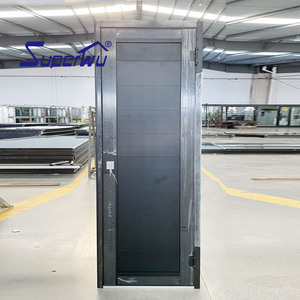
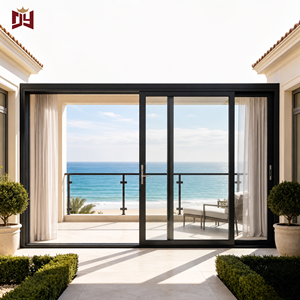
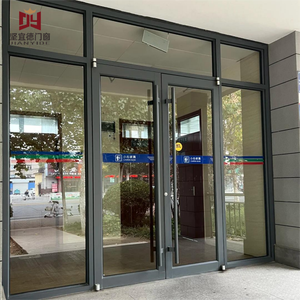
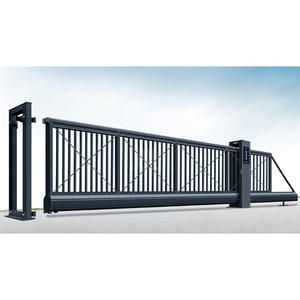
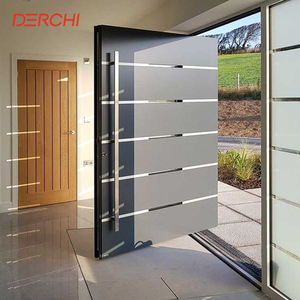
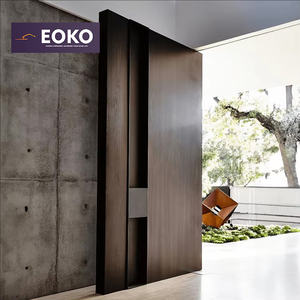
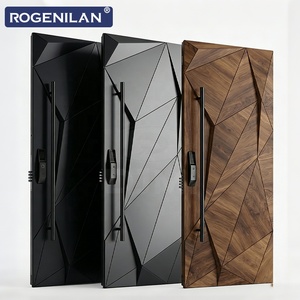
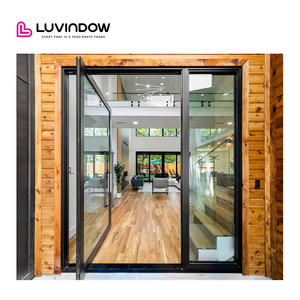
Pioneering High-Precision Aluminium Ke Door Manufacturing & Structural Architectural Systems in Foshan, China.
When global procurement directors, architectural firms, and structural engineers evaluate China Best Aluminium Ke Door Manufacturers & Manufacturer capabilities, technological reliability, structural integrity, and rigorous QA/QC frameworks form the benchmark. Operating from a massive 123,000 m² modern manufacturing hub in Shishan Town, Foshan—the heartland of global aluminum profile extrusion and processing—Doorreme Aluminum Industry Co., Ltd. (founded in 2004) has established itself as an authoritative manufacturer supplying high-specification fenestration systems to over 140 countries and regions worldwide.
An authentic "Ke Door" (often designated in architectural specifications as heavy-duty key structural entrance doors, composite aluminum plate doors, or high-security pivot doors) demands exceptional structural engineering. Unlike standard residential entryways, these doors must endure extreme wind pressures, thermal stress, high-frequency operation in commercial environments, and aggressive atmospheric exposure. Doorreme addresses these demands by combining high-purity 6063-T6/6060-T66 aluminum alloys, advanced polyamide PA66GF25 thermal breaks, precision CNC machining centers, and automated double-component structural silicone sealing.
Doorreme Operational Benchmark: Every aluminium Ke door, sliding system, and architectural curtain wall engineered at our Foshan facility complies strictly with International Standards including ISO9001 quality management, CE marking, North American NFRC/AAMA thermal & air-water performance criteria, and Australian AS2047 fenestration standards.
With an annual production throughput exceeding 500,000 square meters, Doorreme maintains full-chain manufacturing integrity. From raw billet extrusion, anodizing, PVDF fluorocarbon coating, and thermal break strip insertion to multi-axis CNC milling, corner crimping, glass insulating assembly, and multi-stage pressure chamber testing, every step is strictly controlled in-house. This guarantees seamless quality execution for tier-1 commercial developments, high-end residential villas, and public infrastructure projects globally.
Key Macro Shifts Shaping B2B Sourcing, Technical Specifications, and Architectural Integration Through 2030.
The international building envelope and fenestration industry is undergoing a profound structural evolution. Procurement heads, property developers, and structural consultants are moving beyond basic price-per-square-meter comparisons, shifting focus toward dynamic lifetime performance, operational carbon reduction, carbon-neutral supply chains, and advanced smart hardware integration. Understanding these future procurement trends is critical for developers seeking competitive advantage in commercial and luxury residential real estate.
Global energy codes (such as US IECC, EU Energy Performance of Buildings Directive, and Green Star Australia) are enforcing strict $U$-factor thresholds. Sourcing trends favor multi-cavity PA66 polyamide thermal barriers filled with aerogel or polyurethane foam, driving overall system $U$-values down to $\le 0.8 \text{ W/m}^2\text{K}$.
With climate volatility causing higher wind loads and severe storms, demand is surging for TAS 201/202/203 missile-impact rated entrance doors and NFRC-certified cyclone resistance. Aluminium Ke doors featuring heavy-wall profiles (2.5mm–3.0mm structural depth) and laminated PVB/SGP interlayers are now mandatory for coastal zones.
Modern entrance door procurement heavily emphasizes concealed motorization, biometric recognition (facial scan, 3D fingerprint), smart home protocol compatibility (Zigbee, Matter, KNX), and electro-mechanical multi-point locking (e.g., German Siegenia or Roto E-Lock systems).
Architectural preference is shifting toward structural minimalism—floor-to-ceiling pivot entrance doors exceeding 4 meters in height, narrow interlock sightlines ($\le 20\text{mm}$), and hidden frame flush transitions that seamlessly blend interior and exterior living environments.
Leading international developers require suppliers to deliver comprehensive 3D BIM (Building Information Modeling) objects, FEA (Finite Element Analysis) structural calculation reports, and EPD (Environmental Product Declarations) during early-stage procurement stages.
Due to aggressive UV radiation and coastal salt fog exposure, buyers are demanding AAMA 2605 compliant PVDF 3-coat fluorocarbon finishes and anodized coatings ($\ge 25\mu\text{m}$) capable of resisting chalking and color fading for up to 30 years.
How Advanced Metallurgy, Engineering Design, and Automated Fabrication Elevate Structural Door Performance.
The manufacturing technology behind premier Chinese aluminium Ke doors has evolved far beyond standard extrusion cutting and mechanical assembly. Modern engineering requires a refined integration of high-strength structural metallurgy, precision automated processing, thermal thermodynamics, and high-performance hardware acoustics.
Doorreme utilizes primary aluminum billets processed under strict T6 heat treatment conditions. Profile wall thicknesses for heavy-duty commercial entrance doors and high-load pivot doors are calculated via CAD structural software, maintaining key stress-bearing zones at 2.0mm to 3.5mm thickness. This structural geometry prevents frame deflection under cyclic wind pressures of up to $\pm 5000 \text{ Pa}$ (equivalent to Category 5 typhoons).
Uninsulated aluminum profiles are highly conductive ($K \approx 200 \text{ W/m}\cdot\text{K}$). To meet global low-carbon efficiency demands, Doorreme integrates high-grade PA66GF25 (25% fiberglass reinforced polyamide) thermal break strips. By separating the interior and exterior aluminum profiles with multi-cavity thermal barriers and inserting expanding foam strips, heat transfer through radiation and conduction is virtually eliminated.
Doorreme operates fully automated vertical powder coating and fluorocarbon spraying lines. Treatments include:
To minimize urban noise pollution, high-performance aluminium Ke doors incorporate multi-layer EPDM (Ethylene Propylene Diene Monomer) continuous weather-stripping gaskets alongside double or triple insulated glass units (e.g., 6mm Low-E + 12Ar + 6mm Tempered). This configuration achieves acoustic noise attenuation of up to STC 42 dB (Sound Transmission Class), creating quiet, insulated indoor spaces even alongside high-density traffic arterial roads.
Comparative Technical Benchmark across Core Architectural Aluminium Door Categories.
| Door System Category | Wall Thickness | Thermal U-Value Range | Max Wind Load (Pa) | Water Tightness | Acoustic Rating | Ideal Application |
|---|---|---|---|---|---|---|
| Heavy-Duty Architectural Pivot Door | 2.5 mm - 3.5 mm | 1.2 - 1.6 W/m²K | ≥ 4500 Pa | 450 Pa (Class 9A) | STC 38 - 42 dB | Luxury Villa Main Entrance, Hotel Lobbies |
| Thermal Break Lift & Slide Door | 2.0 mm - 2.2 mm | 1.1 - 1.4 W/m²K | ≥ 4000 Pa | 600 Pa (Class E750) | STC 36 - 40 dB | Patios, Penthouse Balconies, Resorts |
| Heavy Commercial Shopfront Entrance | 2.0 mm - 3.0 mm | 1.5 - 2.0 W/m²K | ≥ 3500 Pa | 350 Pa | STC 32 - 36 dB | Retail Malls, Airports, High-Traffic Entrances |
| Hurricane Impact Plate Swing Door | 2.5 mm - 3.0 mm | 1.3 - 1.7 W/m²K | ≥ 5000 Pa (DP70) | 700 Pa | STC 40 - 44 dB | Coastal Zone Structures, High-Security Villas |
| Narrow Frame Exterior Bi-Fold Door | 1.8 mm - 2.0 mm | 1.3 - 1.8 W/m²K | ≥ 3000 Pa | 300 Pa | STC 35 - 38 dB | Event Spaces, Terraces, Residential Patios |
Direct Answers to Technical, Quality Control, and Freight Logistics Queries from International Procurement Professionals.
 English