Precision-extruded 6063-T5/T6 alloy side doors, thermal-break patio access systems, and heavy-duty commercial side-opening configurations certified for global compliance.
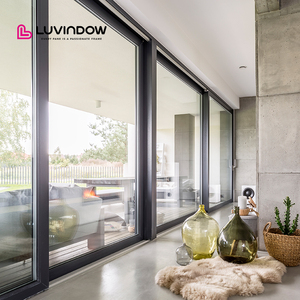
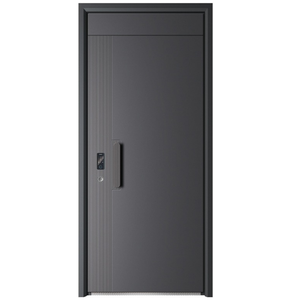
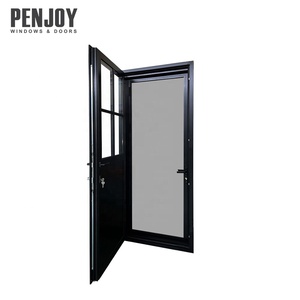
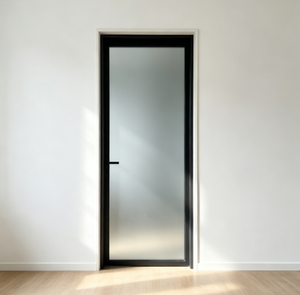
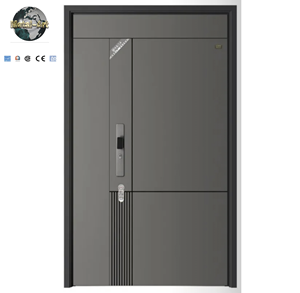
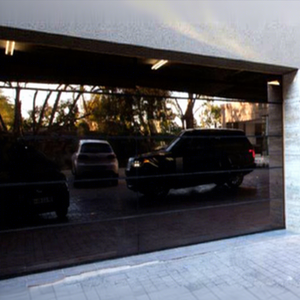
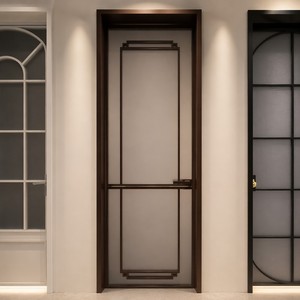
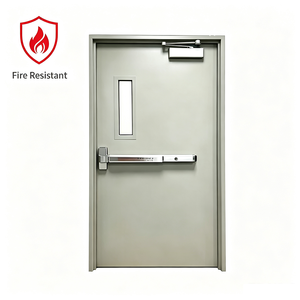
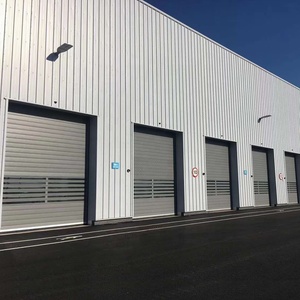
In contemporary architectural design, the side entrance—whether functioning as a secondary residential entrance, patio access, utility ingress, or commercial perimeter door—demands an uncompromising equilibrium between thermal performance, structural integrity, and structural aesthetics. Modern aluminium side doors sourced from premier Chinese manufacturers represent a sophisticated evolution from elementary structural barriers to high-efficiency building envelope components. By leveraging advanced profile geometry, precision thermal break technology, and multi-chambered internal structures, leading Chinese suppliers have redefined global expectations for side-opening door assemblies.
At the core of high-grade aluminium side door engineering is the selection of primary metal alloys. Top-tier manufacturers utilize 6063-T5 and 6063-T6 architectural aluminium extrusions. These alloys offer exceptional tensile strength, outstanding corrosion resistance, and superior surface finishing characteristics required for high-grade anodizing, powder coating, and PVDF (Fluorocarbon) surface treatments. Compared to standard steel or uPVC alternatives, structural aluminium profiles deliver vastly superior strength-to-weight ratios, ensuring that side doors maintain structural dimensionality under severe environmental stress without warping, twisting, or sagging over decades of constant operational cycles.
“Information Gain Insight: The integration of Polyamide PA66-GF25 structural thermal break strips into aluminium side door profiles reduces thermal conductivity by up to 70%, transforming metal door assemblies into high-performance energy barriers capable of satisfying Passive House and LEEDS building standards.”
Historical limitations regarding the thermal conductivity of metallic frames have been entirely solved through advanced thermal barrier technology. Non-thermal break aluminium frames act as thermal bridges, transferring external winter cold or summer heat directly into the interior. Modern engineering overcomes this by inserting multi-cavity, fiberglass-reinforced Polyamide (PA66-GF25) strips between the inner and outer extrusion profiles. This structural break interrupts heat transfer pathways, achieving overall frame Thermal Transmittance values (Uf) as low as 1.1 to 1.6 W/m²K.
Complementing the thermal break profile is the strategic specification of Insulated Glass Units (IGUs). High-performance side access doors incorporate double or triple-pane tempered safety glass filled with 90%+ Argon gas sealed with warm-edge spacers. Applying Low-Emissivity (Low-E) soft coatings onto surface #2 or #3 reflects far-infrared thermal radiation while maximizing visible light transmission (VLT). For coastal or storm-prone regions, laminated hurricane-impact glass (incorporating 1.14mm or 1.52mm PVB/SGP interlayers) ensures structural survival against extreme wind pressure and airborne debris impact.
| Performance Metrics | Standard Aluminium Side Door | Thermal Break Aluminium Side Door | Hurricane Impact Side Door |
|---|---|---|---|
| U-Factor (W/m²K) | 3.5 – 4.8 | 1.2 – 1.8 | 1.4 – 2.0 |
| Acoustic Rating (STC / dB) | 25 – 28 dB | 35 – 42 dB | 40 – 48 dB |
| Design Wind Pressure (Pa) | 1200 – 2400 Pa | 2500 – 4000 Pa | 5000+ Pa (ASTM E330) |
| Air Infiltration Rating | Level 4 (GB/T 7106) | Level 8 (GB/T 7106 / AAMA) | Class A1 Air Tightness |
| Corrosion Resistance | Powder Coated (500h Salt Spray) | PVDF Coating (1000h Salt Spray) | Marine-Grade PVDF (3000h+ Salt Spray) |
Global commercial architectural procurement is undergoing a paradigm shift driven by stringent carbon-neutral mandates, smart automation, and aesthetic minimalism. Project developers, architectural firms, and industrial importers sourcing from China must align their technical specifications with these emerging macro-trends to ensure long-term property asset valuation and regulatory compliance.
Global building energy codes (such as Europe's EPBD and North America's IECC) demand continuous reductions in fenestration U-factors. Future side door procurement focuses heavily on aerogel-insulated profile cavities and vacuum-insulated glass (VIG) integrations.
Side access doors are rapidly transitioning from manual mechanical locks to motorized multi-point electronic locking systems. Smart integration features biometric fingerprint sensors, RFID, facial recognition, and IoT building management software connectivity.
Architectural demand favors ultra-slim minimalist sightlines (frame width < 30mm) combined with barrier-free zero-threshold transitions. Flush drainage tracks prevent water penetration while maintaining ADA-compliant accessibility.
Sustainability has transitioned from an optional marketing narrative to a mandatory procurement criterion. Leading Chinese aluminium door factories are adopting hydro-powered primary aluminium smelting and recycled scrap integration (post-consumer recycled aluminium content exceeding 75%). When evaluating Chinese suppliers, international buyers prioritize factories capable of providing certified Environmental Product Declarations (EPDs), carbon footprint verification, and compliance with ISO 14064 greenhouse gas audits.
As an industry-leading manufacturer located in Foshan, Guangdong—China's world-renowned aluminium production capital—Doorreme (and HiHaus Building Materials) represents the pinnacle of Chinese fenestration engineering. Operating out of a state-of-the-art 123,000 m² modern manufacturing infrastructure, our facilities combine automated CNC machinery, robotic assembly lines, and rigorous quality control methodologies designed to serve over 140 countries worldwide.
Our workshop is equipped with imported 5-axis CNC machining centers, automated double-head corner crimping machines, and precision profile cutting machinery ensuring dimensional tolerances within ±0.5mm.
We partner directly with world-class hardware suppliers including German Roto, Siegenia, Hoppe, and top-tier custom Chinese hardware brands. Side door hinges are tested for over 200,000 continuous opening cycles.
Every commercial B2B order is backed by dedicated technical teams providing wind pressure structural calculations, CAD shop drawings, BIM object modeling, and on-site guidance for complex architectural builds.
Quality assurance follows a strict 4-stage inspection model: Incoming Quality Control (IQC) on raw aluminium billets and glass panes, In-Process Quality Control (IPQC) during profile machining and thermal strip insertion, Final Quality Control (FQC) involving full water-tightness and frame squareness testing, and Outgoing Quality Control (OQC) verifying export protective packaging. Surface finishes undergo 100% inspection for coating thickness (minimum 40μm for anodizing, 60μm for powder coating, 40μm for multi-coat PVDF), gloss consistency, and scratch resistance.
Procuring custom architectural doors from China requires clear technical parameters to avoid miscommunication and ensure seamless installation on site. Buyers should evaluate suppliers using the following critical criteria:
Clear engineering insights addressing structural performance, custom sizing, delivery timelines, and international trade compliance.
Connect directly with our senior architectural engineering team in Foshan, China. Send your project elevation drawings, BOQ schedules, or custom dimension specs for immediate consultation and technical pricing.
Inquire Now English