Factory-direct structural fenestration solutions custom-built for high-end residential villas, commercial towers, and architectural developments globally.
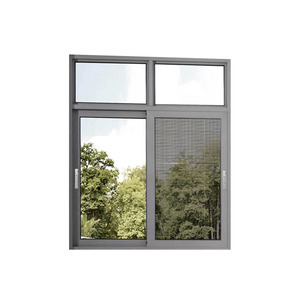
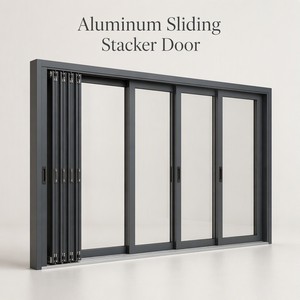
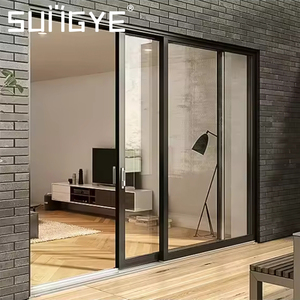
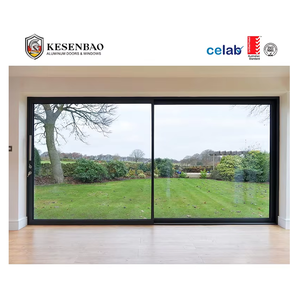
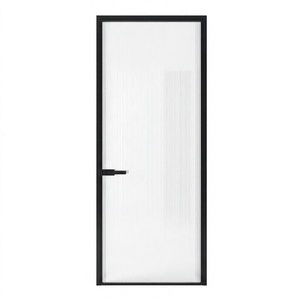
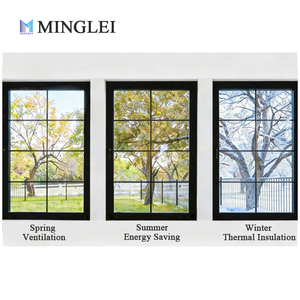
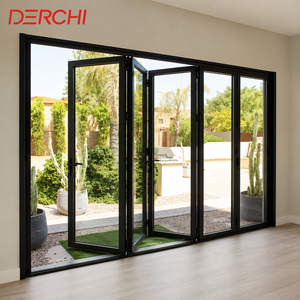
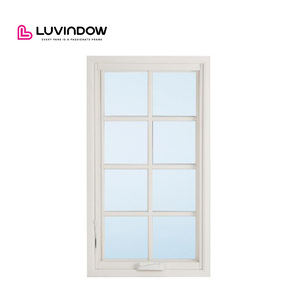
In the contemporary building materials landscape, fenestration engineering plays a pivotal role in dictating structural energy consumption, building envelope integrity, and architectural aesthetics. As international building energy codes tighten—such as the European Union's Energy Performance of Buildings Directive (EPBD) and North American ASHRAE 90.1 standards—Aluminium Composite Windows have emerged as the premier structural choice for developers, architects, and general contractors seeking an optimal balance between structural rigidity, low maintenance, and superior thermal insulation.
Manufactured in our state-of-the-art 123,000 m² facility located in Foshan, Guangdong—China's legendary capital for high-end aluminium extrusion and fabrication—our enterprise delivers structural-grade aluminium composite windows and curtain wall systems tailored for high-wind-load regions, coastal environments, and extreme temperature zones across 140+ countries.
The core structural advantage of our aluminium composite window series lies in the precise formulation of the extrusion alloy and composite layer matrix. We utilize prime 6063-T5 and 6060-T6 architectural grade aluminium alloys, subjected to artificial aging processes that yield ultimate tensile strengths exceeding 160 MPa and yield strengths above 110 MPa.
To combat thermal energy transmission, our profiles integrate structural fiberglass-reinforced polyamide strips. In composite wood-aluminium variants, real timber (such as imported Red Oak, Teak, or Larch) is coupled to the interior side using floating mechanical snaps. This allows independent thermal expansion and contraction between the exterior aluminium shell and interior wooden elements, completely eliminating structural warping over decades of service.
Below is an empirical comparison matrix illustrating the technical specifications of our core aluminium composite window and door systems, engineered for rigors ranging from hurricane-prone coastal regions to sub-zero continental climates.
| System Category | Profile Wall Thickness | Thermal Barrier / Insulating Core | Glazing Specification | Wind Load Resistance (Pa) | Acoustic Rating (STC / Rw) |
|---|---|---|---|---|---|
| Thermal Break Casement Window | 1.4 mm – 2.0 mm | 24mm - 34mm PA66GF25 Polyamide | 5mm + 12A/20A + 5mm Low-E Toughened | Class 9 (≥ 5.0 kPa) | 38 dB – 45 dB |
| Heavy-Duty Lift & Sliding Door | 2.0 mm – 3.0 mm | Multi-Cavity Insulating Foam Insert | 6mm + 16A + 6mm Double/Triple Tempered | Class 8 (4.5 kPa) | 35 dB – 42 dB |
| Narrow Frame / Slim Sightline System | 1.6 mm – 2.5 mm | High-Density Polyamide Thermal Strip | 5mm + 15A + 5mm Argon Gas Filled | Class 7 (4.0 kPa) | 34 dB – 40 dB |
| Aluminium-Wood Composite Window | 1.8 mm (Alu) + 68mm (Timber) | Solid Hardwood + Air Gap Insulation | 5mm + 18A + 5mm Warm Edge Spacer | Class 9 (≥ 5.0 kPa) | 42 dB – 48 dB |
| Unitized Glass Curtain Wall | 2.5 mm – 4.0 mm | Structural Silicone + EPDM Gaskets | 8mm Low-E + 12A + 6mm Laminated | Zone-Specific (Up to 6.0 kPa) | 40 dB – 50 dB |
As the international building envelope market undergoes structural transformation, procurement heads, EPC project directors, and wholesale importers must align their supply chains with evolving regulatory, technological, and architectural shifts. Key trends shaping the future of aluminium composite window sourcing include:
Global developers now demand Environmental Product Declarations (EPDs) and low-carbon aluminium billets (smelted via hydroelectric power). Chinese factories utilizing recycled 6063 alloys and verified low-carbon processes will dominate preferential tender scoring in Europe and North America.
Architectural demand is shifting toward minimal frame profiles with interlocking stiles as narrow as 20mm. This requires high-modulus structural adhesives, precision CNC fabrication, and high-load roller bearings capable of effortlessly carrying glass weights up to 500 kg.
Sourcing workflows are transitioning from static 2D CAD to full 3D Building Information Modeling (BIM). Factories with direct Revit/IFC file integration enable automated CNC cutting and corner crimping, drastically cutting sample turnarounds and job-site misfits.
For coastal resorts and urban high-rises, surface coating degradation due to UV exposure and salt spray corrosion is a primary liability. Our factory standard incorporates AAMA 2605-compliant Fluorocarbon PVDF coatings (minimum 3-coat system, ≥ 40 microns) and 25-micron anodic oxide films, passing 3,000-hour neutral salt spray (NSS) testing to guarantee zero chalking or peeling for 20+ years.
Selecting a window factory in China is not merely about finding competitive unit pricing; it is about establishing a secure, scalable supply chain backed by rigorous engineering oversight and certified quality control protocols. Since our founding in 2004, our enterprise has expanded into an industry-leading OEM/ODM production hub with distinct core capabilities:
Our expansive Foshan factory houses autonomous extrusion lines, automated powder coating plants, double-glazing insulating glass assembly bays, and precision German Roto & Italian Emmegi CNC machining centers.
Every fenestration batch undergo strict quality control tests conforming to North American NFRC, CSA, and European CE benchmarks. We provide full structural calculation packages for local municipal engineering sign-offs.
From architectural shop drawing development to on-site installation sequencing guidance, our senior facade engineers actively assist real estate developers, contractors, and installers across five continents.
Direct answers to critical procurement, technical, and logistic questions asked by international buyers prior to placing contract orders.
Get in touch with China's leading aluminium composite window engineering team. Receive factory-direct pricing, CAD shop drawing support, and custom material samples tailored to your exact specifications.
Get a Quote English