Factory-direct fenestration systems manufactured under strict ISO quality control, designed for high wind load, thermal efficiency, and contemporary minimalism.
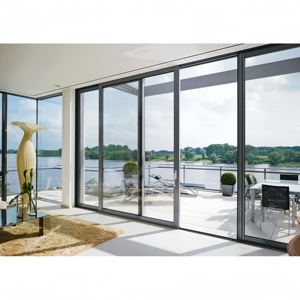
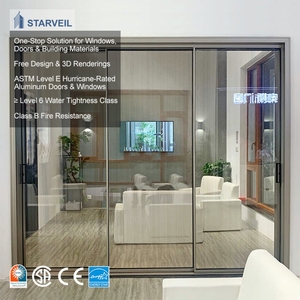
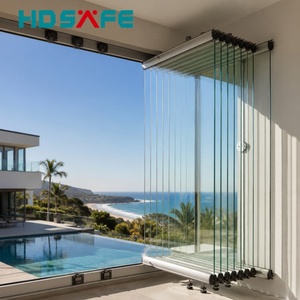
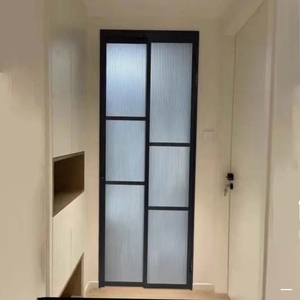
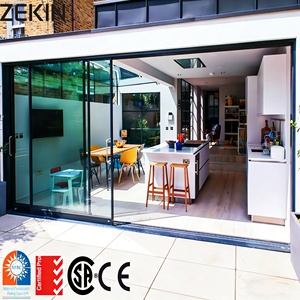
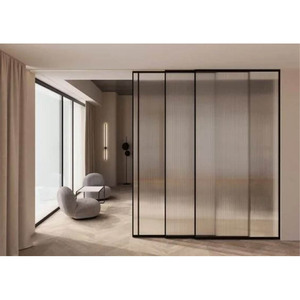
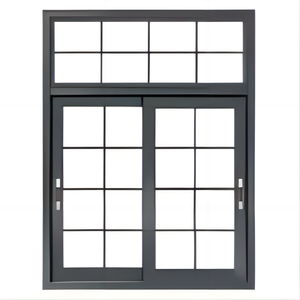
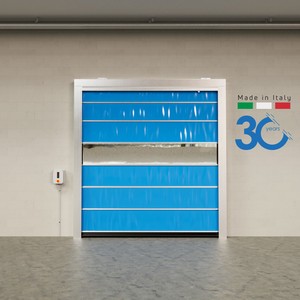
Established in 2004, our 123,000 m² automated manufacturing facility located in Foshan, Guangdong—the premier extrusion hub of China—stands as a benchmark for precision architectural fenestration engineering. Operating with an annual production capacity exceeding 500,000 m², we serve high-end residential developments, commercial towers, and infrastructure projects across 140+ countries and territories spanning the Americas, Southeast Asia, Middle East, Australia, Africa, and the Caribbean.
Our industrial output relies on integrated German CNC machining centers, automatic dual-head cutting machinery, continuous extrusion lines, and automated glass tempering plants. By maintaining end-to-end control from raw 6063-T5 aluminum billet extrusion to structural assembly, anodizing, PVDF fluorocarbon spraying, and double/triple insulated glass unit (IGU) fabrication, we guarantee absolute compliance with international structural load and thermal performance standards.
An engineering breakdown of profile structural geometry, alloy compositions, thermal barrier technology, and surface finishing methodologies.
The performance of heavy-duty sliding patio doors under high wind loads is governed primarily by profile wall thickness, section modulus, and alloy temper. We specify high-grade 6063-T5 and 6063-T6 aluminum alloys, maintaining primary wall thicknesses between 1.6mm for standard sliding patio configurations up to 3.0mm+ for heavy-duty commercial lift-and-slide systems.
Unlike standard commercial extrusions, our load-bearing interlock mullions incorporate internal structural steel reinforcements or thickened internal web geometry. This guarantees resistance against deflection (tested up to 5000 Pa wind pressures), making our sliding doors fully suitable for high-rise coastal developments prone to hurricane and typhoon events.
| Technical Parameter | Standard Residential Grade | Heavy-Duty Commercial Grade | Ultra-Slim Minimalist Series |
|---|---|---|---|
| Profile Wall Thickness | 1.4mm - 1.6mm | 2.0mm - 3.2mm | 2.0mm High-Tensile T6 Alloy |
| Interlock Sightline Width | 80mm - 110mm | 90mm - 130mm | 16mm - 25mm (Ultra-Narrow) |
| Thermal Barrier Strip | 14.8mm PA66-GF25 | 24mm - 34mm Multi-Cavity PA66 | Integrated Structural Thermal Foam |
| Glass Unit Configuration | 5mm + 12A + 5mm Tempered | 6mm + 16A + 6mm Low-E / Laminated | 8mm + 20A + 8mm Triple Insulated |
| Acoustic Insulation (STC) | 32 - 35 dB | 38 - 44 dB | 36 - 40 dB |
| Max Panel Dimensions | 1.5m (W) × 2.4m (H) | 3.0m (W) × 4.0m (H) | 2.5m (W) × 6.0m (H) |
Energy-efficient architectural design demands continuous thermal envelope performance. Our thermal break sliding door systems utilize Technoform Polyamide PA66-GF25 (25% Glass Fiber reinforced) insulation strips. These strips separate the interior and exterior aluminum frames, effectively interrupting conductive heat transfer and eliminating thermal bridging. This structural design drastically reduces overall U-values down to 1.3 W/m²K in triple-glazed configurations.
To resist severe environmental weathering—such as high UV radiation in desert regions or salt-spray corrosion in coastal marine environments—our extrusions undergo specialized surface treatments compliant with QUALICOAT and AAMA standards:
Key technological transitions driving B2B global procurement decisions for residential, commercial, and hospitality projects.
Architectural demand is rapidly shifting toward minimal visual intrusion. Modern sliding doors incorporate pocket-recessed frames, fully embedded threshold tracks, and interlock profiles as narrow as 16mm, maximizing natural daylight while offering floor-to-ceiling panoramic glass views.
The integration of heavy-duty concealed electric actuators, magnetic levitation sliding drives, and smart sensor arrays allows massive sliding panels (weighing up to 800 kg) to operate effortlessly via smartphone apps, wall switches, or centralized Smart Home / BMS protocols.
Global building codes like LEED, BREEAM, and EU EPBD strictly enforce low U-values and carbon transparency. Sourcing hydro-powered recycled aluminum extrusions combined with warm-edge spacer technology and low-emissivity (Low-E) coatings is now a primary requirement for major project tenders.
Detailed technical answers to help developers, architects, general contractors, and distributors streamline procurement from China.
 English