 English
1. The Architectural Evolution of Aluminium Ventilation Windows in Modern Envelopes
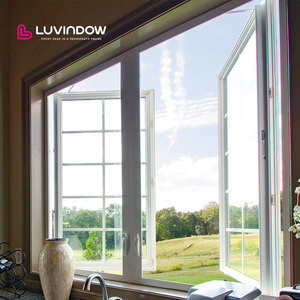
In high-performance facade engineering, ventilation is no longer merely a passive architectural requirement; it is a critical thermodynamic lever governing Indoor Air Quality (IAQ), sensible heating/cooling loads, and structural pressure equalisation. Modern commercial and high-end residential developments are increasingly departing from uninsulated fenestration in favour of specialized aluminium ventilation windows integrated with thermal break profiles and smart micro-ventilation channels.
China's Guangdong manufacturing cluster—most notably Foshan—has emerged as the world's primary innovation hub for custom structural fenestration. By combining advanced 6063-T5/T6 architectural aluminum extrusion alloys with precision polyamide thermal barriers (PA66 GF25), top Chinese manufacturers engineered window systems that reconcile high air exchange demands with stringent U-value (thermal transmittance) constraints.
1.1 Micro-Ventilation vs. Ambient Air Losses
Traditional casement or awning openings create massive thermal plumes, causing rapid loss of conditioned air. Advanced aluminium ventilation windows solve this via integrated micro-ventilation trickle vents and multi-position tilt-turn hardware. These mechanisms permit controlled air exchange ($15-30\text{ m}^3/\text{h}$ per linear metre) without compromising basic building security or triggering structural air draft discomfort.
2. Performance Architecture & System Integration
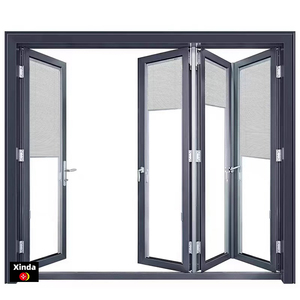
Evaluating top-tier OEM/ODM manufacturers requires looking beyond surface aesthetics. Superior aluminium ventilation windows rely on four foundational engineering pillars:
Structural Integrity & Wind Pressure
Calculated to withstand positive and negative wind pressures exceeding 5000 Pa (equivalent to Category 5 hurricanes), verified through ASTM E330 and EN 12210 testing standards.
Acoustic Attenuation (STC/Rw)
Utilizing multi-cavity glazing (e.g., 5mm Low-E + 12Ar + 5mm) and continuous ternary EPDM sealing gaskets to reduce ambient acoustic transmission by up to 45 dB.
Air Permeability & Water Tightness
Pressure-equalized drainage chambers prevent water penetration under static and dynamic head pressure (tested up to 700 Pa under ASTM E331 / EN 12208 Class E900).
Surface Finish & Corrosion Resistance
Fluoropolymer PVDF coatings (AAMA 2605 compliant) or anodized finishes exceeding 25 microns protect profiles against marine environment salt spray (C5-M corrosion rating).
3. Technical Specification Matrix: Window Profile Configurations
The following technical baseline outlines standard specifications engineered by top Foshan exporters for global architectural compliance:
| Ventilation Window Type | Profile Alloy & Wall Thickness | Thermal Break Strip | Standard Glazing Build-up | Air Permeability Standard | Recommended Application |
|---|---|---|---|---|---|
| Thermal Break Tilt-Turn | 6063-T6 / 1.8mm – 2.0mm | PA66 GF25 (24mm - 34mm) | 6mm Low-E + 16Ar + 6mm Tempered | Class 4 (EN 12207) / ASTM E283 | High-Rise Residential & Luxury Villas |
| Top-Hung Awning Vent | 6063-T5 / 1.4mm – 1.6mm | PA66 GF25 (14.8mm - 20mm) | 5mm + 12A + 5mm Double Clear | Class 3 (EN 12207) | Commercial Office & Airport Facades |
| Parallel Pop-Out Vent | 6063-T6 / 2.2mm Heavy-Duty | PA66 GF25 Multi-Cavity | 8mm Low-E + 16Ar + 8mm Laminated | Class 4 (EN 12207) / Dynamic 600Pa | Unitized Glass Curtain Wall Envelopes |
| Sliding Vent with Screen | 6063-T5 / 1.2mm – 1.6mm | Optional Thermal Break | 5mm + 9A + 5mm Tempered | Class 2-3 (EN 12207) | Mid-Rise Apartments & Tropical Resorts |
4. Future Global Procurement Trends for Aluminium Windows (2025–2030)
Global procurement teams, real estate developers, and facade contractors face evolving regulatory landscapes, environmental imperatives, and smart building demands. Purchasing managers sourcing from China must align their technical submittals with three key global macro-trends:
4.1 Strict Carbon Border Adjustments & LEED v4.4 Decarbonization
With the implementation of the European Union's Carbon Border Adjustment Mechanism (CBAM) and rising global adoption of LEED v4.4 / BREEAM certifications, the carbon footprint of primary aluminium extrusion is coming under scrutinization. Premier Chinese manufacturers like Doorreme Aluminum Industry Co., Ltd. are transitioning to hydro-powered primary aluminium billets and integrating recycled scrap fractions (low-carbon aluminium) to reduce embodied carbon down to $< 4.0\text{ kg CO}_2/\text{kg Al}$.
4.2 Motorized Actuation & Automated Building Management Systems (BMS)
Manual window operation is increasingly being replaced by integrated 24V DC chain actuators linked directly to BMS platforms. Modern aluminium ventilation windows are pre-routed with concealed cable channels, rain sensors, and wind speed monitors. When indoor carbon dioxide levels exceed 800 ppm, the automated vents open to a calibrated micro-ventilation offset, closing automatically upon detecting precipitation.
4.3 Hurricane-Grade Impact Resistance & Extreme Weather Adaptability
Climate volatility has expanded demand for hurricane-rated impact ventilation windows across coastal North America, Australia, and the Caribbean. Procurement specifications now routinely stipulate SentryGlas® (SGP) interlayer laminates combined with reinforced multi-point locking hardware (such as German Roto or Siegenia gear) capable of passing Miami-Dade TAS 201/202/203 impact and cyclic wind pressure tests.
5. Strategic Engineering & Procurement FAQ
Answers to complex operational and structural questions raised by international general contractors, architects, and importers when sourcing aluminium ventilation windows from China.
How do Chinese manufacturers eliminate thermal bridging in custom aluminium ventilation windows?
What structural engineering documentation is supplied for overseas project approval?
How do you guarantee surface finish durability in high-salinity coastal environments?
What is the difference between unitized micro-ventilation vs. traditional casement opening?
What are the lead times and quality control checkpoints for large-scale export orders?
Can Doorreme manufacture windows to custom sizes and precise architectural drawings?
6. Corporate Advantage: Doorreme Aluminum Industry Co., Ltd.
Headquartered in Foshan, Guangdong Province—the epicenter of global aluminum extrusion—Doorreme Aluminum Industry Co., Ltd. has established itself as an authoritative leader in architectural fenestration and facade engineering since its founding in 2004.
Operating a massive 123,000 square meter manufacturing base staffed by over 800 skilled engineers and fabrication specialists, Doorreme delivers an annual output capacity of over 500,000 m² of windows, doors, and structural curtain walls. Our products have been successfully specified and installed across 140+ countries and regions, serving landmark projects across North America, South America, Europe, the Middle East, Southeast Asia, and Australia.
- Precision Manufacturing Equipment: Automated German CNC machining centers, double-head cutting saws, and automated corner crimping stations ensure millimeter-accurate tolerances.
- 40+ R&D Patents: Continuous technical innovation in thermal break profile geometry, hidden drainage channels, and acoustic damping mechanisms.
- Turnkey Engineering Support: In-house structural calculation, wind pressure modeling, site-specific shop drawings, and optional on-site installation guidance for major commercial envelopes.
- Verified Global Certifications: Full compliance with international standards including CE mark, CSA, NFRC, AS2047, and ISO9001 management systems.