Custom-fabricated fenestration assemblies engineered for luxury residential villas, commercial towers, and high-density developments across 140+ countries.
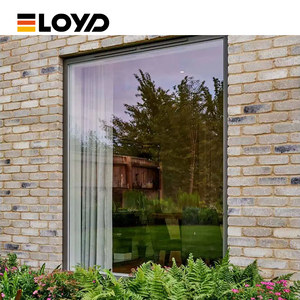
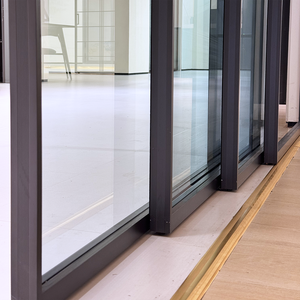
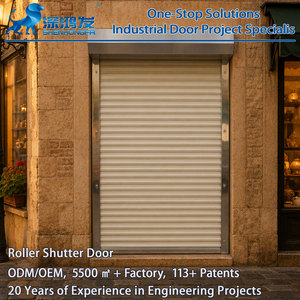
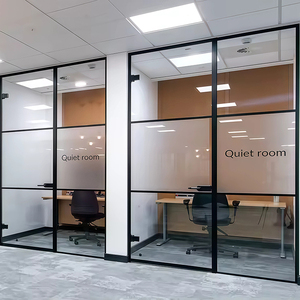
Established in 2004, Doorreme Aluminum Industry Co., Ltd. operates a state-of-the-art 123,000 m² production base dedicated to high-performance fenestration systems for the global market.
Direct-from-factory procurement eliminates multi-tier middleman margins while securing full engineering oversight. Doorreme bridges the gap between architectural intent and industrial extrusion precision.
The global fenestration industry is undergoing a paradigm shift driven by energy codes, structural miniaturization, and extreme climate adaptation.
Standard non-thermal aluminum profiles are no longer viable under modern building envelope energy codes. Modern architectural specifications mandate multi-cavity Polyamide (PA66 GF25) thermal break strips ranging from 24mm to 39mm. Combined with warm-edge spacers, argon-filled double or triple Low-E insulated glass units (IGU), overall system U-values drop below 1.2 W/m²K, radically cutting HVAC thermal loads in cold and tropical zones alike.
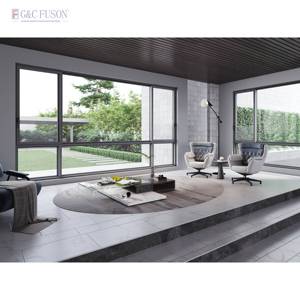
Contemporary architectural aesthetic prioritizes light transmission and expansive glass areas. Leading Chinese export manufacturers are pushing sightline widths down to as low as 16mm to 25mm on interlock profiles. Utilizing structural bonding adhesives (Dow Corning / Sika structural silicone), the glass itself functions as a load-bearing stiffener, allowing floor-to-ceiling fixed picture panels up to 6 meters in height without compromising deflection tolerance.
With coastal typhoons and severe weather events increasing in frequency, wholesale window specifications heavily demand impact-rated fenestration. Laminated glass configurations utilizing SentryGlas (SGP) or high-impact PVB interlayers (e.g., 5mm Tempered + 1.52SGP + 5mm Tempered) maintain membrane integrity even under severe cycling pressure (DP50–DP90) and debris impact, fulfilling coastal building codes across Florida, the Caribbean, and Southeast Asia.
How commercial developers, general contractors, and fenestration importers are adapting their supply chain strategy to secure direct factory advantages.
Global ESG mandates and carbon border adjustment mechanisms (such as EU CBAM) are compelling developers to specify low-carbon aluminum profiles. Primary aluminum production generates high CO2 emissions; consequently, leading Foshan suppliers are integrating hydro-powered secondary aluminum billets with recycled content exceeding 60%. Sourcing certified low-carbon extrusion profiles guarantees compliance with LEED v4.1 and BREEAM sustainability scoring for commercial real estate assets.
The era of purchasing off-the-shelf window dimensions is declining rapidly. B2B procurement now relies on early-stage BIM (Building Information Modeling) file exchange. Importers submit direct REVIT or CAD floorplans, enabling factory technical teams to pre-calculate wind pressure, thermal bridge points, and rainwater drainage capacity. Custom extrusion dies and tailored hardware finishes (anodized, powder-coated, wood grain transfer) are developed on a per-project basis with fast 15-day sample turnaround.
Modern B2B buyers look far beyond FOB unit price. Procurement audits prioritize total freight density, transit breakage prevention, and field installation speed. Advanced suppliers utilize customized steel-crate container packing with moisture-absorbent desiccants, reducing transit glass breakage to under 0.1%. Furthermore, pre-assembled knock-down (KD) hardware kits and color-coded installation tags decrease jobsite labor hours by up to 35%.
Contractors are moving away from fragmented sourcing where windows, glass railings, entrance doors, and curtain walls come from separate vendors. Partnering with a consolidated manufacturer like Doorreme ensures unified powder-coat color matching across all architectural elements, streamlined bill of lading logistics, and a single engineering warranty covering the entire exterior building envelope.
Engineering parameters comparing standard commercial grades with high-performance energy-saving configurations.
| System Category | Profile Alloy & Thickness | Glass Configuration | Thermal Break Strip | Hardware Grade | Tested Performance Rating |
|---|---|---|---|---|---|
| Thermal Break Casement Window | Alloy 6063-T5 / 1.4mm - 2.0mm | 5mm + 12Argon + 5mm Low-E Double Tempered | PA66 GF25 (24mm Multi-Cavity) | German Roto / Siegenia Multi-point Lock | U-Value: 1.4 W/m²K Water Tightness: 600 Pa |
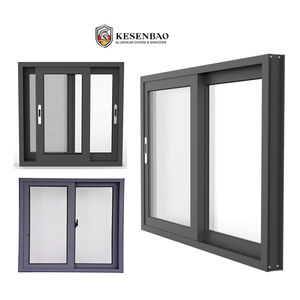
| Heavy Duty Sliding Patio Door | Alloy 6063-T6 / 2.0mm - 3.0mm | 6mm + 16Argon + 6mm Double Tempered | PA66 GF25 (14.8mm Strip) | Heavy-Duty Stainless Steel Roller (300kg) | Wind Load: 4.5 kPa (DP60) Acoustic: STC 38 dB |
| Hurricane Impact Sliding Window | Alloy 6063-T5 / 1.8mm - 2.5mm | 6mm Tempered + 1.52SGP + 6mm Tempered | Non-Thermal or Reinforced Thermal | HOPO / Custom Heavy-Duty Lock | Impact Test: ASTM E1886/E1996 DP Rating: DP70 |
| Unitized Glass Curtain Wall | Alloy 6063-T6 / 3.0mm - 5.0mm | 6mm Low-E + 12A + 6mm Inner Laminated | Structural Silicone (Dow Corning 983) | Stainless Steel 304 Brackets & Anchors | Air Leakage: < 0.1 l/s·m² Structural: ±3.0 kPa |
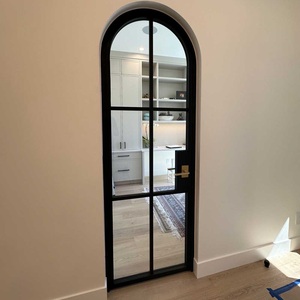
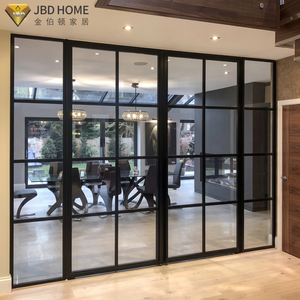
| Narrow Frame Interior Glass Door | Alloy 6063-T5 / 1.2mm - 1.6mm | 8mm / 10mm Clear or Frosted Tempered | Non-Thermal Ultra-Slim | Concealed Hydraulic Hinge / Soft Close Roller | Cycle Test: 100,000 Operations |
Direct technical answers addressing structural customization, export logistics, warranty coverage, and factory compliance.
 English