Custom-engineered aluminum fenestration and entrance solutions fabricated to exact architectural specifications and tested to global standards.
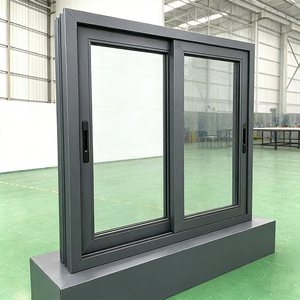
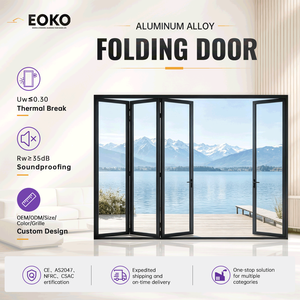
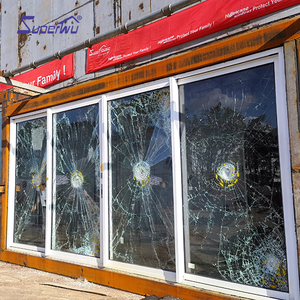
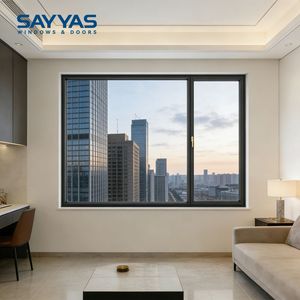
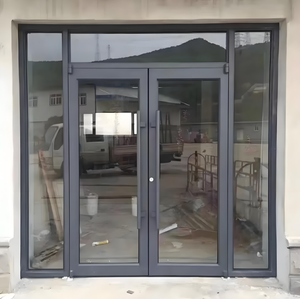
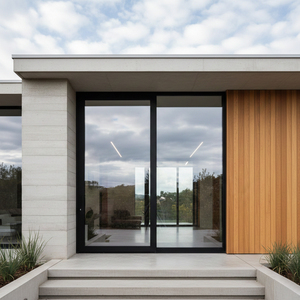
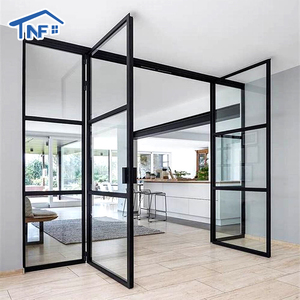
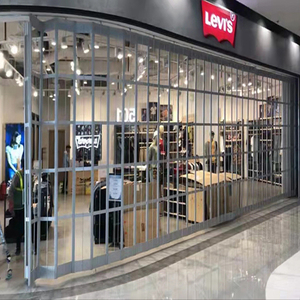
In contemporary commercial and high-end residential architecture, the convergence of extruded structural aluminum profiles (6063-T5 / 6063-T6 alloys) and high-performance polymethyl methacrylate (PMMA) acrylic infill sheets has established a transformative alternative to conventional glass fenestration. Sourcing teams, project engineers, and real estate developers navigating international procurement must balance structural resilience, weight budgets, solar heat gain coefficients (SHGC), and optical clarity standards.
As a global Tier-1 OEM/ODM manufacturing enterprise rooted in China’s primary aluminum industrial hub (Foshan, Guangdong), our engineering division operates across 123,000 m² of automated extrusion, CNC milling, surface treatment, and cleanroom assembly operations. This technical report details the material science, custom tooling protocols, quality verification standards, and procurement strategies governing modern aluminum acrylic door manufacturing.
Understanding the mechanical, optical, and thermal variance between acrylic sheets and glass infill systems is essential for specifying custom OEM/ODM doors in specific commercial environments (e.g., luxury interior partitions, high-foot-traffic commercial entrances, wet-room facilities, and extreme seismic zones).
| Mechanical & Physical Metric | Cast Acrylic Sheet (PMMA) | Fully Tempered Glass (Monolithic) | Laminated Tempered Glass (PVB) |
|---|---|---|---|
| Specific Gravity / Density | 1.19 g/cm³ (Lightweight) | 2.50 g/cm³ (Heavy) | 2.55 g/cm³ (Very Heavy) |
| Impact Strength (Charpy V-Notch) | 16 - 20 kJ/m² (Non-Shattering) | 4 - 5 kJ/m² (High Yield, Fragmenting) | High Resistance (Retained by Film) |
| Light Transmittance (Clear) | 92% to 93% (Superior Optical Purity) | 88% to 90% (Standard Clear) | 86% to 88% (Layer Damping) |
| Thermal Conductivity ($\lambda$-Value) | 0.19 W/(m·K) (Natural Insulation) | 1.00 W/(m·K) (High Conduction) | 0.98 W/(m·K) (Moderate Conduction) |
| Surface Hardness (Pencil / Mohs) | 3H Pencil / ~3 Mohs (Requires Hard-Coat) | 6 - 7 Mohs (Scratch Resistant) | 6 - 7 Mohs (Scratch Resistant) |
| UV Discoloration Resistance | 10-Yr Guarantee (UV-Stabilized Grade) | Inherent UV Immunity | PVB Yellowing Risk over 15+ Yrs |
Executing turnkey OEM/ODM architectural orders requires a closed-loop fabrication methodology. From initial CAD file ingestion to containerized export shipping, each step follows rigorous quality management system (QMS) protocols compliant with ISO 9001 and ISO 14001 certification standards.
Custom aluminum extrusion dies are designed using CAD/CAM software to match specified frame profiles (wall thickness from 1.4mm to 3.0mm). 6063-T5 aluminum billets are preheated to 480°C and extruded under 2,500-ton hydraulic pressure before artificial age-hardening to T6 temper.
Extruded profiles pass through 5-axis CNC machining centers for automatic drilling, miter cutting (45°/90° precision within ±0.05mm), corner key pocketing, lock mortising, and acrylic panel channel grooving. CNC routers simultaneously cut acrylic infills to exact tolerances.
Profiles undergo chemical pre-treatment (chromate-free conversion) followed by Fluorocarbon PVDF coating (AAMA 2605 specification for 20-year weatherability), Anodizing (Class I 18-25 micron finish), or Architectural Powder Coating (Qualicoat Class 2 certified).
Acrylic sheets are surface-treated with anti-static hard-coatings (Siloxane nano-coating for 4H pencil scratch resistance). Panes are secured into aluminum channels using EPDM co-extruded gaskets and high-modulus structural silicone (Dow Corning 995 series).
Finished door units are subjected to static air pressure testing (ASTM E283), water penetration resistance under cyclic pressure (ASTM E331), and structural load testing (ASTM E330) in our factory calibration laboratory prior to batch sign-off.
Door assemblies receive fully protective PE peel-off film, corner foam guards, heat-sealed bubble wrapping, and are packed into custom fumigated OSB plywood crates with internal steel banding for zero-damage sea transport.
Global procurement teams must adapt to evolving green building standards, smart building integration, and material engineering breakthroughs.
Driven by EU CBAM (Carbon Border Adjustment Mechanism) and LEED v4.1 certifications, major procurement contracts now mandate aluminum profiles containing a minimum of 75% post-consumer recycled content (E-line extrusions), reducing embodied carbon footprint from 18 kg CO₂/kg down to under 4.0 kg CO₂/kg aluminum.
Historically, acrylic was susceptible to surface scratches during aggressive cleaning. The new generation of OEM acrylic door infills incorporates dual-cured nano-siloxane hard coatings, increasing surface scratch resistance from 1H up to 4H-5H pencil hardness while maintaining 93% clarity and complete chemical resistance to alcohol cleaners.
Modern interior commercial doors and hotel partition systems are increasingly specifying edge-lit acrylic door infills. Embedded micro-prismatic light-guide panels (LGP) powered by low-voltage 24V DC hidden aluminum track channels allow doors to dynamically switch between clear, frosted, and illuminated signage modes.
Decades of manufacturing discipline, advanced metallurgical controls, and global compliance testing.
Located in Foshan, China, our expansive production facility houses 12 aluminum extrusion lines, automated vertical powder coating lines, CNC 5-axis machining stations, and dedicated acrylic cleanroom assembly bays operated by over 800 skilled technicians.
Our custom door and window systems meet or exceed international code requirements including North American NFRC thermal ratings, Florida Building Code NOA hurricane impact approvals, CSA Group certifications, and European CE Mark (EN 14351-1).
Every B2B contract is assigned a senior fenestration engineer responsible for generating full shop drawings, finite element analysis (FEA) wind pressure simulations, thermal calculations, and installation sequence manuals tailored for local job sites.
Send your project blueprints, opening schedules, or OEM specifications directly to our senior engineering team for an instant quote and technical evaluation.
Inquire Now English