Custom-manufactured to precise Architectural elevations, wind load ratings, and thermal transmittance standards.
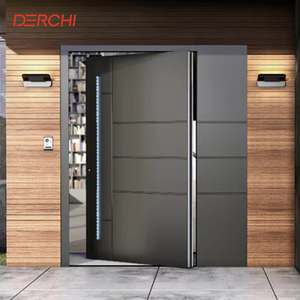
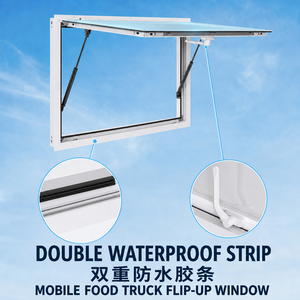
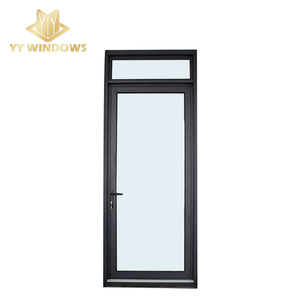
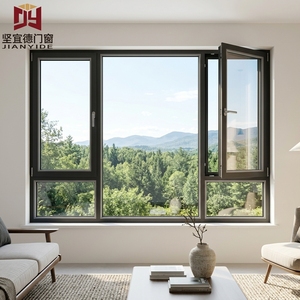
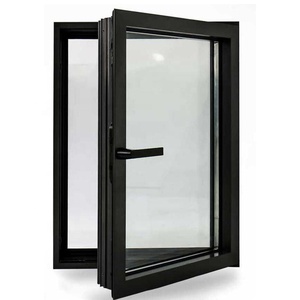
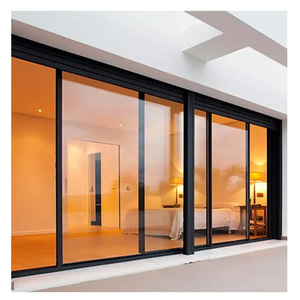
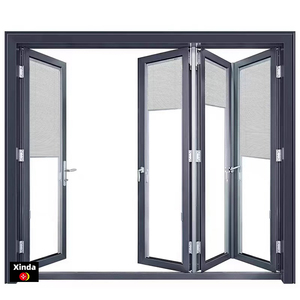
In modern architectural design, black aluminium door systems have transitioned from a niche luxury preference to an industry standard across high-end residential luxury villas, commercial storefronts, hospitality projects, and multi-family residential towers. The demand for ultra-narrow sightlines, deep matte obsidian finishes, and high structural resilience has driven top-tier manufacturers to push the boundaries of extrusion metallurgy, surface treatment chemistry, and thermal break engineering.
Selecting a premier original equipment manufacturer (OEM) or original design manufacturer (ODM) for black aluminium door systems requires evaluating structural calculations, surface coating durability under intense UV exposure, thermal transmittance values ($U$-factors), and water/air tightness ratings. Based in Foshan, China—the world's capital for architectural profile extrusions—Doorreme Aluminum Industry Co., Ltd. (operating from a 123,000 m² smart manufacturing plant since 2004) provides an exhaustive analysis of the technical parameters that define global market leaders.
The core structural integrity of modern black aluminium doors relies on high-grade 6063-T5 and 6060-T66 architectural aluminium extrusions. Premium manufacturers enforce strict billet purity control to eliminate microscopic inclusions that cause surface flaking or structural fatigue under high wind-load pressures. 6063-T5 aluminium profiles provide superior tensile strength (≥ 160 MPa) and yield strength (≥ 110 MPa), enabling structural profiles to hold heavy double- and triple-glazed insulated glass units (IGUs) up to 800 kg per panel without sagging over time.
A family-founded legacy of engineering integrity, certified compliance, and full lifecycle project support.
Equipped with imported German and Italian CNC machining centers, automated powder coating lines, and double-corner crimping tech for precise 0.1mm frame assembly tolerances.
Full compliance with international building regulations including North American NFRC thermal standards, CSA safety guidelines, European CE marks, and ISO9001 management protocols.
From initial shop drawing approvals and FEA structural wind pressure analysis to sending senior installation engineers overseas for complex high-rise curtain wall alignment checkups.
Not all black aluminium doors perform identically. The performance disparity between budget residential grade profiles and architectural-grade facade solutions hinges on thermal isolation technology and chemical surface passivation.
| Performance Spec | Architectural PVDF (3-Coat) | Qualicoat Class 2 Powder | Anodized Matte Black (25µm) |
|---|---|---|---|
| UV & Weathering Resistance | Extreme (> 30 Years Anti-Fading) | High (15-20 Years Anti-Fading) | Superior (Will not peel or chalk) |
| Salt Spray Corrosion Test | ASTM B117 > 3,000 Hours | ASTM B117 > 1,500 Hours | ASTM B117 > 2,000 Hours |
| Thermal Break Integration | Polyamide PA66GF25 Strips | Polyamide PA66GF25 Strips | Polyamide PA66GF25 Strips |
| Thermal Transmittance ($U$-value) | 1.0 - 1.4 W/m²·K (Passive Standard) | 1.3 - 1.8 W/m²·K | 1.2 - 1.6 W/m²·K |
| Recommended Environment | Coastal, Oceanfront, High UV Zones | Urban Residential & Commercial | Modern Minimalist Luxury Villas |
As global building codes tighten around net-zero carbon targets and structural energy conservation, the international market for black aluminium doors is undergoing rapid technical evolution. B2B buyers, real estate developers, and facade contractors must align their procurement strategies with four key emerging trends:
Architects are increasingly specifying "invisible frame" doors where the structural black aluminium sash is embedded flush within the finished floor, ceiling, and wall plaster. Sightlines as slim as 18mm to 21mm at interlock junctions are replacing bulky traditional frames. These systems rely on high-modulus structural silicone sealant bonding directly to tempered laminated glass units to transfer wind loads, allowing ceiling-to-floor glass heights up to 6 meters.
Single-chamber thermal breaks are being superseded by multi-cavity insulation zones filled with aerogel or expanded polyurethane (PU) foam inserts. Coupled with 24mm to 34mm glass fiber reinforced polyamide (PA66GF25) structural strips, modern black aluminium doors effectively bridge the thermal conductor gap, eliminating interior frame condensation in harsh North American and Northern European winters.
Leading European and North American developers now mandate environmental product declarations (EPDs) for fenestration products. Top manufacturers are adopting low-carbon primary aluminium smelted using hydroelectric power or integrating ≥75% post-consumer recycled aluminium billets. This significantly reduces embedded carbon footprints while retaining identical structural yield strengths and surface anodizing clarity.
The integration of motorized multi-point locking gear, magnetic levitation sliding drives, biometrics, and home automation protocols (Zigbee/KNX/Matter) directly inside black aluminium door profiles is standardizing. Heavy-duty motorized lift-and-slide doors weighing upwards of 400 kg can now be operated silently via smartphone interfaces or smart sensor arrays.
Clear, technical responses to common engineering, logistics, and quality assurance queries.
Send your architectural elevation plans, schedules, or specifications directly to our engineering team for technical review, shop drawings, and competitive direct factory pricing.
 English