 English
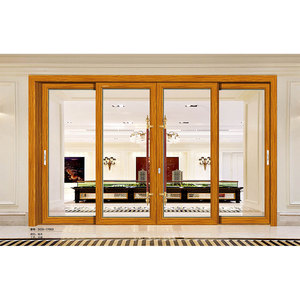
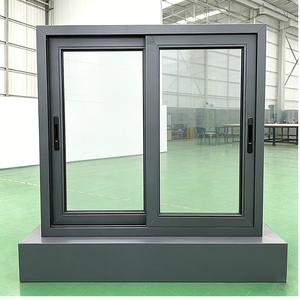
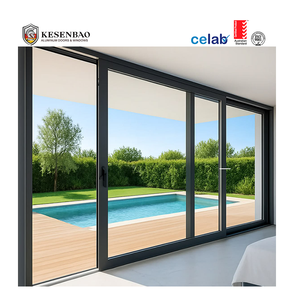
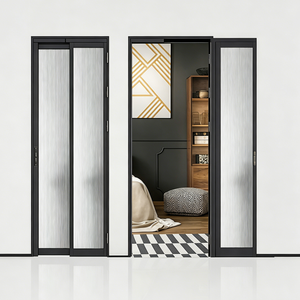
1. Executive Overview: The Evolution of Internal Aluminium & Glass Door Systems
Modern interior architecture has undergone a fundamental structural pivot. Dark, thick timber partitions and load-heavy solid walls are increasingly being replaced by engineered aluminium internal glass doors. This transition is not merely cosmetic; it is rooted in acoustic zoning, natural light optimization (Daylight Factor enhancement), and spatial fluidity across residential, commercial, and hospitality sector projects.
As global architectural standards evolve toward LEED v4.1 certifications and strict acoustic comfort protocols (ISO 140-4 / ASTM E336), selecting the right manufacturer and exporter of internal aluminium glass doors has become a high-stakes engineering decision for property developers, general contractors, and procurement directors. This whitepaper provides a comprehensive technical breakdown of structural aluminium alloys, acoustic glass assemblies, hardware longevity, and supplier evaluation criteria.
2. Technical Evaluation Criteria for Top Manufacturers & Exporters
When conducting vendor due diligence across Asian, European, and American manufacturing hubs, procurement heads must look beyond superficial finish aesthetics. Superior structural integrity requires adhering to exact metallurgy and glazing standards:
Metallurgical Profiling (6063-T5 vs T6)
Top-tier manufacturers employ primary architectural billet 6063-T5 aluminum extrusions with a wall thickness between 1.4mm and 3.0mm. T5 temper provides optimal tensile strength (minimum 180 MPa) and superior surface smoothness for anodizing and electrostatic PVDF coatings.
Acoustic Engineering & Lamination
Interior transparency should never compromise speech privacy. Leading exporters engineer double-glazed units (e.g., 5mm + 12A + 5mm) or laminated safety glass with specialized acoustic PVB interlayers (0.76mm to 1.52mm thickness) achieving STC ratings from 35 dB to 45 dB.
Cycle-Tested Concealed Hardware
The operational lifespan of a heavy-duty glass sliding or bi-fold door depends on its roller carriages and hinges. Professional exporters specify SUS304/316 stainless steel roller bearings tested for over 100,000 continuous opening/closing cycles without frame sag.
3. Comprehensive Technical Specification Reference Matrix
The table below summarizes standard baseline specifications vs. premium project-grade configurations typically supplied by leading exporters for commercial office partitions, high-end villa interiors, and luxury hotel suites:
| Door System Category | Aluminum Profile & Temper | Glass Configuration | Surface Treatment Finish | Target Acoustic (STC) | Hardware Benchmark |
|---|---|---|---|---|---|
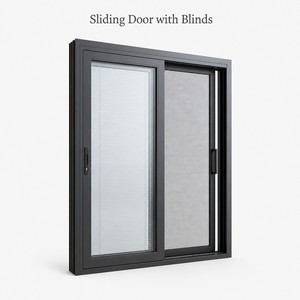
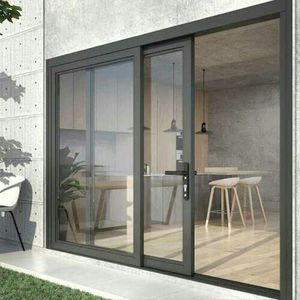
| Slimline Interior Sliding Door | 1.6mm 6063-T5 (16mm sightline) | 8mm / 10mm Monolithic Tempered | Anodized Black / Champagne (15μm) | STC 28 - 32 dB | Soft-Close Magnetic Dampers |
| Heavy-Duty Pocket / Stacking Door | 2.0mm 6063-T6 Structural Profile | 5mm + 1.14PVB + 5mm Laminated | PVDF Fluorocarbon Coating (3-Coat) | STC 36 - 40 dB | SUS304 Quad-Wheel Track Rollers |
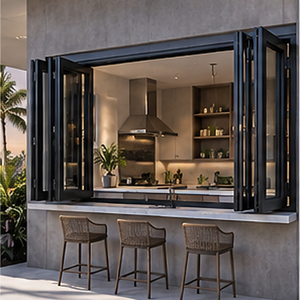
| Acoustic Interior Bi-Fold System | 2.0mm Thermal Break Aluminium | 5mm + 12Argon + 5mm Low-E Glass | AkzoNobel Powder Coating (60-80μm) | STC 38 - 42 dB | Concealed Multi-Point Locking |
| Hybrid PD (Slide-Swing) Door | 1.4mm - 1.8mm High-Strength Alloy | 6mm Frosted / Smart Switchable Glass | Electrophoretic Sandblasted Finish | STC 30 - 34 dB | Dual-Pivot Heavy Duty Track System |
4. Key Industry Trends Shaping 2025–2030 Procurement Strategy
As commercial developers and architectural teams plan multi-year pipeline projects, four mega-trends are actively reshaping the global supply chain for interior fenestration:
Trend 1: Ultra-Narrow Sightlines & Hidden Frame Engineering
The demand for minimalist design has pushed frame widths down from traditional 50mm profiles to ultra-slim 12mm–18mm face widths. Achieving structural stability with such minimal metal requires precise finite element analysis (FEA) to ensure that tall door sashes (up to 3.5 meters in height) do not warp under operational impact or atmospheric pressure differential.
Trend 2: Smart Switchable Glass (PDLC) Integration
Privacy-on-demand technology using Polymer Dispersed Liquid Crystal (PDLC) film laminated inside double glass panels allows doors to switch from crystal clear to opaque white via wall switch, smartphone app, or building automation systems. Global exporters now offer pre-wired structural aluminum frames with integrated electrical slip-ring conduits for seamless smart glass operation.
Trend 3: Low-Carbon Recycled Extrusions & Environmental Product Declarations (EPD)
With carbon taxation and ESG mandates tightening across Europe, North America, and Australia, top-tier manufacturers are adopting low-carbon aluminium billets produced using hydroelectric power (achieving < 4.0 kg CO2/kg Al compared to the global average of 16.5 kg CO2/kg Al). Supplying verified EPD certificates is becoming mandatory for international project bidding.
Trend 4: Factory-Built Pre-Assembled Modular Door Kits
To mitigate rising jobsite labor costs overseas, leading exporters have shifted from shipping raw knock-down (KD) profiles toward pre-assembled modular cassette systems. Doors are factory-glued, pre-drilled, and paired with drop-down acoustic bottom seals, cutting installation time on-site by more than 60%.
Request Engineering Support & Customized Shop Drawings
Planning a hotel, residential community, or office project? Our senior engineers evaluate opening sizes, wind loads, and acoustic targets to generate complete technical proposals.
Get Catalog5. Deep Procurement FAQ: Critical Questions Answered for B2B Buyers
Below are real-world technical, logistical, and compliance questions frequently raised by commercial buyers, architects, and importers during international procurement diligence:
How do internal aluminum glass door systems achieve acoustic ratings above STC 38 dB?
What are the structural differences between 6063-T5 and 6063-T6 aluminum alloys for oversized doors?
How do top manufacturers guarantee glass safety and anti-shatter compliance for export delivery?
PVDF Fluorocarbon vs. Electrostatic Powder Coating: Which finish is recommended for humid interior applications?
What is the standardized process for technical drawing confirmation before production?
- Initial Architectural Review: The buyer submits floor plan elevations, rough opening sizes, and acoustic/thermal targets.
- CAD Shop Drawing Generation: The factory engineering team prepares 1:1 scale CAD drawings showing profile cross-sections, glass rebate depths, hardware mounting details, and wall anchor points.
- Sign-Off & Sample Verification: The client approves shop drawings and verifies physical profile/finish color samples.
- CNC Production Release: Approved CAD files are loaded into automated multi-axis CNC cutting and machining centers to guarantee sub-millimeter manufacturing tolerances across the entire order batch.
6. Why Partner with Doorreme Aluminum Industry Co., Ltd.?
Founded in 2004 in Foshan, China—the global epicenter of architectural aluminum manufacturing—Doorreme Aluminum Industry Co., Ltd. (also operating internationally as HiHaus) has grown into a dominant force in high-performance building envelope systems, aluminum doors, windows, and curtain walls.
Unlike trading intermediaries, Doorreme operates an expansive 123,000 m² state-of-the-art production base equipped with automated German and Italian CNC machining centers, precision extrusion lines, and glass tempering facilities. With an annual production capacity exceeding 500,000 m², the company delivers factory-direct pricing without sacrificing engineering precision.
- 20+ Years of Manufacturing Experience: Dedicated engineering teams with deep knowledge of North American (NFRC/CSA), Australian (AS2047), European (CE), and Middle Eastern building codes.
- Global Track Record in 140+ Countries: From high-rise commercial office buildings in Manila and resort hotel complexes in the Caribbean to luxury shopping malls in South America (including the 14,000 m² Ventura Mall project).
- 40+ Patent Certificates: Continuous R&D investment delivering multi-track concealed sliding mechanisms, ultra-narrow sightline interlocks, and high-integrity thermal break profiles.
- End-to-End Quality Control: Full raw material traceability, in-house salt-spray coating validation, multi-stage water/air tightness testing, and custom export packing protocols.
Whether you are specifying custom narrow-frame glass doors for a high-density multi-family development, or procuring complete curtain wall and internal partition systems for a commercial tower, Doorreme provides dedicated engineer-to-engineer communication, transparent shop drawings, and reliable on-time delivery.