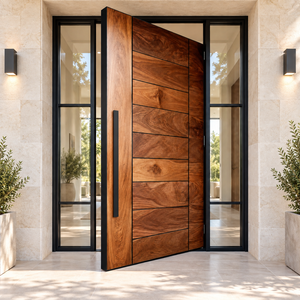
Modern architectural design increasingly demands grand openings that blur the line between interior luxury and external landscape. Aluminium pivot entrance doors have emerged as the primary choice for contemporary villas, high-end commercial headquarters, and hospitality projects worldwide. Unlike conventional hinged doors that transfer dynamic loads directly to standard side jambs, heavy-duty pivot doors operate on a vertical axis pin set at a customized offset from the frame. This structural load distribution permits panel weights exceeding 500 kg and clear opening widths over 2,500 mm.
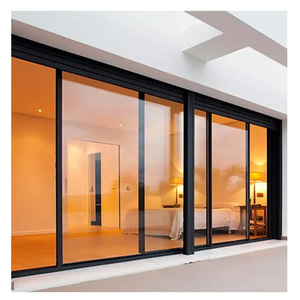
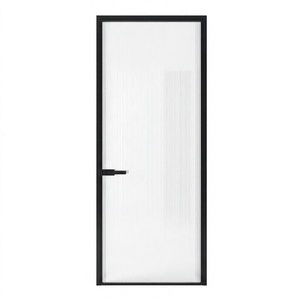
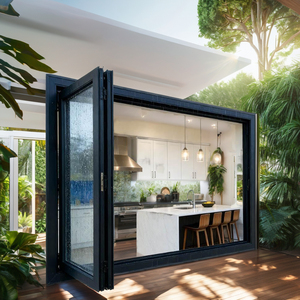
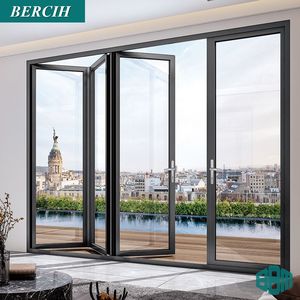
When evaluating global exporters and manufacturing plants—particularly those centered in major industrial hubs like Foshan, Guangdong—architects and procurement executives must look beyond surface aesthetics. An architectural pivot entrance door system operates under immense mechanical stress, wind load deflection pressures, and extreme atmospheric shifts. Below are the key technical pillars that distinguish premier OEM/ODM exporters from basic local assemblers.
Top-tier factories specify prime 6063-T6 or 6060-T6 architectural aluminium alloys with profile wall thicknesses ranging from 2.0mm up to 3.0mm. Substandard factories often use recycled scrap billet, which compromises tensile yield strength and leads to profile warping under sun heat exposure.
The core engine of a pivot door is its floor pivot spindle and top pivot head. Tier-1 manufacturers integrate hydraulic self-closing pivot hinges (e.g., German FritsJurgens or Dormakaba mechanisms) supporting up to 500kg with adjustable closing speeds, 90° hold-open states, and anti-sagging alignment pins.
Exterior pivot doors traditionally struggled with air infiltration. Advanced factories solve this through multi-cavity PA66 polyamide thermal break strips, dual perimeter EPDM gaskets, and automatic drop-down mechanical bottom seals that engage tightly when the door reaches the closed position.
The table below highlights technical specifications comparing Tier-1 Custom Manufacturers (such as Doorreme) against standard factory tiers.
| Performance Benchmark | Tier 1 Industrial OEM Exporter | Tier 2 Mid-Range Factory | Tier 3 Standard Local Fabricator |
|---|---|---|---|
| Aluminium Alloy & Temper | Primary 6063-T6 / 6061-T6 (T5/T6 certified) | Standard 6063-T5 Profile | Commercial Grade / Mixed Alloy |
| Extrusion Wall Thickness | 2.0mm – 3.0mm Heavy Structural | 1.4mm – 1.8mm Standard | 1.2mm – 1.4mm Lightweight |
| Surface Treatment Options | PVDF (Fluorocarbon), AkzoNobel Powder, Anodized 25μm | Standard Powder Coating (50-80μm) | Basic Spray Paint / Liquid Paint |
| Glass Specification | Double/Triple Tempered Low-E, Argon Filled, Laminated Safety | Double Tempered Insulated Glass | Single Tempered / Non-Certified Glass |
| Hardware Integration | German Roto, Dormakaba, FritsJurgens, Custom Smart Locks | Top Chinese Domestic Brands | Generic Unbranded Hardware |
| Structural Wind Load | Tested to ≥ 4.0 kPa (ASTM E330 / EN 12210) | Standard 2.5 kPa | Untested Baseline |
The traditional mechanical key lock is rapidly giving way to invisible smart access. Modern pivot doors are being specified with motorized offset pivots capable of push-to-open activation, biometric facial recognition concealed in vertical pull handles, and full integration into Smart Home Automation networks via Zigbee, Matter, or Crestron protocols.
Architects are pushing door leaf heights to 4,000mm and widths to 2,200mm while requesting ultra-narrow frame sightlines. Achieving structural rigidity without panel bowing requires internal carbon-fiber or steel tension rods within thermal break profiles to counteract thermal expansion caused by direct sun exposure.
Strict green building directives (such as LEED, BREEAM, and EU Energy Performance Directives) require entrance doors to meet aggressive U-factor thresholds (≤ 1.2 W/m²K). Next-generation pivot doors utilize warm-edge spacers, triple Low-E insulated glass units (IGUs) filled with 90%+ Argon gas, and thermal breaks made of PA66 GF25 nylon.
Contemporary buyers prefer hybrid material surfaces. Aluminum frames are increasingly coupled with exterior decorative elements including sintered stone, real wood veneer laminates, brass accents, or PVDF metallic textured coatings capable of passing 3,000-hour neutral salt spray tests (AAMA 2605 standard).
Established in 2004, Doorreme Aluminum Industry Co., Ltd. (operating from a flagship 123,000 m² manufacturing base in Foshan, China) stands as a top-tier manufacturer and global exporter of high-precision aluminium windows, doors, curtain wall facades, and custom pivot entry systems.
Guided by the foundational ethos of "Better Service, More Value," Doorreme combines advanced German and Italian CNC machining lines with over 800 skilled specialists and engineers. Exporting to more than 140 countries across the Americas, Southeast Asia, Middle East, Australia, and Africa, Doorreme offers comprehensive project engineering:
Detailed answers to structural, logistics, and technical engineering questions commonly raised by architects, contractors, and importers.
Submit your project elevation drawings, opening schedules, or spec sheets to receive a comprehensive engineering analysis and competitive factory quotation within 24 hours.
 English