Engineered to strict architectural standards, optimized for heavy wind load, hurricane impact, and thermal envelope efficiency.
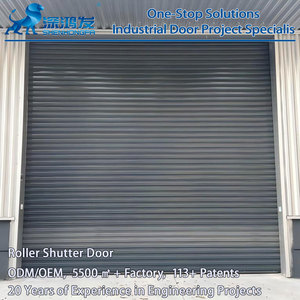
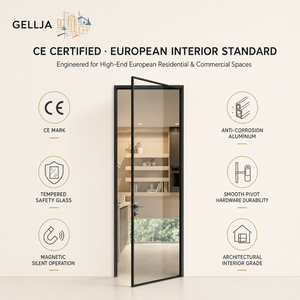
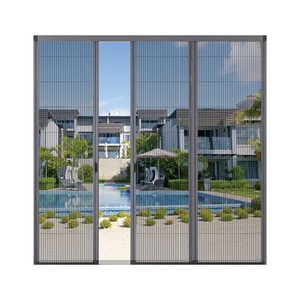
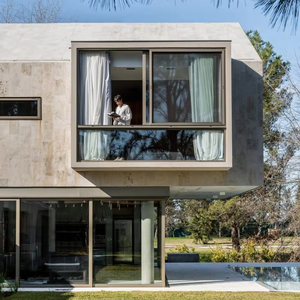
In modern high-rise, commercial, and coastal residential architecture, exterior storm windows serve as the critical primary shield against extreme weather events, thermal transfer, and structural wind fatigue. Selecting the right global manufacturing partner requires rigorous technical evaluation—moving far beyond basic unit price to audit extrusion alloy purity, structural silicone glazing (SSG) calculations, thermal barrier integrity, and international certification compliance (ASTM, CSA, CE, AS2047).
Aluminum exterior storm windows outperform legacy vinyl (uPVC) and timber alternatives across every critical structural performance metric. High-tensile 6063-T5 and T6 architectural aluminum extrusions provide unmatched dimensional stability under severe design pressures (DP ratings exceeding DP70 to DP100).
To prevent thermal bridging—a historic drawback of aluminum—modern exterior storm systems utilize Polyamide (PA66 GF25) thermal break strips reinforced with 25% glass fiber. This engineering evolution lowers U-factors dramatically (achieving levels as low as 1.2 to 1.6 W/m²K), aligning with stringent net-zero energy building requirements in North America and Western Europe.
| Performance Parameter | Standard Specification | Heavy-Duty / Storm Impact Grade | Testing / Certification Standard |
|---|---|---|---|
| Profile Alloy & Temper | Architectural 6063-T5 | High-Tensile 6063-T6 / 6005A-T6 | GB/T 5237, ASTM B221 |
| Wall Thickness | 1.4 mm - 1.6 mm | 2.0 mm - 3.0 mm Reinforced | ISO 9001 Structural Audit |
| Design Pressure (DP) | DP 35 - DP 50 | DP 70 - DP 100+ (Hurricane Zone) | ASTM E330, TAS 202 |
| Air Infiltration Rate | < 0.15 cfm/ft² | < 0.05 cfm/ft² (Airtight Sealed) | ASTM E283 |
| Water Penetration | 300 Pa (6.27 psf) | 720 Pa (15 psf) Heavy Rain Resistance | ASTM E547 / ASTM E331 |
| Surface Treatment | Powder Coating (AAMA 2603) | PVDF Fluorocarbon 3-Coat (AAMA 2605) | 10-25 Year Coastal Corrosion Resistance |
The global fenestration supply chain is anchored by key manufacturing hubs known for precision engineering, scalable industrial capacity, and export reliability. Below is an authoritative technical audit of the top 10 suppliers and exporters shaping the market in 2025/2026.
Foshan, China (Tier-1 OEM/ODM Leader)
Operating a massive 123,000 m² facility with over 800 skilled specialists, Doorreme leads the international export sector. Utilizing imported German CNC machining centers and Italian assembly equipment, Doorreme delivers structural curtain walls, storm impact casement windows, and custom sliding fenestration across 140+ countries. Backed by 40+ technical patents and full engineering calculation support.
Tokyo, Japan / Global Facilities
Renowned for extreme precision engineering and micro-seal tolerances. YKK AP specializes in commercial architectural building wraps and storm-rated window systems designed for heavy seismic and typhoon zones throughout the Asia-Pacific and American regions.
Bielefeld, Germany
The benchmark for European passive house standards and complex aluminum facades. Schüco engineers premium thermal-break storm systems featuring automated dynamic locking points and integrated building management system (BMS) controls.
Dallas, Texas, USA
A dominant North American manufacturer focusing heavily on hurricane-rated storm storefronts, glazed curtain walls, and heavy commercial architectural windows compliant with Miami-Dade County strict structural codes.
Duffel, Belgium
European innovator providing ultra-slim frame profiles with high structural wind load ratings. Reynaers emphasizes sustainable circular engineering, using low-carbon recycled aluminum billets across their exterior window lines.
Tokyo, Japan
Global building materials giant overseeing residential and commercial exterior storm envelope solutions, integrating advanced weather-stripping elastomers and sound-dampening laminated acoustic glass options.
Norcross, Georgia, USA
Pioneer in commercial framing systems, Kawneer specializes in heavy thermal-barrier storm windows, blast-resistant framing, and impact-tested architectural entrance systems across major international infrastructure projects.
Toulouse, France
Powered by Norsk Hydro's green aluminum smelting network, Technal crafts customized storm-resistant acoustic fenestration systems for demanding coastal environments in Southern Europe and the Middle East.
Minneapolis, Minnesota, USA
Specialist in high-durability storm retrofits, high-performance curtain walls, and protective architectural window systems tailored for healthcare, educational, and institutional real estate assets.
Foshan, China
One of China's earliest extrusion industrial leaders, delivering heavy architectural profiles, industrial storm sash components, and large-scale bulk profile shipments for local fabricators across Asia and Africa.
The exterior storm window market is undergoing a rapid technical convergence driven by climate volatility, updated energy conservation codes, and architectural preferences for maximal daylighting.
Architects increasingly demand minimal frame visibility without sacrificing structural strength. Next-generation storm windows integrate structural silicone glazing (SSG) directly with high-rigidity 6005A-T6 alloy frames, keeping sightlines under 25mm while meeting wind loads up to 5000 Pa.
Standard tempered glass is rapidly giving way to ionoplast interlayers (like Kuraray SentryGlas®) combined with double Low-E Argon insulation. These units prevent storm-debris penetration even when glass breaks under heavy windward impacts, eliminating the need for storm shutters.
Commercial storm windows are evolving from passive barriers to dynamic building elements. Integrated 24V DC hidden motorized actuators synched with wind/rain sensor arrays auto-seal windows during violent weather events while allowing natural stack-effect ventilation during mild conditions.
B2B importers, real estate developers, and general contractors are revising their global sourcing playbooks to insulate project timelines against geopolitical and logistics disruptions.
Leading developers no longer purchase off-the-shelf window dimensions. Modern procurement requires factory engineering teams to provide full Revit/BIM 3D modeling, finite element analysis (FEA) for structural wind pressure, and shop drawings prior to extrusion cutting—a core capability pioneered by suppliers like Doorreme.
On-site labor costs in North America, Australia, and Europe have escalated dramatically. Procurement is shifting toward factory-glazed, fully unitized frame packages shipped in custom steel-crated ocean containers, reducing job-site installation labor by up to 60%.
Institutional funding for major architectural developments is now tied to embodied carbon metrics. Importers prioritize exporters capable of providing certified EPD documentation and utilizing hydroelectric-smelted aluminum profiles with high post-consumer recycled content.
Founded in 2004 in Foshan, China—the world’s premiere aluminum industrial cluster—Doorreme Aluminum Industry Co., Ltd. has spent over two decades engineering bespoke fenestration solutions for high-stakes projects worldwide.
Our 123,000 m² modern manufacturing plant houses automated extrusion lines, anodizing/PVDF coating bays, and double-glazed insulating glass assembly workshops, producing over 500,000 m² of windows, doors, and curtain walls annually.
Every unit is crafted to custom shop drawings using imported German Roto hardware, top-tier Chinese security multipoint locks, and SS304 stainless steel friction stays or hurricane-rated fly screens.
For complex commercial developments, Doorreme dispatches senior engineering directors internationally to guide structural installation sequencing, alignment verification, and air/water tightness testing on site.
Technical details B2B buyers, architects, and importers verify prior to contract award.
 English