As architectural paradigms shift toward seamless indoor-outdoor integration, multi-panel aluminium stacking doors have emerged as the premier structural solution for luxury villas, commercial developments, and high-end residential towers worldwide. Discover engineered multi-slide systems manufactured to rigorous international standards.
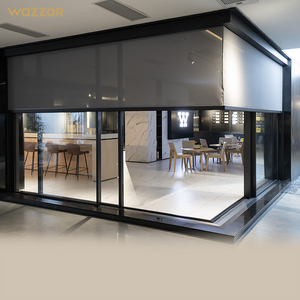
Wazzor Energy Efficient Aluminum Sliding Doors With Tempered Glass Frameless Patio Balcony Interior Spaces
Operating out of a modern 123,000 square meter intelligent manufacturing hub in Shishan Town, Foshan, Doorreme Aluminum Industry Co., Ltd. has established itself as an industry leader since 2004, providing engineered architectural fenestration solutions across 140+ countries.
123,000 m²
Production Base
20+ Years
Industry Expertise
140+
Global Export Markets
800+
Specialized Workforce
Technical White Paper
Engineering Excellence in Aluminium Stacking Door Fabrication
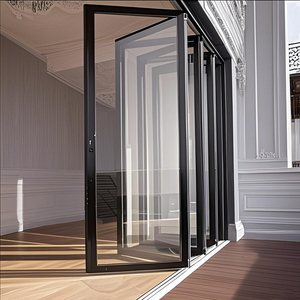
In contemporary architectural design, the boundary between interior sanctuaries and exterior environments has become fluid. Aluminium stacking doors—also known as multi-slide or telescoping door systems—represent the pinnacle of functional engineering for expansive structural openings. Unlike standard two-panel sliding doors or multi-fold bi-fold doors, stacking systems utilize multi-track head and sill configurations that allow multiple sashes to slide effortlessly and stack neatly parallel to one another behind a single fixed panel or recessed wall pocket.
Information Gain Insight: Structural integrity in multi-track stacking systems is dictated by track drainage hydraulics and sash deflection limits. Premium Chinese manufacturers incorporate polyamide thermal breaks (PA66GF25) combined with heavy-duty tandem stainless steel rollers rated for sash weights up to 400 kg, achieving seamless operation across span widths exceeding 12 meters.
Anatomy of High-Performance Stacking Profiles
The performance of an aluminium stacking door depends directly on profile alloy extrusion quality, thermal break technology, surface passivation, and multi-point hardware integration:
1. Primary Alloy Selection & Extrusion Precision: Premier manufacturers employ high-grade 6063-T5 or 6063-T6 architectural aluminium extrusions with profile wall thicknesses ranging from 1.6 mm for standard patio spans to 3.0 mm for heavy-duty commercial and hurricane-impact elevations. This structural rigor prevents sash warping under heavy wind loads (up to 5000 Pa design pressure).
2. Thermal Break Polyamide Technology: Uninsulated metal profiles transfer heat rapidly. Modern energy-efficient stacking systems utilize structural thermal breaks engineered with 24 mm to 34 mm PA66GF25 (Polyamide 66 reinforced with 25% glass fiber). This thermal barrier insulates interior spaces, lowering system U-factors below 1.4 W/m²K when combined with double Low-E argon-filled glazing.
3. Multi-Track Water Drainage & Flush Threshold Sills: Water infiltration resistance during storm conditions is achieved via sub-sill drainage channels, continuous EPDM weather-stripping gaskets, and anti-lift pile seals. Fully recessed flush sills are fitted with integrated smart drainage tracks to eliminate trip hazards while satisfying ADA compliance and severe weather water tightness standards (ASTM E331 rating > 700 Pa).
Comparative Performance Matrix: Door System Architectural Selection
Next-Generation Innovations in Aluminium Stacking Systems
As real estate developers, contractors, and architectural firms navigate stringent energy codes and evolving aesthetic demands, key technological shifts are transforming the global aluminium door manufacturing landscape.
Ultra-Slim Sightlines & Concealed Frames
Architectural demand is moving rapidly toward minimalistic interlocks with sightlines under 20 mm. By structurally bonding glass directly into concealed outer frames embedded within walls and ceilings, modern stacking doors provide maximum daylight transmission exceeding 95%.
Smart Automation & Motorized Drive Systems
Heavy-duty multi-panel stacking configurations weighing over 1,000 kg are increasingly fitted with integrated brushless DC motors, obstacle-detection sensors, soft-close dampening mechanisms, and mobile app or home automation control interfaces.
High-Performance Low-E & Vacuum Glazing
To meet strict zero-carbon building targets and NFRC / Energy Star certifications, leading factories are pairing thermal break extrusions with triple-glazed IGUs featuring Low-E coatings, warm-edge spacers, and Argon or inert gas fills to achieve sub-1.0 U-factors.
Hurricane Impact & Coastal PVDF Finishes
For coastal installations in North America, Australia, and the Caribbean, stacking doors require SGP (SentryGlas) laminated impact glass compliance (ASTM E1886/E1996) alongside 70% Fluorocarbon (PVDF) surface coatings to withstand 2,000+ hours of salt spray corrosion.
Procurement Knowledge Base
Frequently Asked Questions by Global B2B Buyers
Clear, authoritative guidance addressing structural engineering, factory customization, quality verification, and international logistics for architects, contractors, and importers.
How do aluminium stacking doors differ structurally from folding (bi-fold) doors?
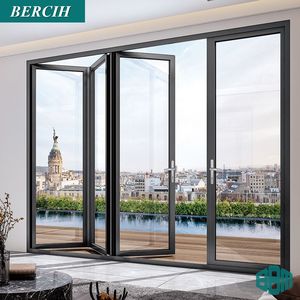
Aluminium stacking doors feature individual sash panels that slide along parallel tracks (2-track, 3-track, or 4-track head and sill frames) and stack behind one another or inside a wall pocket. This design allows for larger individual glass panels (up to 3 meters wide per sash) and superior wind pressure resistance compared to bi-fold doors. Bi-fold doors hinge together and fold outward or inward, requiring clear floor space outside the opening, whereas stacking doors remain entirely inline, maximizing usable patio space and offering unobstructed panoramic glass views even when partially open.
What aluminum alloy grade and profile wall thickness should be specified for high-wind coastal projects?
For hurricane zones and high-wind coastal structural envelopes, architectural specifications must mandate 6063-T6 or 6061-T6 structural aluminium alloy extrusions. Outer frame wall thickness should measure between 2.0 mm and 3.0 mm, while sash profile depth should range from 120 mm to 200 mm depending on panel count. Furthermore, hardware should utilize SS316 stainless steel friction hinges, multi-point locking gearboxes (e.g., German Roto or Siegenia), and SGP laminated safety glass (e.g., 6mm Tempered + 1.52mm SGP + 6mm Tempered) compliant with ASTM E1996 impact standards.
What international testing certifications should I request from a Chinese door manufacturer?
When auditing Chinese door manufacturers for global supply, request project-relevant test reports certified by accredited third-party laboratories (such as Intertek, SGS, or TUV). Key international certifications include NFRC (National Fenestration Rating Council) and Energy Star for thermal and solar performance in North America; CSA (Canadian Standards Association) for structural compliance; CE / EN 14351-1 for European Union building codes; and AS2047 / AS1288 certification for Australian acoustic, water penetration, and structural deflection compliance.
Can Doorreme manufacture custom stacking doors according to project CAD drawings and BIM models?
Yes. Every order manufactured at Doorreme's 123,000 m² Foshan facility is 100% custom-engineered to order. Overseas developers, architects, and main contractors provide opening elevations, architectural CAD drawings, or Revit BIM models. Our dedicated structural engineering team performs wind load calculations, thermal simulations, and shop drawing creation. Production begins only after formal sign-off on detailed production shop drawings, ensuring flawless site installation sequencing.
How are large multi-panel stacking glass doors packaged to prevent damage during sea freight container shipment?
Heavy architectural glass assemblies require specialized export crating protocols. Aluminum door frames and sashes are disassembled into knockdown (KD) or semi-assembled units depending on container size (20GP, 40HQ, or Open Top containers). Glass units are wrapped in protective foam layer film, fitted with corner guards, and secured inside fully enclosed ISPM 15 compliant fumigated plywood wooden crates with internal steel strapping and desiccant gel packs to prevent moisture condensation during transit.
What hardware options and surface treatment finishes offer the highest durability for B2B commercial orders?
For hardware, we integrate premium German hardware (Roto, HOPPE, Siegenia) or top-tier OEM hardware rated for over 100,000 lifecycle opening cycles. Surface finishes include Qualicoat-certified AkzoNobel powder coating (60-80 microns thickness), Fluorocarbon PVDF coating (suitable for high-UV and marine environments with 10-20 year color retention warranties), and hard-coat anodized finishes (15-25 microns) offering superior scratch resistance and modern industrial aesthetic appeal.
Ready to Engineer Your Project's Stacking Door Package?
Partner directly with China's leading architectural aluminium manufacturer. Submit your structural drawings, opening schedules, or tender documents to receive detailed engineering proposals and factory-direct estimates.
 English