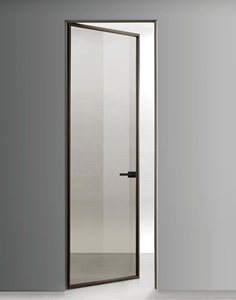
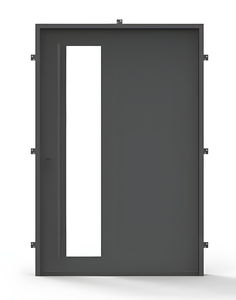
Top China Aluminum Clad Wood Doors Suppliers & Exporter

Architectural Grade Engineering, Passive House Thermal Performance & Custom B2B Export Solutions

Direct Factory Catalog

High-Performance Architectural Fenestration Systems

Engineered for luxury residential villas, commercial shopfronts, and high-rise developments worldwide.
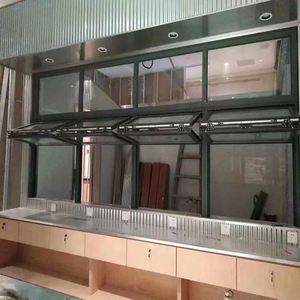
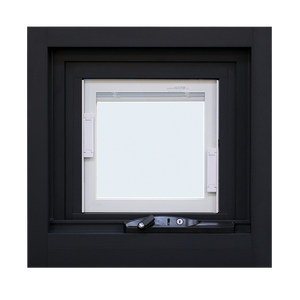
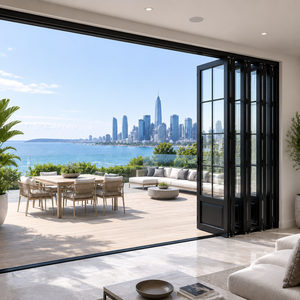
CLEARVIEW Aluminum Folding Glass Bifold Window

CLEARVIEW Aluminum Folding Glass Bifold 3-Season Porch Window

Australian Standard Aluminum Window and Door

Janelas De Aluminio / Australian Standard Certified Windows & Doors

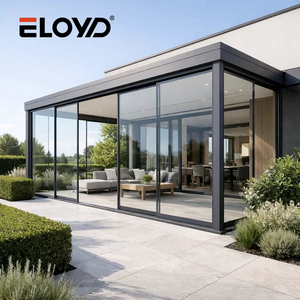
Minimalist Thermal Break Panoramic Sliding Door

Minimalist Thermal Break Aluminum Panoramic Sliding Door Low-E Glass

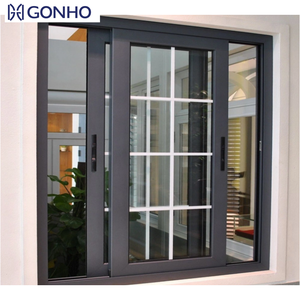
Waterproof Black Sliding Window Aluminium Doors

Commercial Waterproof Black Frame Sliding Aluminum Patio Doors

Retro Style Aluminum Folding Glass Door French Heritage

Retro French Heritage Style Fire-Resistant Aluminum Folding Door

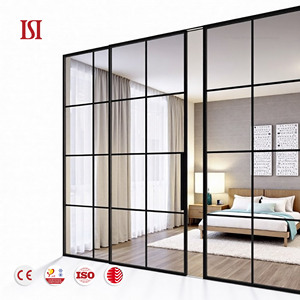
Fiberglass Aluminum Alloy Tempered Glass Sliding Door

Hand-Laminated Tempered Glass Aluminum Interior & Exterior Sliding Door

GELLJA Thermal Break Aluminum Swing Door Smoked Glass

Thermal Break Soundproof Slim Frame Swing Door with Smoked Glass

Waterproof Commercial Aluminium Shop Front Glazing Swing Door

Commercial Shopfront Waterproof Aluminum Glazed Entrance Door

2004
Established Year
123,000 m²
Factory Footprint
140+
Export Destinations
800+
Skilled Workforce
Industry Technical Report

Comprehensive Guide to Sourcing Aluminum Clad Wood Doors from China

In modern high-end architectural fenestration, aluminum-clad wood doors represent the ideal synthesis of natural interior aesthetics, superior thermal insulation, and weatherproofing. By combining a structural interior solid timber core with an exterior protective extruded aluminum shield, these composite doors deliver high thermal performance, structural integrity, and architectural flexibility.

For international buyers, general contractors, commercial developers, and fenestration distributors searching for verified China aluminum clad wood doors suppliers & exporters, navigating structural specifications, timber seasoning standards, surface treatment engineering, and hardware compatibility is essential. This technical white paper breaks down structural mechanics, material selection, procurement trends, and quality verification standards to optimize your sourcing strategy.

Information Gain Insight: Unlike standard uniform aluminum profile doors, premium aluminum-clad wood door systems feature independent floating clip connections. This structural design accommodates differential thermal expansion rates between exterior aluminum profiles ($\alpha \approx 23 \times 10^{-6} / K$) and interior timber components ($\alpha \approx 4 \times 10^{-6} / K$), eliminating frame warping under extreme weather cycles.

1. Architectural Anatomy & Engineering Specifications

Understanding the engineering balance of aluminum-clad timber fenestration is vital when specifying systems for high-performance projects:

  • Interior Solid Timber Frame: Provides natural warmth, acoustic absorption, and structural rigidity. Typical species include finger-jointed laminated Larch, Red Oak, White Pine, and Teak, dried to a strictly controlled moisture content of 10% to 12%.
  • Exterior Architectural Aluminum Shield: Fabricated from high-grade 6063-T5 or 6060-T6 aluminum extrusions (minimum wall thickness of 1.4 mm to 2.0 mm), providing resistance to UV radiation, torrential driving rain, wind loads, and thermal shock.
  • Polyamide Thermal Barrier (PA66 GF25): Reinforced with 25% glass fiber, these thermal break struts decouple inner and outer thermal zones, minimizing thermal bridge transmission.
  • Triple-Sealed EPDM Gasket Array: Utilizes continuous, non-aging EPDM (Ethylene Propylene Diene Monomer) weatherstripping to achieve air tightness and driving rain resistance under pressure differential.

Technical Performance Benchmarks (Standard vs. Premium Engineering)

Performance Indicator Standard Aluminum Door Standard Thermal Break Premium Aluminum Clad Wood Door
U-Factor ($W/m^2\cdot K$) 2.8 – 3.5 1.8 – 2.2 0.8 – 1.2 (Passive House Standard)
Sound Transmission Class (STC) 25 – 30 dB 32 – 36 dB 38 – 45 dB (Acoustic Grade)
Air Infiltration Rating Class 3 (EN 12207) Class 4 (EN 12207) Class 4 / NFRC Air Tightness
Water Penetration Resistance 300 Pa 450 Pa 600 Pa – 900 Pa (E900 Standard)
Thermal Expansion Management Rigid / Monolithic Polyamide Strip Floating Nylon Clip Decoupling

2. Manufacturing Capabilities & Enterprise E-E-A-T

Founded in 2004 in Foshan, Guangdong—China's aluminum industry hub—our 123,000 m² advanced manufacturing facility houses automated CNC profile machining centers, Homag precision timber joinery machinery, and PVDF coating lines. Operating with over 800 employees and exporting to 140+ countries and regions, our engineering teams provide complete project support, shop drawings, wind-load calculations, and custom extrusion tooling.

German Machining Precision

Utilizing 5-axis CNC processing centers to guarantee frame miter tolerances within 0.05 mm for structural joinery integrity.

AAMA 2605 Surface Finishes

Exterior aluminum cladding finished with PVDF fluoropolymer coating, offering 20+ years of color retention against coastal corrosion and high UV exposure.

Certified Quality Standards

Compliance tested under international building envelope standards including AS2047 (Australia), CE (Europe), CSA (Canada), and NFRC (North America).

3. Product Evolution & Key Technological Innovations

The manufacturing landscape for aluminum clad wood fenestration in China has evolved significantly. Key technological advancements driving product quality include:

A. Advanced Timber Drying & Lamination Techniques

Solid timber frames prone to warping or sap leakage are no longer used. Modern production relies exclusively on 3-ply or 4-ply finger-jointed laminated wood. Timber slabs are kiln-dried over 21 days until moisture content stabilizes between 10% and 12%. Alternate grain directions in each laminated layer counteract natural wood stress, increasing dimensional stability and load-bearing capacity by 40% compared to monolithic timber.

B. Eco-Waterborne Timber Finishes

Interior wooden surfaces are treated with non-toxic, waterborne European timber stains (such as Sikkens or Remmers). Applied via 4-stage dip coating and automated spray processes, these finishes penetrate 2–3 mm into the wood pore structure, protecting against humidity, fungal growth, and micro-cracking while remaining VOC-free.

C. Multi-Point Concealed Hardware Integration

Heavy doors require hardware capable of smooth operation over decades. Partnering with elite hardware engineers like German Roto, SIEGENIA, and HOPPE, our aluminum clad wood folding and lift-slide doors incorporate multi-point gear locking mechanisms, heavy-duty stainless steel rollers (rated up to 400 kg per panel), and anti-lift safety catches.

4. Global Procurement & Future Market Trends (2025–2030)

When planning overseas commercial developments or wholesale distribution, commercial buyers should consider key procurement trends shaping the industry:

  1. Ultra-Low Energy & Passive House Demand: Strict regional building codes are pushing demand toward triple-pane insulated glass units (IGUs) filled with 90%+ Argon gas, featuring Low-E coatings and warm-edge composite spacers (like Technoform). Aluminum-clad timber doors natively meet these standards due to the high natural insulation value ($k$-value) of wood.
  2. Narrow-Frame Minimalist Aesthetics: Modern architectural designs prioritize slim sightlines to maximize natural daylight. Engineered structural aluminum clad wood frames allow for narrow profile designs without compromising structural wind-load performance.
  3. Turnkey Supply Chain & Project-Based Customization: Procurement teams are seeking fully customized supply packages. China's top tier suppliers now offer CAD/BIM drawing customization, site-specific structural wind load analysis, sea-freight protective crating (vacuum packing + steel-framed plywood cases), and remote installation support.
Frequently Asked Questions

Procurement & Technical FAQ

Direct technical guidance for contractors, architects, and international importers.

What is the structural difference between aluminum clad wood and wood clad aluminum doors?
An aluminum clad wood door features a full solid structural timber frame on the interior that bears the weight of the sash and glass, protected by an exterior clip-on aluminum profile. A wood clad aluminum door is primarily a structural aluminum window/door with thin decorative wood veneers attached to the inside. Aluminum clad wood offers superior thermal insulation, soundproofing, and structural strength for high-end applications.
How do you prevent the interior timber from rotting or warping over time?
Timber preservation relies on three factors: (1) Kiln drying to a moisture content of 10–12%, (2) Multi-layer finger-jointed lamination that neutralizes internal wood stress, and (3) Environmental water-based European coatings applied through multi-stage impregnation. Additionally, exterior aluminum cladding prevents rainwater from touching the wood.
Can Doorreme manufacture doors according to custom architectural CAD drawings and site dimensions?
Yes. Every unit is built to order. Send your opening sizes, elevation drawings, or site plans, and our engineering team will provide detailed production drawings (shop drawings), hardware proposals, and glass specifications. Mass fabrication begins only after your written approval of the technical drawings.
What glass configurations and thermal performance options are available?
Standard configurations include double tempered insulating glass (e.g., 5mm + 12A/20A + 5mm). For extreme hot or cold climates, we supply triple-pane Low-E glass with Argon gas filling, warm-edge spacers, laminated glass for hurricane impact zones (e.g., 5mm + 1.14PVB + 5mm), and tinted or frosted privacy options.
Which hardware and lock brands do you install on export orders?
We specify premium hardware based on project budgets and performance requirements. Standard specifications include top-tier Chinese hardware, with options for German Roto, SIEGENIA, HOPPE, or GU systems for high-load sliding and tilt-turn mechanisms.
How are export goods packaged to avoid damage during ocean transport?
Products undergo a 4-layer packaging process: (1) Protective surface film on profiles, (2) Foam corner protectors, (3) Waterproof plastic shrink wrap, and (4) Heavy-duty fumigated wooden crates or steel-framed pallet boxes designed for safe forklift handling and container loading.
What certification documentation do you provide for local building code compliance?
Depending on your target market, we provide factory test reports and compliance documentation for AS2047 (Australia), CE EN14351 (Europe), NFRC / CSA (North America), as well as structural wind pressure calculations verified by certified fenestration engineers.
How can I become a local wholesaler, agent, or dealer for Doorreme products?
We actively support distributors, dealers, and installation contractors worldwide. Partners receive factory-direct pricing, custom showroom samples, marketing collateral, and dedicated engineering support. Contact our global sales department to discuss regional distribution agreements.
Factory Direct B2B Service

Ready to Request Engineering Drawings & Factory Pricing?

Send your project schedule, CAD elevations, or custom opening sizes directly to our technical sales team for a response within 24 business hours.