 English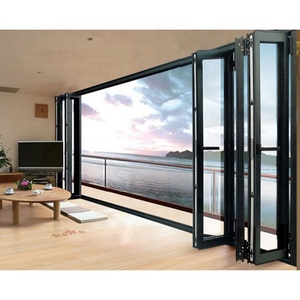
Executive Sourcing Guide: Sourcing China Aluminum Doors & Windows
The global construction landscape is experiencing a paradigm shift. Architectural design now mandates an unprecedented fusion of minimalist structural aesthetics, aggressive carbon-neutral thermal insulation targets, and extreme climatic resilience. For commercial developers, general contractors, facade engineers, and institutional volume buyers, identifying a premier OEM/ODM manufacturer among China aluminum door manufacturers requires evaluating technical metrics beyond baseline unit prices.
As the world’s leading hub for architectural extrusions, Foshan in Guangdong Province accounts for over 30% of global high-spec aluminum architectural profile processing. Modern manufacturers operating within this ecosystem—such as Doorreme Aluminum Industry Co., Ltd. (operating a 123,000 m² integrated production cluster with 800+ employees since 2004)—have evolved from basic extrusion houses into fully integrated structural engineering partners capable of delivering customized building envelope solutions across 140+ countries.
“Information Gain Advantage: Sourcing structural aluminum doors from China is no longer merely a unit-cost exercise. It requires rigorous auditing of alloy metallurgical temper (6063-T6 vs 6061-T6), polyamide thermal break quality (PA66GF25), surface polymer coating durability (PVDF multi-coat vs standard powder coating), and verifiable compliance with NFRC, AS2047, and CSA performance standards.”
1. Technical Benchmarks & Product Selection Matrix
When specifying custom aluminum door systems for luxury residential villas, multi-family mid-rises, or high-traffic commercial developments, procurement managers must match system mechanics to structural wind load requirements, acoustic attenuation targets, and thermal boundary limits.
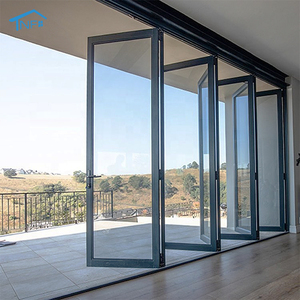
Exterior Bifold & Folding Doors
Designed to collapse multi-meter wall openings seamlessly. Demands heavy-duty bottom-loaded stainless steel roller tracks, multi-point lock systems, and thermally broken profiles capable of supporting panel weights exceeding 150 kg per leaf without sash sagging.
Lift-and-Slide & Heavy Sliding Doors
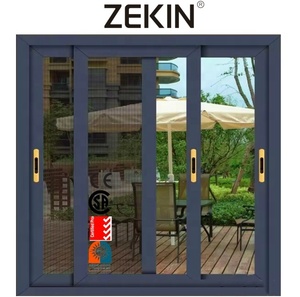
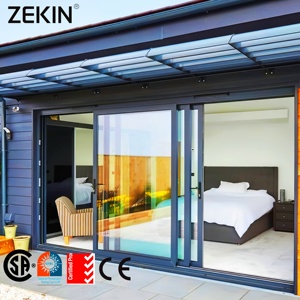
Optimized for expansive balcony openings requiring superior water tightness (up to 700 Pa) and wind load resistance (up to 5000 Pa). Lift-and-slide mechanics disengage weather seals during operation for effortless gliding and drop into place upon locking to create an airtight seal.
Hurricane Impact & Coastal Doors
Formulated for tropical and coastal regions subject to severe storm surges. Incorporates heavy-wall 6063-T6 aluminum extrusions (2.0mm–3.0mm wall thickness), laminated glass configurations (e.g., 6mm Tempered + 1.52mm SentryGlas/PVB + 6mm Tempered), and PVDF anti-salt spray finishes.
| System Category | Nominal Profile Thickness | Thermal Barrier Material | Standard Glazing Build-Up | Performance Target (U-Factor / STC) |
|---|---|---|---|---|
| Heavy-Duty Sliding Door | 1.6 mm - 2.2 mm | PA66GF25 Polyamide Strips | 5mm Low-E + 16A + 5mm Tempered | U ≤ 1.8 W/m²K | STC 36 dB |
| Thermally Broken Folding Door | 2.0 mm - 2.5 mm | PA66GF25 Polyamide Technoform | 6mm Low-E + 12A + 6mm Tempered | U ≤ 1.6 W/m²K | STC 38 dB |
| Commercial Casement / Entry Door | 1.4 mm - 2.0 mm | High-Density Insulated Foam / PA66 | 6mm + 1.14PVB + 6mm Laminated | U ≤ 2.0 W/m²K | STC 40 dB |
| Narrow-Frame Minimalist Sliding Door | 2.0 mm - 3.0 mm (Concealed Frame) | Structural Thermal Break Interlock | 8mm Low-E + 18A + 8mm Tempered | U ≤ 1.4 W/m²K | STC 35 dB |
2. Future Sourcing & Procurement Trends in Architectural Fenestration (2025–2030)
The strategic procurement of aluminum door systems from primary Chinese manufacturers is being transformed by regulatory updates, advanced materials engineering, and digital supply chain integration. Overseas buyers who stay ahead of these trends achieve significant competitive advantages in project margin, compliance speed, and long-term building operation costs.
A. Ultra-Low U-Values & Passive House Certification Requirements
With stringency increasing across North American (IECC 2024), European (EPBD), and Australian (NCC 2022) energy efficiency codes, window and door assemblies can no longer act as thermal bridges in building envelopes. Future procurement requires integrated thermal break designs that utilize multi-cavity PA66GF25 polyamide barrier strips filled with aerogel or expanded polyurethane (PU) insulation. Primary suppliers in China are expanding triple-pane double Low-E argon-filled glazing production lines capable of achieving system U-factors below 0.8 W/m²K (Passive House standard).
B. Minimalist Structural Sightlines with Maximum Load Bearing
Architectural design heavily favors ultra-narrow interlocking stile sightlines (often as thin as 18mm to 25mm) that yield up to 95% glass surface ratio. Achieving this aesthetic without sacrificing structural integrity against high-altitude wind pressure (up to 6.0 kPa) requires custom alloy formulations, reinforced carbon-fiber internal stiffeners, and structural silicone glazing (SSG) techniques. Reputable Chinese factories are now integrating automated structural bonding lines utilizing Dow Corning and Tremco structural sealants.
C. Advanced Surface Treatment & Environmental Longevity
In coastal, high-salinity, and high-UV environments (such as the Caribbean, Australia, and the Middle East), standard powder coatings degrade, chalk, and blister within 3 to 5 years. Procurement is shifting rapidly toward fluorocarbon PVDF coatings (complying with AAMA 2605 specifications with 10,000-hour salt spray testing certificates) and high-micron architectural anodizing (25+ microns). Premium manufacturers provide traceable 20-to-30-year warranties backed by international coil and extrusion finish labs.
D. BIM Integration & Complete Digital Engineering Submittals
Tier-1 OEM factories no longer wait for manual field measurements. Leading manufacturers receive Autodesk Revit BIM models and IFC files directly from architectural engineering firms, running automated finite element analysis (FEA) for structural wind load calculations and thermal stress modeling. This digital workflow allows shop drawings to be generated, reviewed, and approved with zero conversion errors before physical extrusion cutting begins.
3. Product Engineering & Manufacturing Development Standards
Evaluating a supplier’s manufacturing capability requires looking inside their fabrication workshop. Quality control in high-spec aluminum door manufacturing relies on strict process tolerances across six core fabrication stages:
1. Precision Extrusion & Tempering
Utilizing virgin 6063 aluminum ingots processed under precise T5 or T6 artificial aging treatments to achieve a Webster hardness of ≥ 12 HW, ensuring long-term structural stiffness.
2. Automated CNC Milling
German and Italian 5-axis CNC machining centers drill lock hardware mortises, drainage slots, and corner crimping connections within ±0.1mm tolerances, eliminating manual alignment defects.
3. Automated IGU Assembly
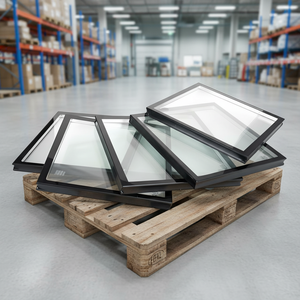
Insulated Glass Units (IGU) are washed in demineralized water, assembled with warm-edge spacers, filled with 90%+ Argon gas, and dual-sealed with butyl and structural silicone.
4. Hardware Integration
Outfitted with top-tier hardware platforms such as German Roto, Siegenia, Hoppe, or premium custom-engineered concealed hinges tested for 100,000+ open-close operational cycles.
4. Enterprise Strengths & Factory Audit Matrix: Doorreme Case Study
To understand how an enterprise-scale Chinese manufacturer maintains global competitiveness, consider the operational framework of Doorreme Aluminum Industry Co., Ltd. Established in 2004 in Shishan Town, Foshan—China's premier aluminum manufacturing zone—Doorreme demonstrates the key physical and operational assets required for large-scale international supply contracts:
- Scalable Industrial Infrastructure: Operates a 123,000 m² modern manufacturing plant featuring automated extrusion lines, powder coating vertical lines, and dedicated curtain wall/window assembly workshops capable of producing over 500,000 m² of fenestration annually.
- In-House R&D and Engineering Force: Supported by over 800 employees, including a 40+ person engineering department capable of preparing structural wind pressure calculations, water penetration analyses, and full shop drawings tailored to regional building codes.
- Global Regulatory Compliance: Maintains active product testing and certification credentials across key export zones, including North American NFRC and CSA standards, Australian AS2047/AS1288 certifications, and European CE marking.
- End-to-End Quality Assurance: Every project undergoes five critical QC gates: raw aluminum alloy spectral testing, coating thickness and cross-hatch adhesion checks, corner joint strength testing, water-air-wind mock-up chamber testing, and protective wood-crate packaging verification prior to container loading.