Factory-direct wholesale architectural doors and windows manufactured in Foshan, China. Built to international structural and thermal compliance codes (ASTM, CSA, AS2047, CE).
An authoritative B2B procurement guide for general contractors, real estate developers, commercial architects, and facade engineering specifiers.
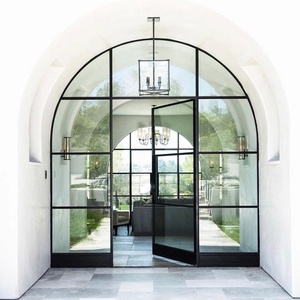
In modern architectural fenestration, the entry door serves as both a thermal threshold and a structural barrier against severe atmospheric forces. Top China aluminum front door manufacturers prioritize primary-grade extrusion billets over recycled scrap aluminum. The industry gold standard for architectural entrance systems utilizes 6063-T5 architectural aluminum alloy, offering optimal tensile strength (minimum 190 MPa) and superior surface finish capability for anodizing and PVDF fluorocarbon coatings.
For hurricane-prone coastal environments (such as Florida NOA compliance regions or typhoon-susceptible Caribbean territories), structural profiles are reinforced with wall thicknesses ranging from 2.0 mm to 3.0 mm, yielding wind pressure tolerances exceeding 80 PSF (Pounds per Square Foot). Thermal break integration employs Polyamide PA66 GF25 (25% glass-fiber reinforced) insulation strips, effectively severing thermal bridging between interior and exterior aluminum chambers to lower U-factors down to 1.2–1.6 W/m²·K.
Double and triple-glazed toughened safety glass incorporating low-emissivity (Low-E) coatings, Argon gas insertion (90%+ purity), and SGP (SentryGlas®) or PVB laminated interlayers for maximum acoustic dampening (STC 42+) and impact resilience.
PVDF (Fluorocarbon) coating complying with AAMA 2605 requirements, delivering 20+ years of UV resistance, salt-spray anti-corrosion protection, and chalking defense, crucial for high-salinity marine air environments.
Precision-engineered German Roto, Siegenia, or top-tier custom Chinese hardware systems featuring 304/316 stainless steel multi-point locking mechanisms capable of supporting heavy pivot and hinged door leafs up to 400 kg.
When selecting aluminum glass front door suppliers from China, evaluating certified laboratory testing data ensures project compliance with localized building standards:
| Performance Parameter | Standard Entry Door | Thermal Break Front Door | Hurricane Impact-Rated Front Door |
|---|---|---|---|
| Profile Thickness | 1.4 mm – 1.6 mm | 2.0 mm – 2.5 mm | 2.5 mm – 3.0 mm Reinforced Alloy |
| Thermal Transmittance (U-Value) | 2.8 – 3.4 W/m²·K | 1.4 – 1.8 W/m²·K | 1.2 – 1.6 W/m²·K |
| Air Tightness (ASTM E283) | Level 3 (0.3 cfm/ft²) | Level 4 (0.1 cfm/ft²) | Superior Sealed (0.05 cfm/ft²) |
| Water Resistance (ASTM E331) | 250 Pa (5.2 psf) | 450 Pa (9.4 psf) | 700 Pa – 1000 Pa (20.8 psf) |
| Acoustic Insulation (STC Rating) | 28 – 32 dB | 36 – 40 dB | 42 – 48 dB (with SGP Laminated Glass) |
| Wind Pressure Rating | 2.0 kPa (41.7 PSF) | 3.5 kPa (73.1 PSF) | 5.0+ kPa (80+ PSF NOA Standard) |
Key macro-commercial shifts shaping global imports of architectural entrance doors, high-performance facade glazing, and structural fenestration from Chinese exporters.
Architectural demand is moving rapidly away from heavy, bulky frames toward ultra-narrow visible profile frames (down to 15 mm – 20 mm vertical stiles) and massive pivot doors exceeding 4 meters in height. Chinese fabricators are utilizing high-tensile 6061-T6 structural inserts to maintain rigidity without sacrificing visual minimalist elegance.
Front entrance procurement specification now mandates integrated access control directly embedded within the door structure during factory assembly. Features include concealed motorized multi-point lock actuators, 3D facial recognition, biometric fingerprint scanning, and wireless IoT integration compatible with commercial building management platforms.
International developers subject to LEED, BREEAM, or WELL building certifications now demand Environmental Product Declarations (EPD) from Chinese window and door manufacturers. Forward-thinking suppliers in Foshan are adopting solar-powered extrusion plants and certified low-carbon recycled aluminum content.
Founded in 2004, our 123,000 m² smart manufacturing plant leverages imported German CNC machining centers, automated glass insulating lines, and rigorous in-house laboratory testing.
Navigating cross-border fenestration procurement requires complete technical clarity. Our factory-direct service model ensures zero discrepancies between structural blueprints and final jobsite installation:
Critical engineering, logistics, and customization queries answered by senior fenestration specialists.
Send your project blueprints, window schedules, or site measurements to connect directly with our senior structural engineering team.
 English