Factory-direct engineering precision customized for Australian commercial and high-end residential specifications.
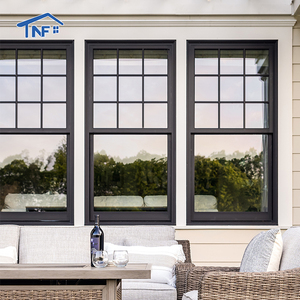
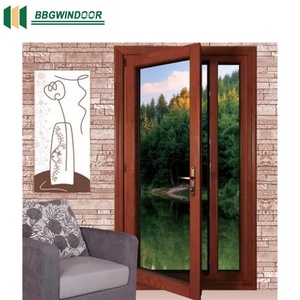
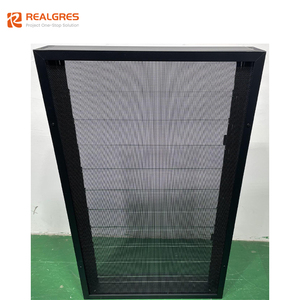
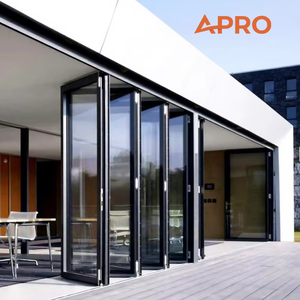
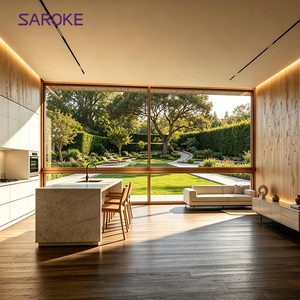
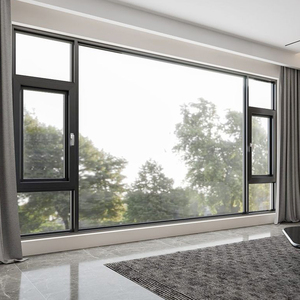
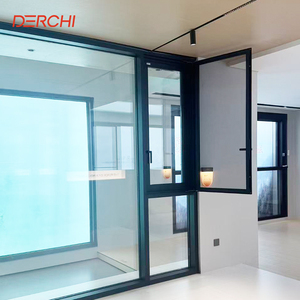
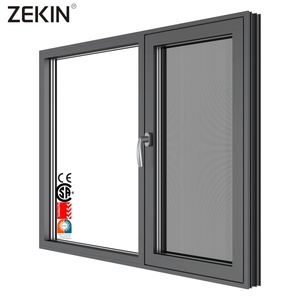
The Australian architectural landscape demands an unprecedented balance of structural integrity, aesthetic durability, and stringent fire safety compliance. As Australian builders, facade contractors, developers, and architects navigate the updated requirements of the National Construction Code (NCC 2022), selecting certified Aluminum Composite Panel (ACP) facade manufacturers has evolved into a strategic risk management imperative. Exterior building envelopes across metropolitan hubs such as Sydney, Melbourne, Brisbane, Perth, and coastal regional developments face unique environmental stresses—ranging from severe UV radiation and marine C5 atmospheric corrosion to high cyclonic wind loading (AS/NZS 1170.2).
Doorreme Aluminum Industry Co., Ltd., operating from a state-of-the-art 123,000 m² production complex in Foshan, China, delivers engineered cladding and architectural envelope solutions tailored specifically to Australian statutory standards. With over two decades of technical advancement, Doorreme bridge the gap between factory-direct cost efficiencies and local Australian compliance rigor, specializing in non-combustible core formulations, structural silicone curtain wall integration, and custom-fabricated facade cassettes.
Procuring exterior composite panel systems for projects within New South Wales (NSW), Victoria (VIC), Queensland (QLD), and Western Australia (WA) requires rigorous verification of test reports issued by NATA-accredited or internationally recognized laboratories. Doorreme manufacturing protocols align directly with the following Australian standards:
Combustibility testing for materials used in vertical building elements. Core materials are subjected to 750°C furnace exposure to verify zero sustained flaming and minimal heat rise.
Full-scale fire performance verification for external wall assemblies, measuring flame propagation, debris spalling, and systemic thermal resistance across multi-story mockups.
Structural engineering design validation for extreme wind pressures, ensuring panel skin thickness, stiffener routing, and fixing bracket spacing withstand cyclonic Regions C & D.
Furthermore, weatherproofing integrity is tested under AS/NZS 4284 (Testing of Building Building Facades), verifying static water pressure resistance, dynamic water penetration, and structural serviceability under seismic and wind displacements.
The performance longevity and safety profile of an Aluminum Composite Panel facade depend fundamentally on core mineralogy and fluoropolymer surface chemistry. Doorreme provides fully customizable panel configurations engineered for severe Australian weather conditions.
To meet varied project budgets and compliance tiers, panel manufacturing is categorized into two core technologies:
Australia experiences some of the highest ultraviolet (UV) radiation indices globally. Standard polyester (PE) coatings rapidly chalk and fade within 3 to 5 years under Australian sunlight. Doorreme utilizes 3-coat continuous coil-coating lines applying Kynar 500 / Hylar 5000 PVDF (Polyvinylidene Fluoride) resins or FEVE (Fluoroethylene Vinyl Ether) technology:
| Coating Specification | Resin Type & Layers | Film Thickness | UV Resistance (QUV 4000h) | Atmospheric Suitability |
|---|---|---|---|---|
| PVDF Standard 2-Coat | 70% Kynar 500 Resin (Primer + Topcoat) | 25 - 28 µm | Color Retention > 80% | Urban Inland (Sydney West, Canberra) |
| PVDF Architectural 3-Coat | Primer + Color Coat + Clear Metallic Topcoat | 35 - 40 µm | Color Retention > 90% | Coastal C4 Environment (Brisbane, Perth) |
| FEVE High-Gloss Fluoropolymer | Fluoroethylene Vinyl Ether (Clear/Solid) | 30 - 45 µm | Ultra-High Gloss Retention | Severe Marine C5 (Gold Coast, Newcastle) |
| Anodized Finish ACP | Electrochemically Sealed Oxide Layer | 15 - 25 µm | Metallic Integrity (100% Recyclable) | High-Traffic Architectural Facades |
Different geographical microclimates within Australia require tailored facade engineering parameters. Below are localized technical deployment scenarios where Doorreme composite panel cladding and window systems are optimized:
Environment: Atmospheric Corrosivity Category C4/C5 (ISO 9227 salt spray environment), high humidity, elevated atmospheric salinity.
Engineering Solution: 0.5mm 5005-H24 marine-grade aluminum alloy skins laminated over A2 Non-Combustible mineral core. Finished with a 38µm 3-Coat PVDF coating featuring a chromate conversion primer. Backside panels receive a 15µm protective wash coat to prevent galvanic oxidation against sub-framing systems.
Environment: High-rise wind pressure vortexes, urban acoustic reflection, stringent fire boundary clearances under NCC 2022.
Engineering Solution: 4mm or 6mm structural ACP cassette systems routed and folded with internal extruded aluminum stiffener profiles (6063-T6). Mechanically fixed to continuous vertical top-hat sub-framing. System integrates thermally broken double-glazed casement windows achieving sound attenuation up to Rw 42 dB.
Environment: AS/NZS 1170.2 Wind Region C/D (Ultimate wind speeds exceeding 250 km/h), wind-borne debris impact requirements.
Engineering Solution: Impact-resistant structural laminated aluminum panels paired with heavy-duty structural silicone glazing facade framing. Sub-frame fixing brackets utilize SS316 stainless steel fasteners with neoprene isolation gaskets to withstand cyclic wind pressures without frame distortion.
Environment: Prefabricated school buildings, health hubs, modular housing units requiring rapid installation cycles and low maintenance.
Engineering Solution: Pre-cut, pre-grooved flat panel shipments delivered directly to modular off-site builders in Melbourne or Brisbane. Lightweight 4mm FR panels enable efficient site assembly, reducing craneage and on-site labor expenses.
Facade specifiers frequently compare Aluminum Composite Panels against alternative exterior metallic cladding solutions. The table below outlines key structural, thermal, and cost parameters:
| Performance Metric | 4mm ACP A2 Non-Combustible | 3mm Solid Aluminum Sheet | 25mm Aluminum Honeycomb |
|---|---|---|---|
| Weight (kg/m²) | ~7.8 kg/m² | ~8.1 kg/m² | ~5.6 kg/m² |
| Rigidity / Flexural Stiffness | High (Composite Beam Effect) | Moderate (Prone to Oil-Canning) | Exceptionally High |
| Acoustic Insulation (STC) | 26 - 28 dB | 23 - 24 dB | 25 dB |
| Thermal Conductivity (W/m·K) | 0.21 W/m·K (Insulative Mineral Core) | 205 W/m·K (Highly Conductive) | 1.10 W/m·K |
| Flatness / Surface Stability | Superior (Zero visual distortion) | Requires stiffeners to prevent oil-canning | Superior flat aesthetic |
| Fire Rating (AS 1530.1) | Pass (A2 Non-Combustible Mineral) | Pass (100% Metal) | Pass (All-Aluminum Assembly) |
| Installed Cost Index | Cost-Effective (Baseline 1.0) | 1.35x Baseline | 1.85x Baseline |
While 3mm solid aluminum plates offer inherent non-combustibility, they exhibit a lower flexural modulus per unit weight, rendering large panels susceptible to "oil-canning" (visible surface bowing). 4mm ACP A2 panel designs deliver equal or superior surface flatness at a significantly lower material cost, making them the preferred choice for large-scale architectural projects across Australia.
Doorreme Aluminum Industry Co., Ltd. operates as a vertically integrated manufacturer based in Shishan Town, Nanhai District, Foshan—China's global capital for architectural aluminum extrusion and panel fabrication. Established in 2004, the facility encompasses over 123,000 square meters of manufacturing space and employs more than 800 skilled engineers, technicians, and production specialists.
Equipped with 6 automated continuous lamination lines, high-speed CNC routing routers, V-grooving machinery, and German-imported precision cutting stations capable of producing panel lengths up to 6000mm.
Every coil batch undergoes 18 stringent internal checks including 180° peel strength testing, cross-hatch paint adhesion (ISO 2409), Impact Resistance (ASTM D2794), and acid/alkali chemical resistance testing.
Our in-house technical department provides 3D facade modeling, fabrication shop drawings, elevation nesting plans, and bracket static load calculations for Australian structural engineer sign-off.
Connect directly with Doorreme senior facade engineering team for technical spec reviews, AS 1530.1 test report verification, sample kits, and factory-direct pricing for your upcoming tender.
Contact Us English