Explore our export-grade aluminum window and door systems customized for residential, commercial, and structural retrofitting applications across Japanese prefectures.
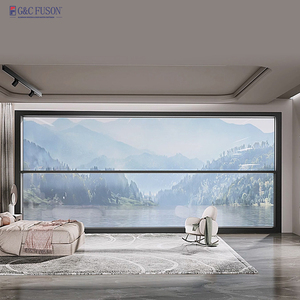
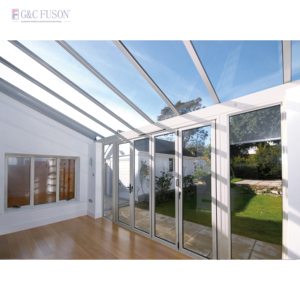
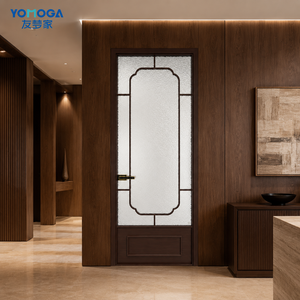
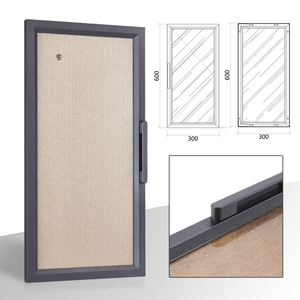
Analyzing architectural demands across Tokyo metropolitan high-rises, coastal Hokkaido residential projects, and storm-prone southwestern Japanese islands.
In high-density Japanese cities like Tokyo and Osaka, lot footprints are constricted, placing a premium on interior usable area. Crank out casement and awning windows project outward, requiring zero indoor clearance for operational swing.
Southern coastal Japan faces seasonal violent typhoons with extreme wind-driven rain. Unlike traditional horizontal sliding windows prone to track flooding, crank-out windows utilize multi-point compression locks pushing sashes against EPDM continuous gaskets.
Severe winter thermal gradients demand high insulation values to prevent surface condensation and heat loss. Integrated thermal break PA66 polyamide struts separate inner and outer aluminum frames, minimizing thermal bridging.
Detailed analysis of ZEH (Zero Energy House) mandates, JIS A 4706 performance standards, and Japanese seismic engineering integration.
The Japanese building envelope market is undergoing a seismic shift driven by the Ministry of Land, Infrastructure, Transport and Tourism (MLIT) mandates. By 2025, mandatory energy efficiency compliance under the amended Building Energy Efficiency Act requires all new residential and commercial structures to achieve rigorous insulation benchmarks. Aluminum crank out windows—historically recognized for superior structural rigidity and air tightness compared to conventional sliding sashes—have become the preferred specifier choice for Japanese general contractors (ゼネコン), architects, and house builders.
Key architectural trends driving crank out window adoption include:
To achieve Net-Zero Carbon by 2050, Japan demands window assemblies with exceptional thermal resistance. Our thermal break crank out windows incorporate 24mm to 34mm PA66 GF25 fiberglass-reinforced polyamide barriers, lowering thermal transmittance to meet strict Zone 1-4 (Hokkaido to Tohoku) ZEH criteria.
Exporting fenestration products to Japan requires strict adherence to JIS testing protocols. Our export series undergo full-scale mock-up testing to verify compliance across mandatory performance vectors:
Japan’s high seismic risk necessitates window frames capable of handling inter-story drift without glass shattering or frame jamming. Our crank out frames feature flexible structural silicone seals and heavy-duty stainless steel corner joints engineered to absorb seismic shear forces during earth tremors.
| Performance Parameter | Standard Aluminum Window | Doorreme Thermal Break Crank Out (Japan Spec) | Testing Standard / Standard Compliance |
|---|---|---|---|
| Thermal Transmittance (U-Value) | 3.5 – 4.2 W/m²·K | 1.3 – 1.6 W/m²·K | JIS A 2102 / ISO 10077-1 (ZEH Ready) |
| Wind Load Resistance | 1600 Pa (S-3) | 3000 Pa (S-6 Grade) | JIS A 1515 / ASTM E330 Typhoon Rated |
| Water Penetration Resistance | 250 Pa (W-3) | 500 Pa (W-5 Grade) | JIS A 1517 Static & Dynamic Spray Test |
| Acoustic Insulation (STC) | 28 dB (T-1) | 38 – 42 dB (T-3 / T-4 Grade) | JIS A 1416 / ISO 140 Sound Reduction |
| Frame Alloy & Temper | Standard Recycled Profile | 6063-T5 High-Purity Primary Aluminum | JIS H 4100 Industrial Extrusion Spec |
| Surface Coating Durability | Standard Powder Coating | AkzoNobel PVDF Fluorocarbon (3-Coat) | AAMA 2605 / 20+ Year Coastal Salt Spray |
Combining 20+ years of export expertise with German precision machinery, lean Chinese manufacturing costs, and strict Japanese quality assurance standards.
Located in Foshan—China’s premier aluminum manufacturing capital—our 123,000 square meter automated facility houses fully integrated extrusion, thermal break strip insertion, glass tempering, and CNC machining lines under one roof.
Japanese procurement demands zero-defect execution. Our factory operates under ISO9001 quality management, inspecting frame cutting tolerances within ±0.5mm, diagonal frame squareness within ±1.0mm, and 100% seal integrity checks before wooden crate packing.
Our dedicated R&D team of 800+ employees includes structural fenestration engineers ready to convert Japanese architectural blueprints into production-ready Auto-CAD and BIM models, complete with wind pressure calculation reports.
We supply custom crank out windows equipped with industry-leading operator hardware, including American Truth hardware and German Roto multi-point gear operators, guaranteeing over 20,000 smooth opening cycles without arm sagging.
To eliminate maritime shipping damage to Japanese ports (Tokyo, Yokohama, Nagoya, Osaka, Kobe), all units are sealed in moisture-proof vacuum wrap and encapsulated in fumigated solid timber export crates with corner protectors.
Direct answers to critical questions asked by Japanese general contractors, trading companies (商社), architects, and developers.
Yes. We regularly fabricate fenestration systems tailored to the Building Standards Act of Japan (建築基準法). We provide structural load calculations, frame structural safety reports, and glass thermal stress analysis required by Japanese local building authorities for project sign-off.
For coastal prefectures (such as Shizuoka, Kanagawa, or Okinawa), we specify 316-grade stainless steel operator arms, heavy-duty Truth/Roto gearing, and 3-coat 40+ micron PVDF fluorocarbon frame finishes tested to withstand 2,000+ hours of continuous salt spray without pitting or chalking.
Absolutely. Our aluminum crank out windows feature integrated, high-transparency SS304 stainless steel mesh insect screens (mesh density up to 20x20). The screens can be fixed internally or equipped with a detachable hinge design for easy cleaning from inside the room.
Standard custom fabrication takes approximately 20 to 30 days upon final shop drawing sign-off. Shipping time from our Guangzhou/Foshan port to Tokyo, Yokohama, or Osaka ports is exceptionally fast, usually taking only 4 to 7 days transit time.
Yes. Japanese architectural design frequently specifies subtle metallic tones such as Champagne Gold, YKK-compatible Anodized Black, Stainless Metallic Gray, and Matte Bronze. We offer advanced anodizing and electrocoating (ED coating) finishes that ensure absolute color consistency across all profiles.
We provide full English/Japanese shop drawings detailing sub-frame installation, waterproof membrane flashing details, and anchor bolt positioning. For large-scale commercial projects, our technical engineering team can also provide virtual guidance or on-site supervision.
Partner directly with Foshan’s premier 123,000 m² factory. Send us your project drawings, CAD elevations, or bill of quantities, and our engineering team will provide a comprehensive proposal and competitive price quote within 24 hours.
 English